If you’re staring at your Arizona yard wondering how to transform baked earth into a lush landscape without drowning your water bill, you’re not alone. I’ve learned that desert landscaping isn’t about fighting the heat; it’s about working with it.
The truth is, most homeowners skip the foundational work, including assessment, then wonder why their agave looks struggling. Here’s what actually works: a customized approach starting with your specific conditions, not generic desert aesthetics.
Assess Your Yard’s Conditions Across a Full Year
How’s your desert yard actually going to perform when the thermometer hits 120 degrees, or when winter creeps in? That’s the question I’m asking before planting a single saguaro. You’ll want to map your yard’s sun exposure throughout the year (spoiler: that shady corner vanishes come summer). Check your soil type—sandy, caliche-laden, or clayey—since it dramatically affects desert irrigation planning and drainage.
Consider seasonal climate swings: monsoons drench us, then we’re parched for months. Observe water availability in different zones. Notice where afternoon heat scorches relentlessly versus where morning coolness lingers. This honest assessment prevents costly mistakes and keeps your plants healthy year-round. Think of it as creating a bespoke blueprint for survival, not just aesthetics.
Plan Your Irrigation System First
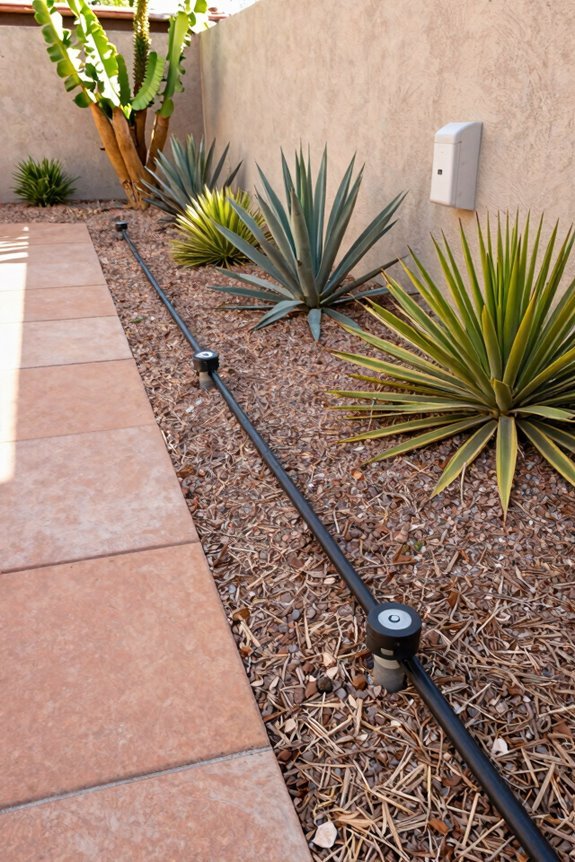
Before you dig a single planting hole, I’m mapping out your irrigation strategy; water is essential to desert gardening, and getting this wrong means watching your plants wilt or spending money on inefficient systems. I assess whether you’ve got existing infrastructure or need to build from scratch.
Front yard gets one uniform zone. Your backyard has thirsty plants that warrant their own high-water drip line running through the fence.
| Zone | Plant Type | Water Need |
|---|---|---|
| Front | Native shrubs | Low |
| Back | Citrus/palms | High |
| Boundary | Mixed understory | Medium |
Mapping current emitters prevents redundant installations. Instead of expanding drip irrigation footprints for color variety, I shift plant selection strategically, keeping the same water budget while increasing visual impact.
Choose Native Arizona Plants for Year-Round Interest
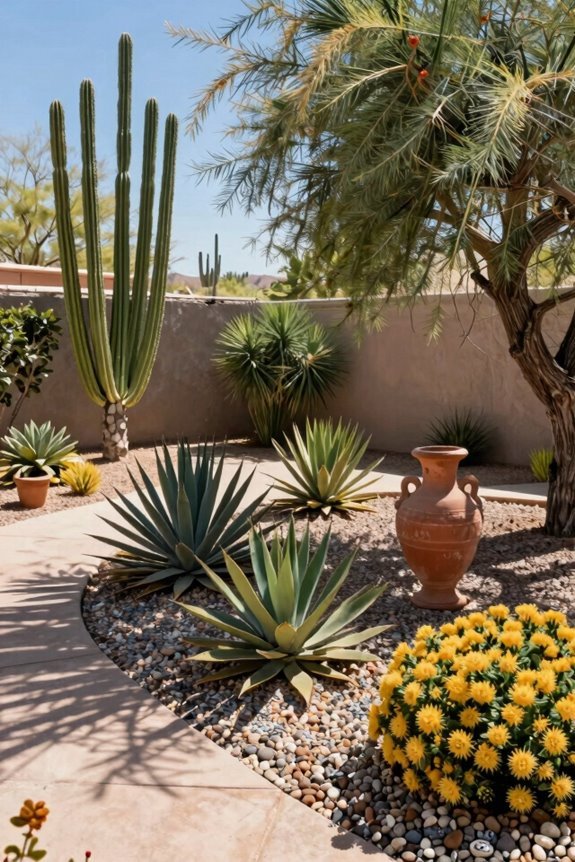
I want you to think beyond the typical desert monotony, because Arizona’s native palette offers far more verdure and visual drama than most gardeners realize. You’ll discover that plants like Yucca gloriosa with its ivory-edged sword leaves, paired with architectural agave and delicate penstemon blooms, create a bespoke landscape that shifts with seasons while demanding minimal water.
These shrubs and ornamental grasses aren’t just survivors; they’re your key to year-round color and sculptural interest. A garden composed of native plants actually succeeds under Arizona’s brutal sun rather than merely tolerating it.
Native Plants & Natural Shapes
Why settle for thirsty ornamentals when Arizona’s native palette offers year-round drama without the guilt? I’ve discovered that desert-native plants like ocotillo, palo verde, and velvet mesquite aren’t just survivors; they’re architectural showstoppers. Their natural shapes create visual interest without forcing awkward pruning sessions, which means goodbye to topiary nightmares.
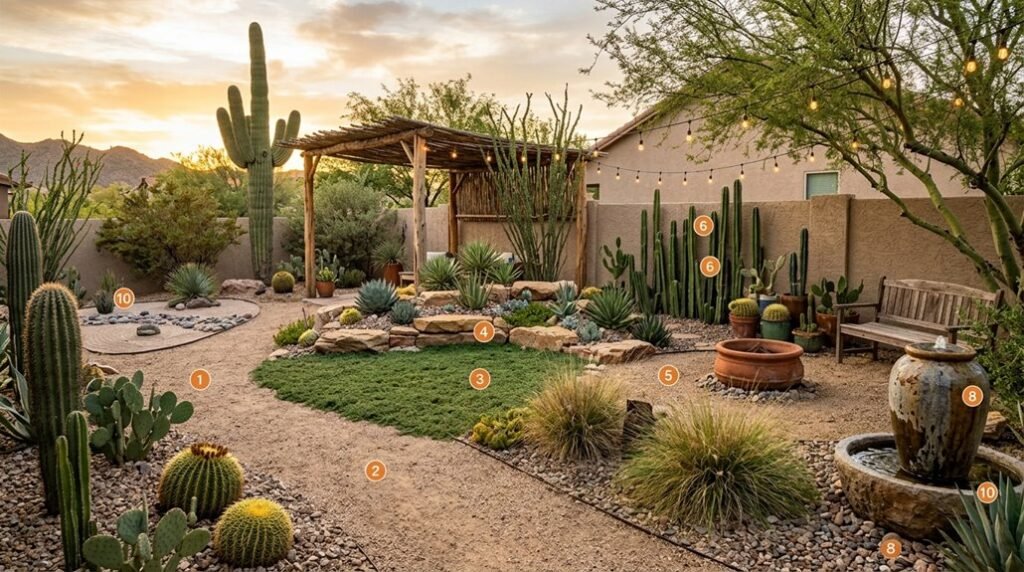
The real power comes through repetition. Massing golden barrel cacti and totem pole varieties together establishes cohesion while mimicking how these plants actually cluster in the wild. This intentional approach to drought-tolerant landscaping transforms your space into something authentically Arizonan rather than a generic resort knockoff.
What I’ve learned is that these desert dwellers thrive on neglect, rewarding you with architectural foliage that evolves beautifully across seasons. That’s the real luxury: beauty that works with your climate, not against it.
Seasonal Color & Visual Drama
How do you keep a desert scene from looking like a monochromatic sleep-aid commercial? I’ll tell you: strategic desert color choices that shift through seasons. Native Arizona plants deliver seasonal interest without demanding constant babying; they’re basically the overachievers of drought-tolerant plants.
Here’s what creates year-round visual interest:
- Color-shifting natives like yucca (hello, pink winter hues) and agave that respond to temperature swings
- Textured anchors such as ocotillo and penstemon offering architectural form and spring blooms
- Repetitive plantings of golden barrel and totem pole cacti that reinforce visual cohesion
Strategic placement of these drought-tolerant plants, paired with textured grasses and evergreen structure, delivers continuous impact. Moisture fluctuations and sun exposure guide your choices, ensuring robust growth across winter, spring, and summer. You’re not just landscaping; you’re orchestrating a bespoke seasonal symphony.
Desert Shrubs & Ornamental Grasses
Native shrubs and ornamental grasses are practical tools for creating visual interest in desert landscapes. I’ve discovered that drought-tolerant plants like Baja fairy duster and turpentine bush transform bare yards into textured spaces. Pink muhly grass waves softly, catching light like copper wire. These desert shrubs anchor your landscape while ornamental grasses soften hardscapes, avoiding overly manicured appearances.
| Plant | Texture | Water Needs |
|---|---|---|
| Chuparosa | Feathery | Minimal |
| Agave | Architectural | Drought-tolerant |
| Penstemon | Spiky | Low |
Repetition creates cohesion. Plant clusters of the same species rather than isolating individual plants to establish a unified feel. Your selected palette supports local wildlife while requiring minimal maintenance.
These native selections offer year-round foliage, shifting seasonally under stress. They’re reliable performers in your desert garden, requiring little attention once established.
Embrace Natural Shapes Over Manicured Formality
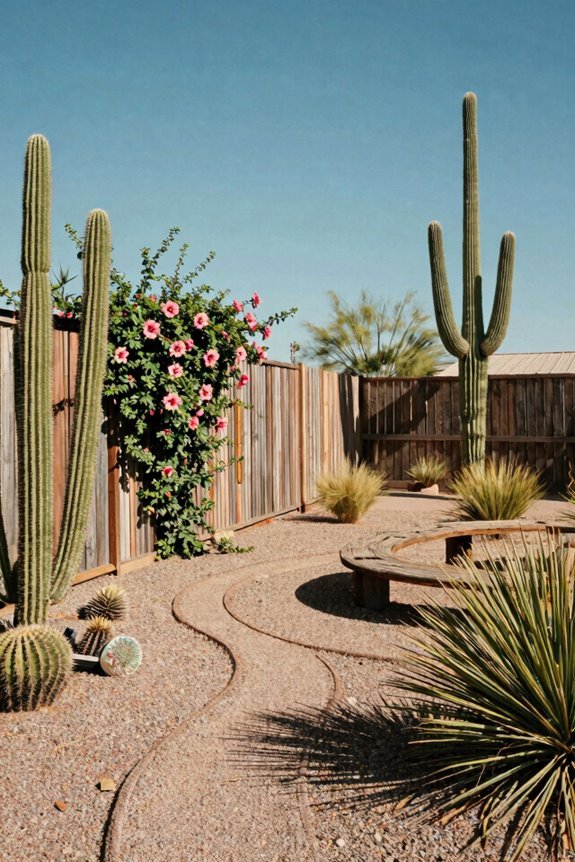
Perhaps the most liberating shift you can make in desert landscaping is abandoning the notion that plants must conform to geometric perfection. When you embrace natural shapes, your yard transforms into something authentically yours.
Here’s why this matters:
- Native plants thrive without forcing – Baja fairy duster and turpentine bush grow into their own organic forms, reducing constant pruning
- Drought-tolerant selections reward loose, spacious groupings – think flowing drifts rather than rigid rows
- Natural shapes create genuine drama – textured vegetation beats manicured monotony every time
Your desert landscape becomes bespoke and resilient when you stop wrestling plants into ball shapes. Instead, let golden barrels cluster naturally alongside ornamental grasses.
Pair this philosophy with salvaged stone or metal sculptures as focal points, and you’ve created something that feels intentional yet effortless, a space that belongs to the land, not against it.
Create Dramatic Focal Points With Structural Plants
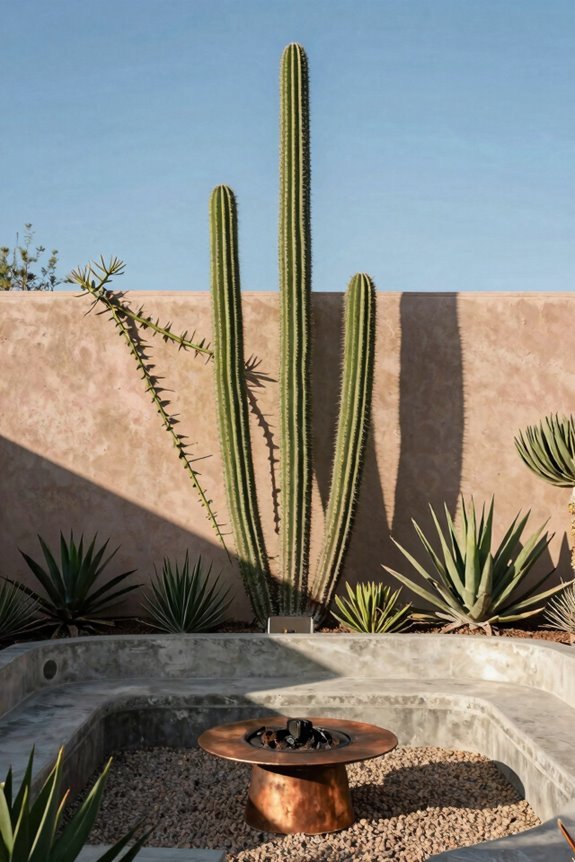
Structural plants aren’t just greenery; they’re the architectural backbone that makes your desert yard stop people in their tracks. I’ve found that architectural succulents like agave, yucca, and totem pole cacti create commanding desert landscape focal points that anchor your entire design.
The Century Plant’s dramatic 6-foot thorny leaves demand attention, while Yucca gloriosa Bright Star offers ivory-edged sword leaves that blush pink under stress. Repetition works. Massing these vertical elements throughout your yard builds cohesive, eye-catching statements that feel intentional rather than random.
Pair them with hardscape backdrops, such as raised planters or walls, to amplify their impact. Add sculptural elements nearby. You’re not just planting; you’re curating a narrative where every structural specimen earns its place.
Layer Textures Using Shrubs, Grasses, and Groundcovers
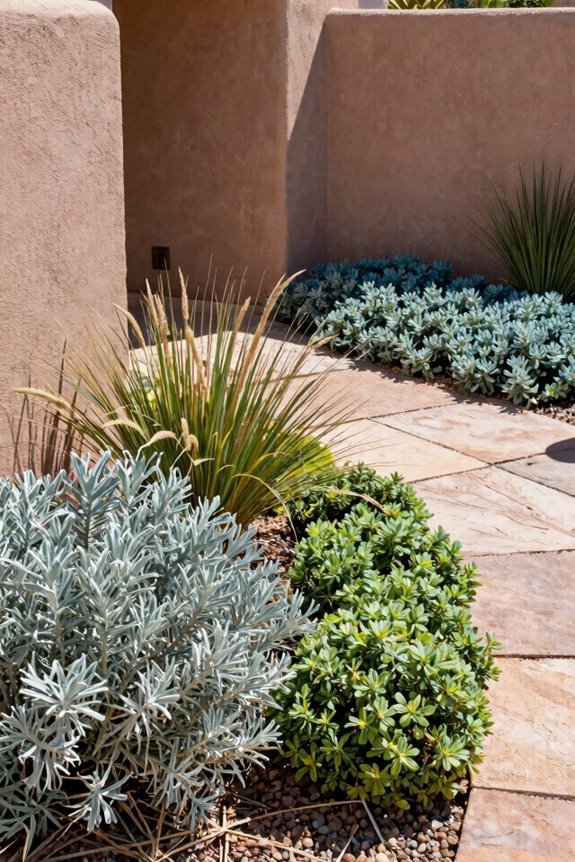
Once you’ve anchored your yard with those commanding structural plants, it’s time to fill in the narrative with texture. That’s where shrubs, grasses, and groundcovers become your strategic asset. I’ve found that layering these elements creates the visual rhythm a desert landscape truly craves.
Here’s what transforms a sparse yard into a cohesive space:
- Cluster drought-tolerant natives like chuparosa and pink muhly grass in drifts for airy, wispy movement
- Repeat texture-rich specimens such as golden barrels across your space to foster visual unity
- Anchor low-growing perennials as color carpets beneath taller shrubs for dimensional depth
Strategic placement with drip irrigation sustains these verdant layers year-round. When you combine decomposed granite with wispy grasses and soft groundcovers, you’re not just filling space. You’re crafting a bespoke desert setting that feels both intentional and effortlessly alive.
Design Hardscaping and Pathways for Arizona Desert Heat
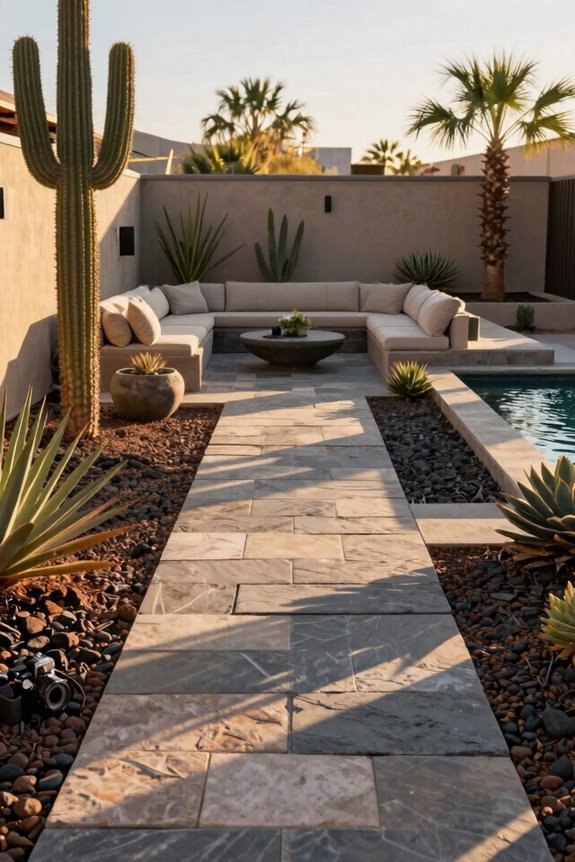
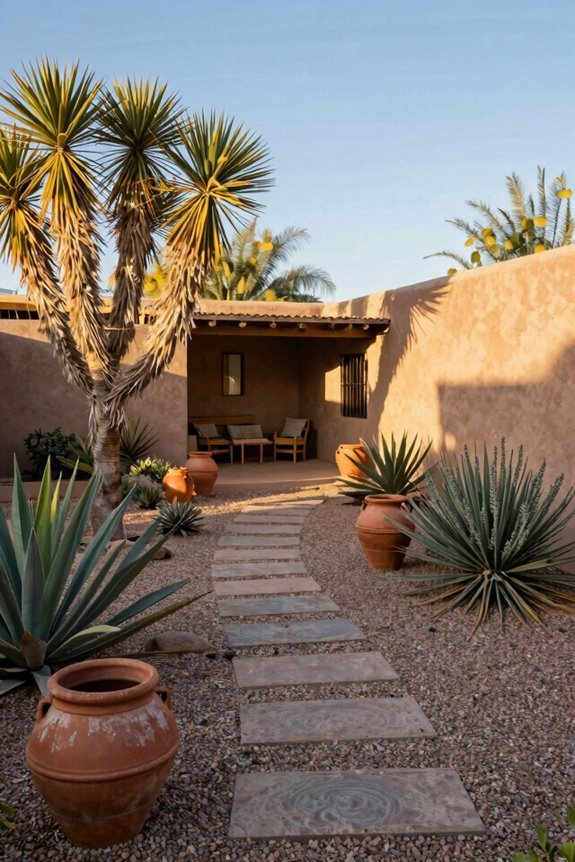
As your layered plantings mature and that lush texture becomes established, the hardscape beneath them deserves equal attention, because nothing derails a desert project faster than a pathway that turns to soup after monsoon season or a patio that radiates heat like a pizza oven at noon. I’ve found decomposed granite with stabilizer additives creates firm, mud-free walkways that embrace desert aesthetics beautifully.
Dry-lay flagstones define pathways while gravel-filled gaps invite drought-tolerant groundcovers between stones. For your hardscaping, choose terra cotta, sand, and beige palettes that harmonize with native plantings rather than clash against them. Strategic boulders in odd numbers create natural planting zones, breaking visual monotony.
Install pergolas or shade sails. These aren’t luxuries; they’re essential for protecting both you and vulnerable plants from relentless desert heat.
Exploit Seasonal Color Shifts in Desert Plants
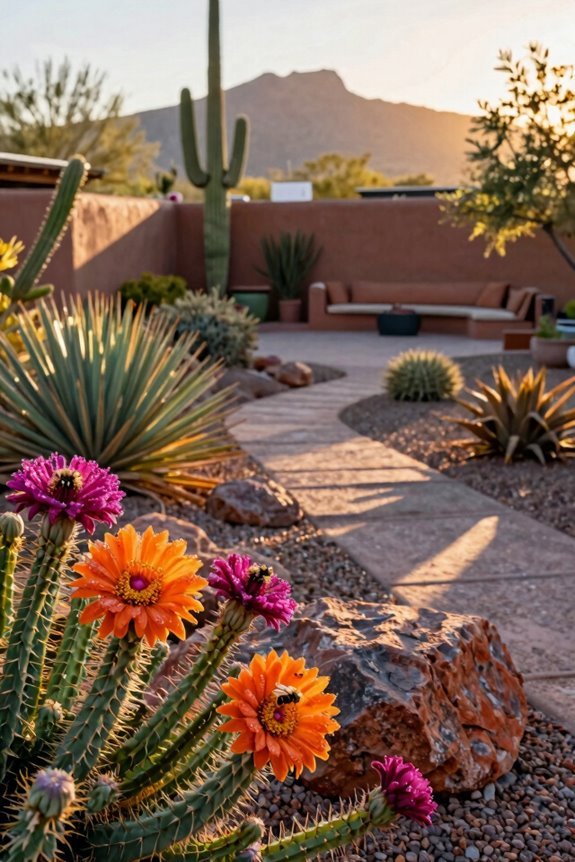
Why settle for static plants when Arizona’s climate creates a natural color shift across twelve months?
I’ve discovered that desert plants don’t just survive, they perform. Your drought-tolerant landscape changes seasonally, offering dramatic interest without extra effort. Here’s how I’ve created year-round visual appeal:
- Yucca leaves shift pink under cool weather or water stress, creating unexpected jewel tones
- Century Plants contribute 6-foot thorny silhouettes that evolve dramatically with temperature fluctuations
- Pink muhly and native shrubs (like chuparosa) blend seamlessly, maintaining textured updates
Strategic placement matters tremendously. I’ve positioned drought-adapted agaves where morning light catches their seasonal color changes. Desert grasses ripple with moisture-responsive shifts.
When you select native desert shrubs alongside ornamental varieties, your backyard becomes a living calendar. Each season reveals fresh color chapters without demanding irrigation or fuss. That’s the desert living advantage right there.
Build Privacy With Hedge Walls and Tall Plantings
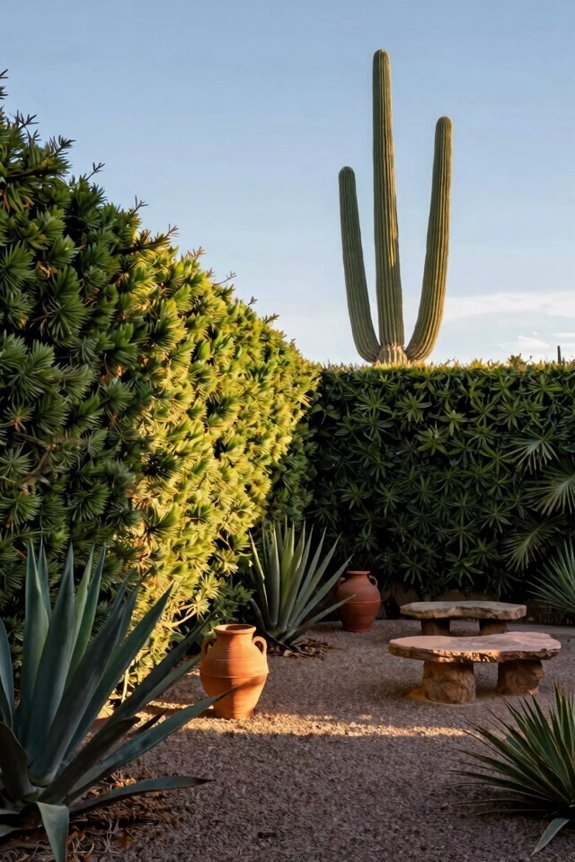
You can craft genuine seclusion in your Arizona backyard by layering Italian cypress in tight hedgerows that reach your desired height, think of them as living walls you control completely. Strategic placement of these columnar evergreens, combined with potted cacti along fence lines and even faux ivy on wrought iron, creates bespoke screening that doesn’t demand constant fussing (unlike that neighbor’s struggling lawn).
When you zone your irrigation thoughtfully so hedge walls and companion plantings drink together, you’re not just building privacy. You’re establishing a cohesive, water-smart landscape that actually does well in desert heat.
Natural Privacy Screen Solutions
Ever notice how the best desert yards don’t just hide from neighbors, they do it with style? I’ve found that creating a natural privacy screen turns your space into a comfortable outdoor retreat while respecting our arid climate.
Here’s what works beautifully:
- Italian cypress hedge walls planted densely and topped at your desired height deliver serious greenery and complete seclusion
- Faux ivy on wrought iron gives you that green aesthetic without demanding constant pruning (desert-appropriate design, hello)
- Potted cacti arrangements along fence lines add vertical interest while maintaining drought-tolerant landscaping principles
The real magic happens when you plan drought-tolerant irrigation strategically. I designate my front-yard as a single irrigation zone with drip lines aligned perfectly to sustain hedge walls. It’s bespoke screening that actually performs well here.
Your privacy screen becomes less burden, more blessing.
Tall Desert Plant Selections
When you’re ready to move beyond faux ivy and potted arrangements, tall desert plants become your privacy powerhouses, transforming bare walls into living screens that actually flourish here. I’ve found that vertical accents like Palo Verde, Velvet Mesquite, and Desert Willow create layered screening while establishing microclimates that benefit surrounding plantings.
For cohesive structure, repetition matters. Columnar forms like totem pole cactus and golden barrels deliver low-maintenance greenery with architectural punch. They’re like nature’s exclamation points and way less demanding than most neighbors.
When spacing your tall desert plantings, think odd-number groupings with larger specimens anchoring behind mid-height elements. This maximizes concealment without crowding. Add climbing vines over structures for extra texture, and you’ve built privacy screens that actually enhance usability while keeping that authentic desert aesthetic intact.
Strategic Planting For Seclusion
How do you turn a see-through backyard into a private retreat? I’ve discovered that strategic planting transforms exposure into enclosure, creating the secluded space you’re craving.
- Italian cypress hedge walls grown densely together form impenetrable privacy screens that add vertical structure while requiring minimal water
- Topped at your desired height, these drought-tolerant plantings adapt seasonally, giving you flexible control over sightlines
- Potted cacti lined along fences create architectural rhythm; a living barrier that’s both practical and visually striking
I recommend layering varied plant sizes within your hedge walls. This layered approach builds visual interest while achieving cohesive seclusion.
The dense greenery blocks prying eyes without sacrificing desert authenticity. For alternative fencing options, faux ivy offers year-round coverage without relentless pruning. These drought-tolerant planting strategies don’t just shield your space; they cultivate belonging.
Maximize Small Arizona Backyards With Vertical Gardens
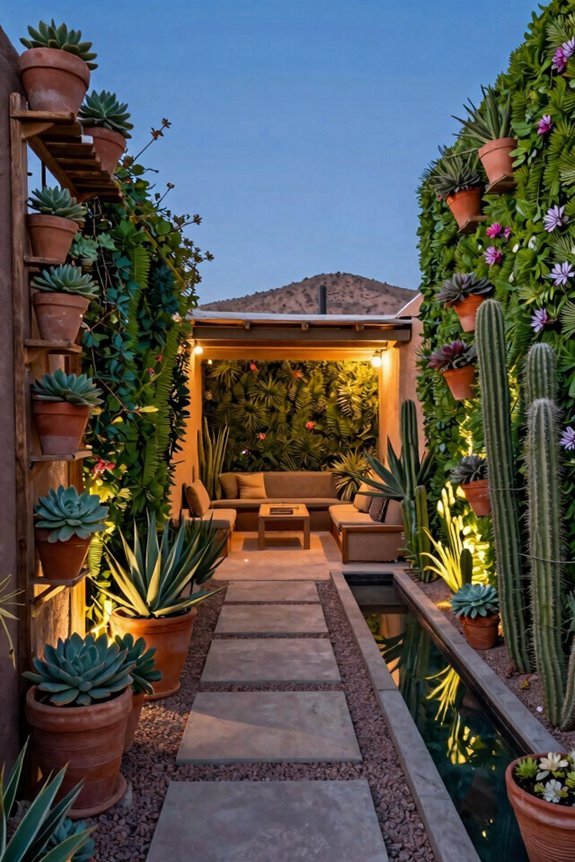
Because ground space in Arizona’s compact yards is precious real estate, going vertical isn’t just smart, it’s highly effective. I’ve discovered that mounting climbing plants and wall-mounted planters creates lush greenery without sacrificing that coveted ground real estate. Metal or fiberglass wall features become functional art, working hard while enhancing visual appeal.
Here’s where drought-tolerant plants shine. Training vines over pergolas delivers cooling shade while columnar cacti and succulents nestle into wall niches, their minimal water needs aligning perfectly with desert landscaping principles. Repetition creates rhythm; staggered wall pockets holding bespoke plant combinations establish visual cohesion in tight spaces.
This approach transforms blank walls into living galleries. Your vertical gardens become the foundation of your desert landscape, proving that sometimes the best direction is up.