
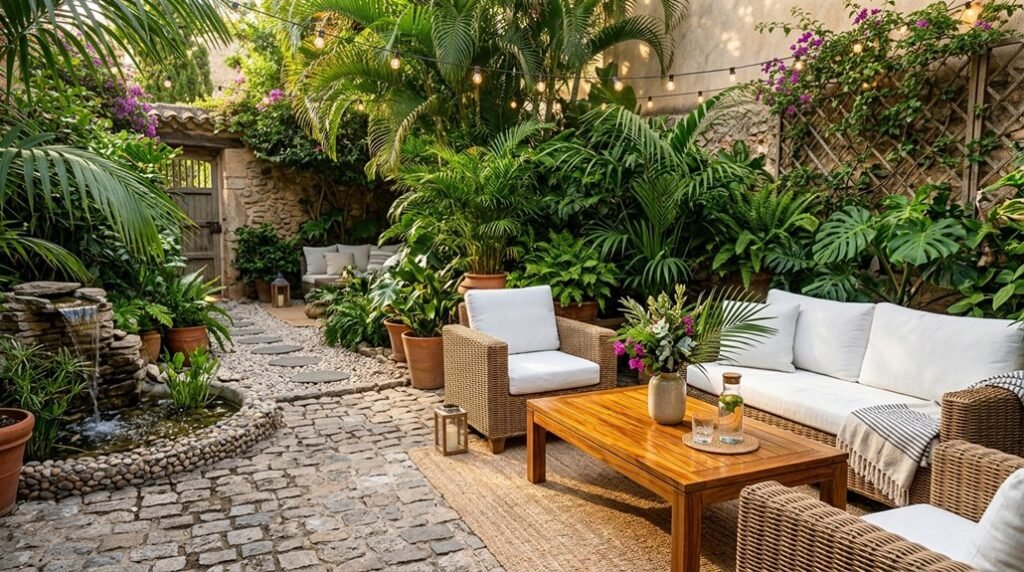
I’ll transform your patio into a peaceful retreat without leaving home.
Your outdoor space probably feels either scorched or shadowy, with awkward corners that nobody wants to sit in (we’ve all been there).
But here’s the thing: with intentional layering, strategic plantings, and a few design moves, you can create a real retreat right outside your door.
The question isn’t whether it’s possible; it’s which of these seven approaches fits your space and vision.
Let’s find out.
Assess Your Patio’s Light and Space Before Choosing Plants
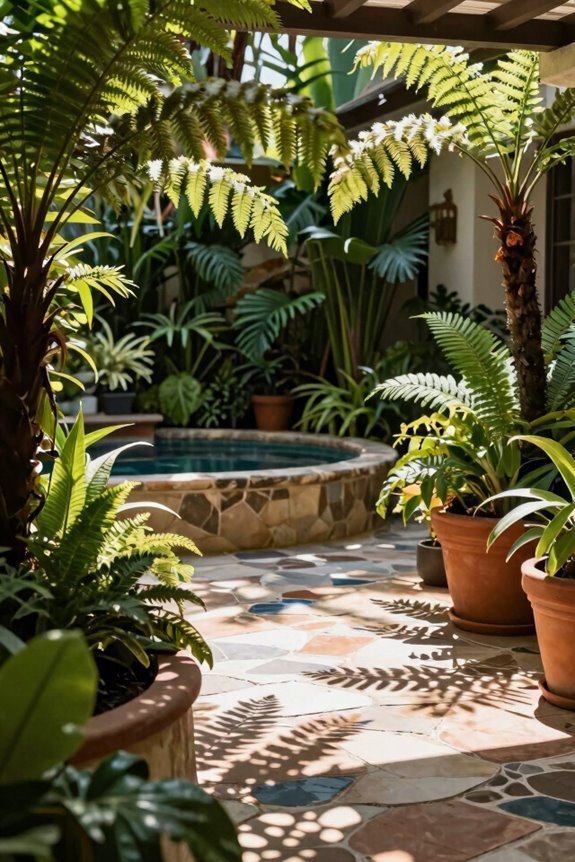
How’s your patio actually performing throughout the year? I’ve learned that successful transformations begin with honest assessment, not wishful thinking. Watch your space across seasons, noting where winter shade pools and summer sun blazes. This matters because plants thrive when conditions match their needs.
I strategically evaluate lighting patterns, identifying microclimates where shade-tolerant plants like Acanthus mollis and Strelitzia nicolai flourish. These architectural plants command attention without demanding relentless sunshine. I also consider reflectivity: pale pebbles and light-green Pothos bounce available light around darker corners, creating luminous depth.
The real secret? I position tall plants deliberately. They’re not random décor but functional shade-makers. Understanding your patio’s unique light journey lets you craft customized planting schemes where everything actually survives, transforming ordinary space into your personal retreat.
Select Shade-Tolerant Plants for Year-Round Greenery
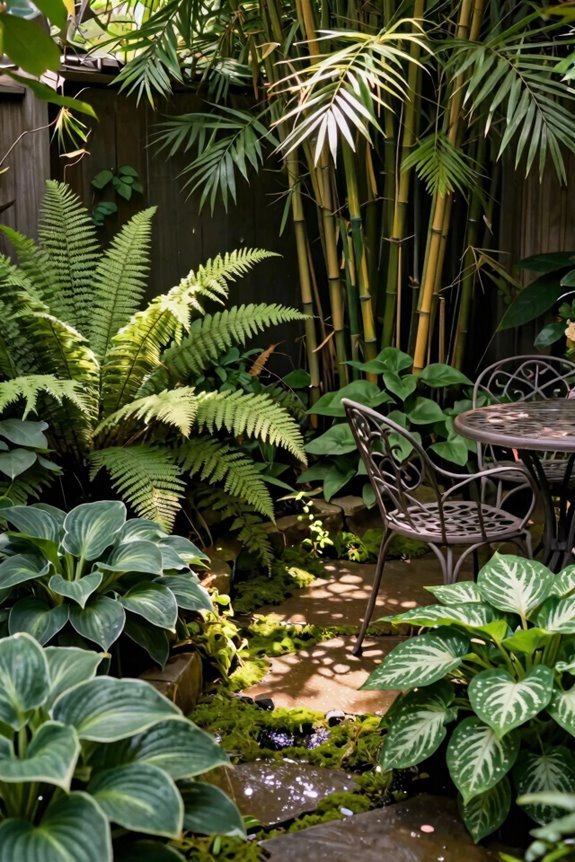
Once you’ve mapped your patio’s light patterns, I’d recommend choosing shade-tolerant plants like Acanto, Strelitzia nicolai, and Farficus pandurata. Each offers distinct architectural qualities that transform dim corners into focal points filled with greenery.
To amplify vegetation in shadowy zones, layer in ground covers and reflective elements such as pale pebbles, Pothos, and variegated Tradescantia that bounce light around like botanical mirrors. This combination of bold structural foliage and brightening accents creates year-round greenery without demanding sunbathing hours your patio simply can’t provide.
Best Plants For Shade
Why do so many patio designs fail in shadier corners? I’ve discovered the secret: choosing the right plants changes those dim spots into green, peaceful areas. Acanto delivers elegant dark-green foliage that practically glows in shadow, making it my go-to structural plant. For drama, Ave del paraíso commands attention with its striking vertical presence, a plant that captures conversation in low-light conditions.
Bananero offers bold, oversized leaves perfect for moist, half-shaded areas, creating instant visual impact. Begonia hybrids bring year-round color with cane-like stems that add sophisticated height. Finally, Ficus pandurata handles heavy shade without complaint, providing evergreen structure in tight spaces.
These shade-tolerant plants aren’t just functional; they’re customized solutions that’ll make your patio feel like a place where you truly belong.
Structural Foliage Features
Now that you’ve got the right shade plants in your corner, let’s talk about making them work harder, specifically by choosing plants that’ll give your patio genuine architectural bones year-round.
I’m talking about structural foliage that actually earns its square footage. Acanto delivers those dramatic, sculptural leaves that anchor any corner, bouncing back even after disturbance. Ave del paraíso towers impressively, becoming your living focal point. For tighter spaces, Ficus pandurata anchors vertically without demanding room to sprawl.
What makes these choices brilliant? They’re not just present, they’re present meaningfully. Their structural leaves transform bare shade into layered, intentional design. Bananero offers rapid vertical drama with those magnificent leaves, though you’ll prune strategically. Begonias add delicate canes threading through the composition.
Your patio doesn’t need perfection. It needs custom foliage that works as hard as you do.
Ground Cover Lighting Solutions
How do you coax lush verdure from corners where sunlight barely whispers hello? I’ve discovered that ground cover lighting solutions transform shadowy patios into welcoming spaces. Here’s my bespoke strategy for shading success:
- Pothos cascading from elevated planters: their waxy leaves catch filtered light beautifully
- Soleirolia soleirolii (Irish moss) paired with pale pebbles: creates luminous texture underfoot
- Lamium’s silvery-variegated foliage brightening dark zones: no fussy maintenance required
- Sedum spp. in sun-pocket microclimates: hardy little survivors that earn their space
I’ve learned that combining shade-tolerant plants with light-reflective gravels maximizes visibility year-round. This isn’t just gardening; it’s crafting spaces where you’ll actually want to linger.
The verdant ground cover absorbs the mood you’re creating while strategic lighting amplifies perceived brightness. You’re not fighting darkness; you’re designing around it.
Arrange Plants by Height and Texture for Visual Depth
When you’re stacking your patio’s verdure like a botanical wedding cake, something shifts: suddenly you’ve got depth where there was once just flatness. Arranging plants by height creates natural focal points that make your space feel infinitely larger.
I layer taller specimens like Ave del paraíso at the back, mid-height Begonias in the middle, and creeping Sedum at the edges. This tiered approach isn’t just visually appealing; it’s strategic. The varying textures and foliage, from glossy Farfugium leaves to architectural Acanthus foliage, transform a flat patio into something distinctive and layered.
| Altura | Plantas | Texturas | Función |
|---|---|---|---|
| Alto | Ave del paraíso | Arquitectónica | Foco trasero |
| Medio | Acanto, Begonias | Contrastante | Transición |
| Bajo | Sedum, Soleirolia | Delicada | Borde |
| Luz | Piedras pálidas | Reflectante | Brillo |
Repeating this arrangement across zones guides your eye naturally, expanding perceived space while creating the cohesive outdoor retreat you’re seeking.
Position Seating to Maximize Comfort and Views

I’ve found that positioning your seating strategically changes a patio from a mere outdoor space into a comfortable retreat where comfort and scenery work together. You’ll want to arrange your furniture, whether it’s a weather-resistant sectional, individual lounge chairs, or a mix of both, to face your garden’s natural focal points: a meandering path, a trickling fountain, or that distant tree line that makes you forget the neighbors exist.
Creating distinct shade zones with pergolas or strategically placed tall plantings of screening plants not only shields you from the midday heat but also frames your views like a carefully curated gallery, ensuring every sightline feels intentional and every seat tells a story.
Arrange Furniture for Conversation
Why do the best conversations happen when you’re actually facing each other? I’ll tell you: it’s because eye contact builds connection. When I arrange my patio for meaningful chat, I create a semi-circle layout that invites genuine engagement around plants and natural focal points.
Here’s my approach to fostering conversation:
- Position seating in U-shaped configurations facing central plant clusters or water features
- Mix chair heights, pairing upholstered seats with wooden benches for ergonomic comfort
- Place low-profile tables within arm’s reach for drinks and natural conversation cues
- Clear pathways around furniture for unrestricted movement and accessibility
This custom arrangement transforms your patio into a plant-framed space. I’ve found that when people can actually see each other’s expressions, conversations deepen. The physical setup becomes invisible; only the connection remains.
Orient Seating Toward Best Views
Now that your furniture faces people instead of blank walls, let’s point those seats toward something actually worth looking at. Your garden deserves an audience, and your seats deserve a proper show.
I’d position seating to capture your garden’s best features: that focal tree, water feature, or sweeping vista that makes you actually want to sit outside. Layer plantings strategically so you’ve got greenery framing your views without blocking them entirely. Think of it as creating bespoke sightlines.
| View Type | Best Orientation |
|---|---|
| Water features | Direct, unobstructed angle |
| Focal trees | Slightly angled for depth |
| Open sky | Elevated sightlines |
| Garden vistas | Layered perspective |
| Sculptures | Eye-level positioning |
Consider microclimates too. Afternoon shade without glare on your face transforms everything. Strategic placement of taller plants behind seating frames your vistas perfectly, maximizing both visual access and genuine relaxation.
Create Shade and Shelter Zones
How much comfort are you actually getting from that perfect view if you’re squinting against the afternoon sun?
I’ve learned that true patio bliss requires strategic shade. It’s the difference between lounging and suffering. Here’s how I create shelter zones that work:
- Layer tall trees with mid-height shrubs to form natural canopies reducing midday heat by several degrees
- Install a pergola above seating areas, framing your vista while filtering harsh rays
- Add semi-shade plants like Strelitzia and Begonias, maintaining greenery where sunlight’s scarce
- Deploy movable outdoor curtains and retractable awnings for customized shade that adapts throughout the day
Your patio transforms when you balance exposure with shelter. I’ve discovered that clustered furniture with generous legroom under protective foliage creates those intimate gathering spots we want. Shelter isn’t just practical; it’s where connection happens.
Use Reflective Surfaces and Light Colors to Brighten Dark Corners

Because shaded patios can feel like caves, albeit stylish ones, strategic use of reflective surfaces and pale tones brightens those gloomy corners into luminous retreats. Light-colored stones and pale ground covers act as natural mirrors, bouncing precious daylight onto seating areas and plants alike. Consider incorporating glossy planters and glass accents; they’re effective tools against dimness.
Light-green plants like Pothos create an ethereal under-canopy feel while maximizing leaf reflective properties. Position lush specimens to cast dappled patterns across surfaces, increasing perceived brightness without electrical lighting. Combine these reflective surfaces with warm LED fixtures mounted overhead. This bespoke approach maintains ambient brightness at dusk while preserving natural colors. You’re not fighting shadows anymore; you’re orchestrating light itself.
Install Warm Lighting to Extend Your Oasis Into Evening
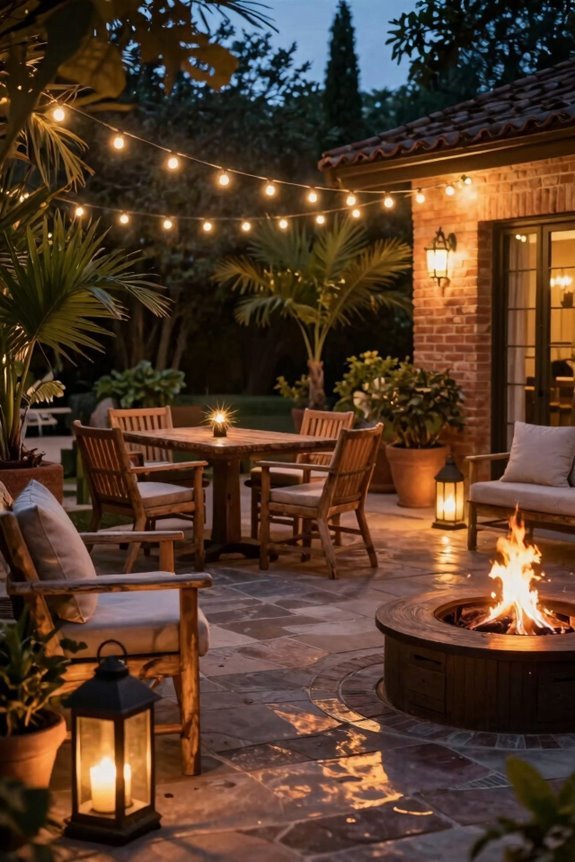
As twilight descends and your patio’s natural luminosity fades, thoughtfully layered lighting transforms those shadowy hours into an extension of your daytime retreat. I’d recommend embracing warm color temperatures around 2700–3000K, which create that inviting warm atmosphere perfect for lingering conversations.
Here’s how to craft your custom exterior lighting:
- Layer ambient lights overhead to bathe your entire space in soft, honeyed glow
- Position task lighting along pathways so you’re not stumbling through the plants (safety meets style)
- Highlight focal points: fountains, sculptures, flowering shrubs with accent lights for drama
- Install dimmable LED fixtures to adjust mood and reduce energy consumption
These lit areas define your outdoor retreat beautifully. Smart controls let you automate evening sequences, so your sanctuary’s already glowing when you step outside. That’s belonging redefined.
Add Water and Fragrant Plants for Multisensory Richness
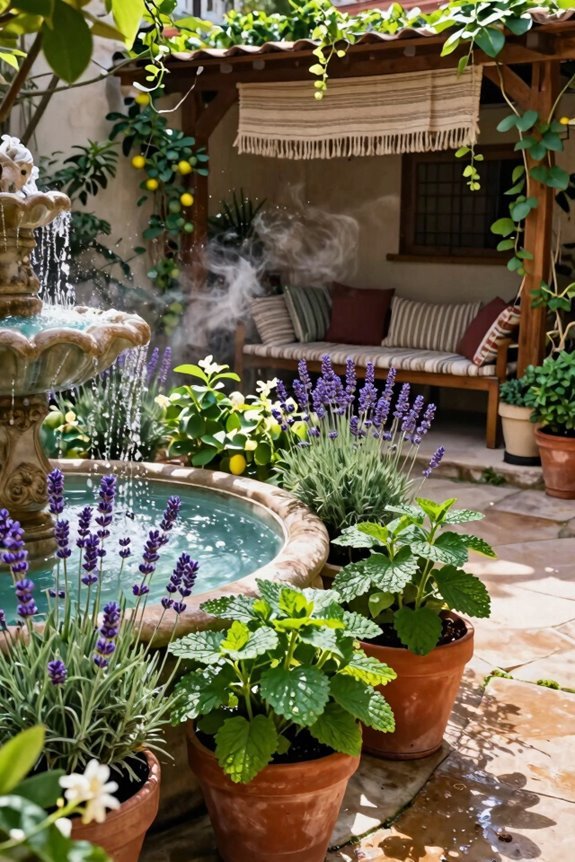
Your patio’s transformation isn’t complete until you engage the senses beyond sight. Water’s an effective tool for this purpose. I’d introduce a modest fountain or reflective basin beneath the shade of overhead structures; the gentle murmur creates an auditory anchor that elevates ordinary afternoons into peaceful moments.
Now layer in fragrant plants. Citrus varieties, aromatic herbs, and fragrant flowers don’t just smell pleasant—they signal you’ve arrived somewhere special. I’d position moisture-tolerant specimens like Begonias and Strelitzia in tiered arrangements: tall scent producers anchoring back rows, mid-height bloomers creating depth, low ground covers softening edges.
The key is regular misting, which preserves plant health and intensifies fragrance. This multisensory approach—water, fragrant plants, and shade working together—turns your patio from overlooked corner into the gathering place everyone gravitates toward, yes, even your reluctant neighbors.