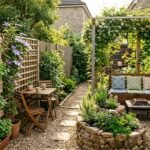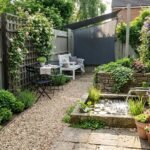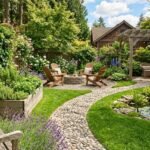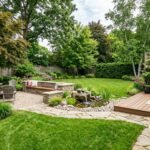
I’ve learned that transforming your outdoor space into a garden café requires thoughtful planning rather than simply placing furniture and hoping it works. You’ll need to understand your sunlight patterns, soil conditions, and traffic flow before you commit to anything permanent.
The right materials, such as teak, powder-coated aluminum, and weatherproof cushions, make all the difference between a space that remains in good condition year-round and one that deteriorates by autumn. But here’s where it gets interesting: the real magic happens when you layer these elements strategically, creating zones that feel both intimate and inviting.
So where do you start?
Assess Your Space: Layout, Sunlight, and Traffic Flow
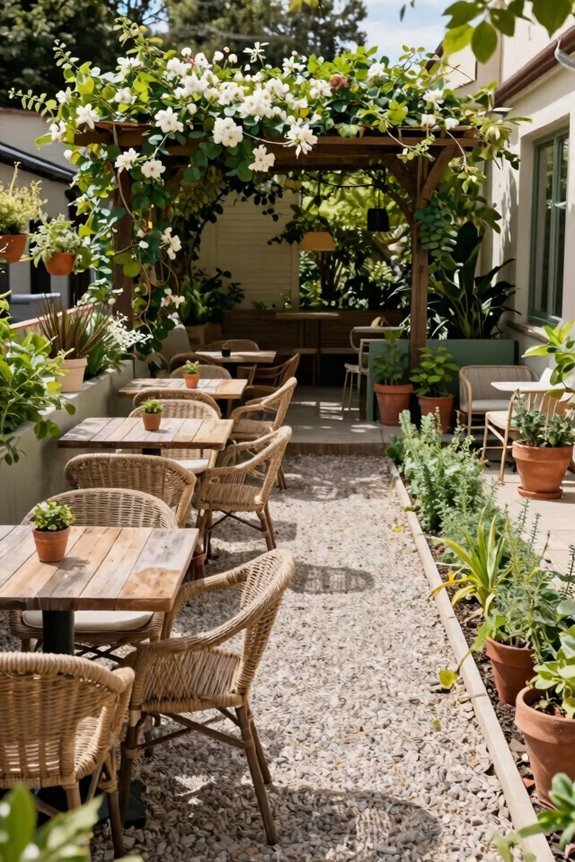
Before you design your garden cafe, you’ll want to actually understand what you’re working with, not just glance out the window and call it done. Start by measuring your space honestly. Note those awkward corners, slopes, or that massive oak tree you’re not removing (smart move).
Next, track sunlight throughout the day. Morning rays hitting your eastern edge? Perfect for early coffee seekers. Afternoon shadows creeping westward? That’s where you’ll position your outdoor seating for comfort.
Now observe traffic flow, how do guests naturally move through the space? Your layout should whisper directions rather than shout them. These detailed observations convert raw outdoor space into functional cafe zones that actually work.
Choose a Garden Café Style That Fits Your Vision
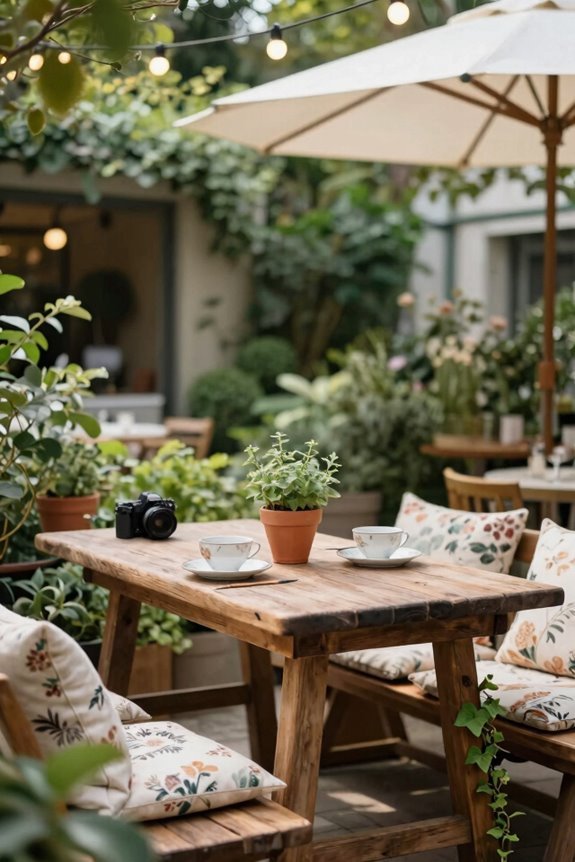
Now that you’ve mapped your space’s sunlight patterns and traffic flow, you’ll want to choose a style that actually works for how you live, not just how it looks online. I’ve found that the best garden cafés blend personal aesthetic with practical functionality.
Whether you’re drawn to tropical settings with rattan furniture, minimalist monochrome with Vellino granite tiles, or industrial raw wood paired with concrete, your choice should reflect both who you are and what you’ll realistically maintain. The trick is asking yourself: do I want a nostalgic 1970s vibe with curved metal chairs, or am I more of a person who prefers abundant greenery among ornamental plants and would rather let nature do the heavy lifting, both literally and aesthetically?
Define Your Personal Aesthetic
Your garden café’s personality begins long before you place the first chair; it starts with deciding which aesthetic speaks to your soul. Do you crave lush greenery and island vibes? Tropical Design might be your match, layering palm and banana trees with oversized planters to transform your outdoor space into a getaway.
Picture yourself sipping coffee beneath swaying fronds while strategic seating invites lingering conversations. Alternatively, maybe minimalist monochrome appeals: sleek black granite tiles, neutral furnishings, and restraint itself becomes the statement. Or perhaps vintage charm calls to you, with curved metal chairs, wooden tables, and retro posters whispering 1970s nostalgia.
Each aesthetic shapes how guests experience your space, influencing everything from plant selection to seating arrangement. Your choice isn’t just decoration; it’s orchestrating belonging.
Align Style With Functionality
Aesthetics alone won’t keep your guests comfortable when a sudden downpour hits or the afternoon sun turns your seating area into a furnace. I’ve learned that true style emerges when design meets durability. Your chosen outdoor aesthetic should dictate every practical decision, from furniture materials to terrain preparation.
Consider teak dining tables for Rustic charm or powder-coated aluminum for Minimalist spaces. Each style demands specific functionality. Mediterranean designs thrive on drought-tolerant plants and earthy textures that naturally suit arid terrain. Tropical themes require robust weather-resistant fabrics and strategic canopy placement.
The best results happen when form and function work together. Your custom garden cafe becomes truly livable, not just appealing to social media, when every chair withstands seasons and every pathway flows intuitively. Style without functionality is just expensive decoration.
Select Weather-Resistant Materials and Furniture
Because your garden café will face relentless sun, rain, and temperature swings, the foundation of its longevity rests on smart material choices. I’d recommend investing in outdoor furniture crafted from teak, acacia wood, powder-coated aluminum, or resin wicker, materials that withstand severe weather conditions. Your durable seating deserves UV-resistant fabrics and rot-resistant cushions that maintain their color season after season.
Don’t overlook weatherproof hardware and rust-proof metal frames, which prevent corrosion. For flooring, porous stone or concrete tile like Vellino gray delivers slip-resistant, easy-to-clean practicality. Consider modular, scalable designs that adapt swiftly when crowds swell or storms demand quick reconfiguration. These thoughtful choices create a welcoming café space that endures.
Build a Solid Patio Foundation
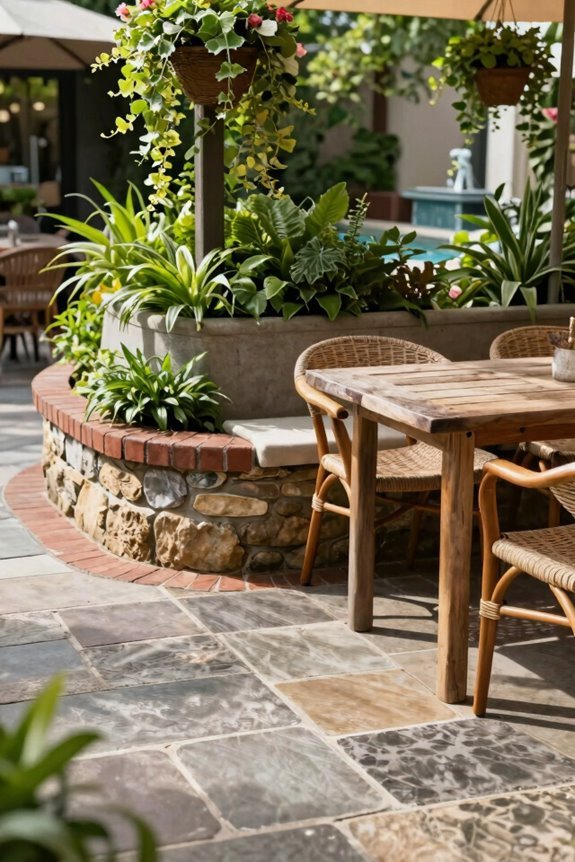
How do you expect your garden café to stand firm when storms roll through and guests gather for weekend brunches? Your patio foundation is everything; it’s the unsung hero supporting your outdoor seating and dreams of al fresco dining.
I’d recommend installing a compacted gravel base topped with concrete or permeable pavers (they’re basically the responsible cousin of regular pavers). This creates a stable, level surface that won’t settle into your landscape like an exhausted guest after dessert.
Integrate proper drainage by sloping your patio slightly away from structures, preventing puddles that’ll damage your durable materials and invite weeds like uninvited relatives. A moisture barrier prevents moisture damage underneath. These foundational choices transform your backyard from sketchy to sturdy, ensuring your garden café remains the community gathering spot everyone wants.
Map Out Zones: Dining, Lounging, and Social Areas
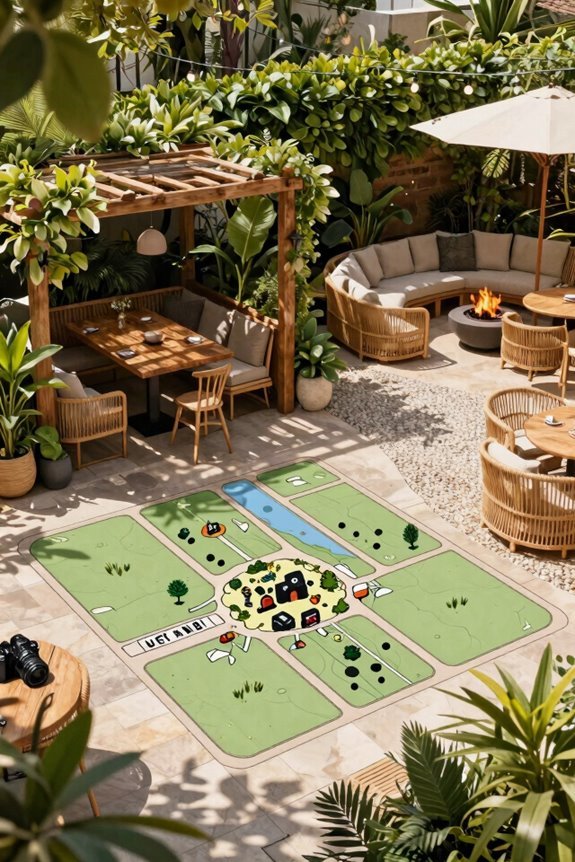
I’ve found that mapping out distinct zones changes a backyard from chaotic to café-like, and it all starts with understanding how you actually move through and use the space. You’ll want to position your dining area where sunlight hits naturally, or in shade depending on your climate. Tuck lounging furniture into wind-sheltered corners with low hedges as visual dividers, and create a separate social hub near a water feature or fire pit that pulls people together without interrupting the other zones.
The key is maintaining sightlines across all three areas while using bespoke furniture sets, strategic lighting, and subtle ambient elements to reinforce each zone’s purpose without turning your garden into a maze.
Functional Layout Planning
The foundation of any successful garden café rests on thoughtful spatial organization: dividing your outdoor space into distinct dining, lounging, and social zones that flow naturally without feeling cramped or chaotic. I’ve found that strategic layout planning transforms functionality into an experience.
Here’s what I prioritize:
- Dining zones positioned for optimal sunlight and wind protection
- Lounging areas tucked into quieter corners for genuine refuge
- Social hubs centered where energy naturally congregates
- Service access routes designed to minimize staff cross-traffic
Visual boundaries, such as terracotta planters or contrasting pavers, define zones without walls, preserving sightlines across your plant-filled space. This bespoke approach ensures guests drift seamlessly between areas while servers navigate efficiently behind the scenes.
Flow isn’t accidental; it’s intentional design that feels effortless.
Flow and Spatial Organization
Once you’ve locked in your layout’s bones, thoughtful movement planning becomes essential when you map out where people gather, linger, and flow, because a garden café depends on smooth circulation rather than congestion.
I create distinct zones using strategic zoning techniques. Your dining area needs clear sightlines to the service station, so guests can easily locate coffee without confusion. I delineate pathways with contrasting materials—perhaps permeable pavers leading to seating while gravel defines lounging alcoves. This visual separation prevents bottlenecks without walls.
Furniture styles and planters act as gentle boundaries between zones, maintaining cohesion through your bespoke color palette. Your main entry should funnel guests naturally toward the café’s heart, minimizing cross-traffic that turns your garden into an obstacle course.
Smart flow means guests drift effortlessly between spaces, savoring your verdure-framed setting.
Layer Shade and Lighting for Year-Round Comfort
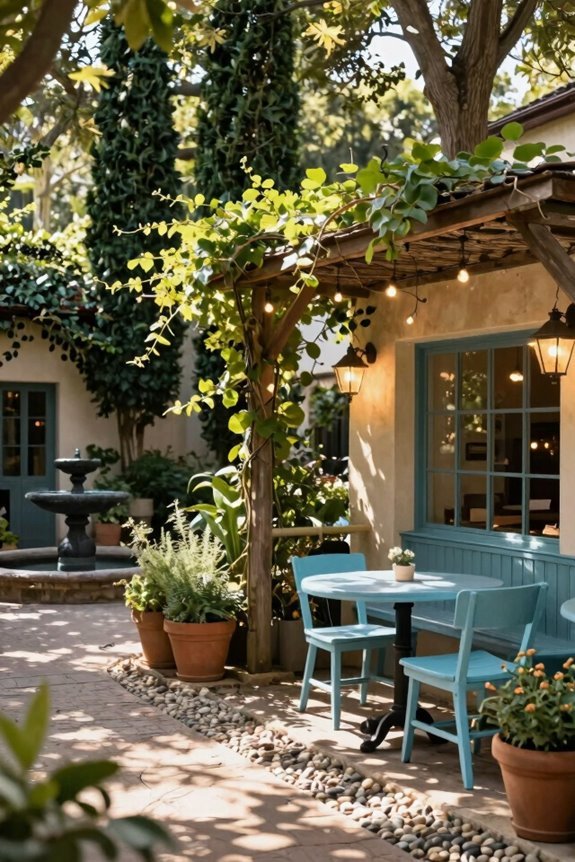
How do you stretch those precious outdoor hours from a quick lunch into a lingering evening affair? Layering shade and lighting extends your garden café into a year-round comfort zone. I’ve discovered that combining natural shade from pergolas with dappled greenery creates an inviting retreat without sacrificing openness.
Layering shade and lighting transforms your garden into a year-round retreat that welcomes lingering evenings.
Your outdoor dining experience improves dramatically when you:
- Install string lights and task lighting for evening readability
- Choose weather-resistant LED fixtures in warm color temperatures
- Position overhangs to filter harsh midday glare
- Zone lighting separately for dining, lounging, and pathways
This bespoke approach means you’re not abandoning your space when the sun dips. Instead, you’re welcoming guests into varied atmospheres throughout the evening.
Strategic outdoor lighting paired with thoughtful shade planning doesn’t just extend usability. It creates real connection in your outdoor space, even in winter.
Fill Your Café Garden With Greenery and Planters
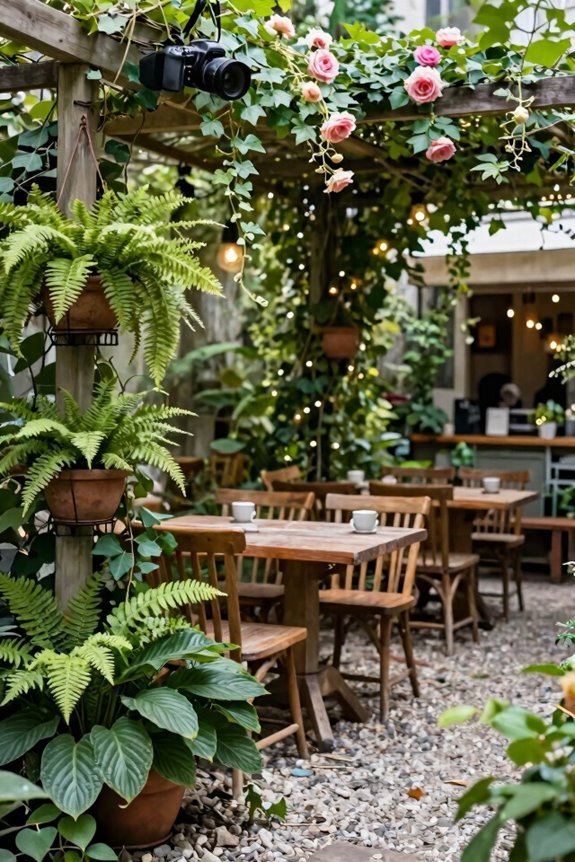
I’ve discovered that container gardens offer you unmatched flexibility; you can shuffle your verdure around seasonally without committing to permanent beds, which is perfect when you’re still figuring out your café’s personality. Native plants in these bespoke containers require less fussing, a win for your maintenance schedule, while delivering authentic regional character that makes your space feel deeply connected to its surroundings.
Container Gardens For Flexibility
Because your café garden doesn’t need to be permanent to be beautiful, container gardens offer the perfect solution for creating full, transformable outdoor spaces. I’ve found that planters give you creative freedom without commitment. You can pivot your design seasonally, relocate arrangements easily, and experiment with tropical plants without worrying about soil conditions.
Here’s why I love this flexibility:
- Swap seasonal displays without permanent landscaping changes
- Move planters around to refresh sightlines and guest flow
- Test tropical plant combinations before committing fully
- Adjust container gardens as your outdoor cafe evolves
Trees in pots, such as Japanese maples, crabapples, and flowering cherries, deliver canopy drama instantly. Ornamental grasses add texture and movement within your planters, creating visual interest from every seating angle.
This approach lets you build an intimate, verdant atmosphere that feels intentional and bespoke, not static.
Native Plants And Maintenance
Why settle for thirsty ornamentals that’ll drain your water bill and your patience when native plants do the sturdy work for you? I’ve discovered that drought-tolerant species like sage, yarrow, and coneflower make my café garden easier to maintain. These resilient beauties thrive with minimal irrigation while simultaneously supporting local pollinators, basically providing natural pest control for your landscape.
The real advantage comes from grouping plants by sun exposure and soil type. I arrange my natives strategically, ensuring each species gets its proper growing conditions. This thoughtful placement cuts maintenance dramatically, meaning no more struggling specimens.
Mixing flowering perennials throughout creates continuous seasonal color and attracts butterflies and bees all year. Your café garden becomes self-sustaining rather than needy. That’s the native plant advantage: beautiful results without the constant fussing.
Create Focal Points: Cabanas, Water Features, or Fire Pits
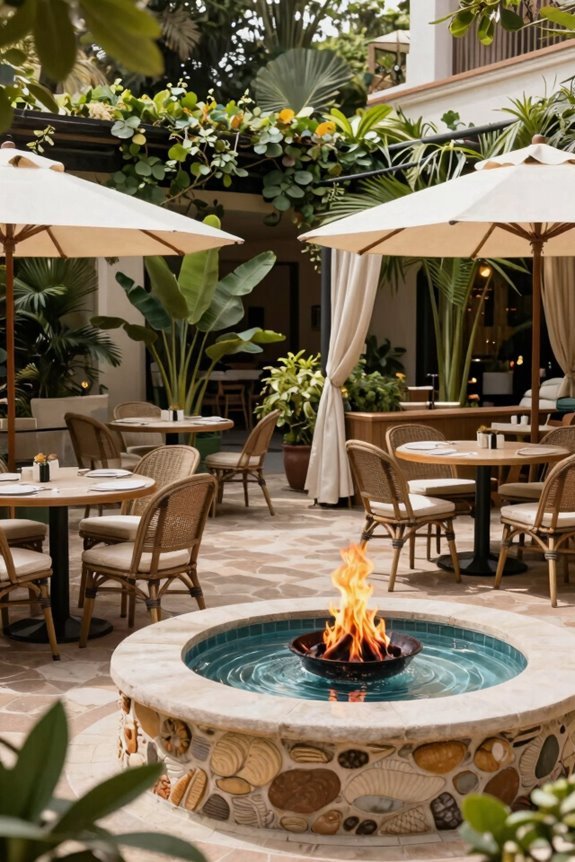
How do you transform a sprawling garden into an intimate gathering space? I’ve found that strategic focal points, cabanas, water features, and fire pits, create appeal. They’re not just pretty; they’re conversation anchors that draw people in.
Consider these elements:
Cabanas offer privacy, water features soothe with sound, fire pits warm cool evenings, and trellises frame it all beautifully.
- Cabanas offer privacy and exclusivity within your larger cafe space
- Water features (fountains, koi ponds) deliver soothing soundscapes that calm the mind
- Fire pits extend entertaining into cooler evenings with cozy warmth
- Trellises or canopies frame these features as visual anchors throughout your garden
I’d recommend coordinating materials—brick, natural stone, or weathered wood—so everything feels bespoke rather than mismatched. Each focal point should whisper, “Linger here,” creating intimate zones that make guests actually want to stay.
Your garden shifts from empty space into a destination.
Weave In Working Details: Herbs, Storage, and Covers
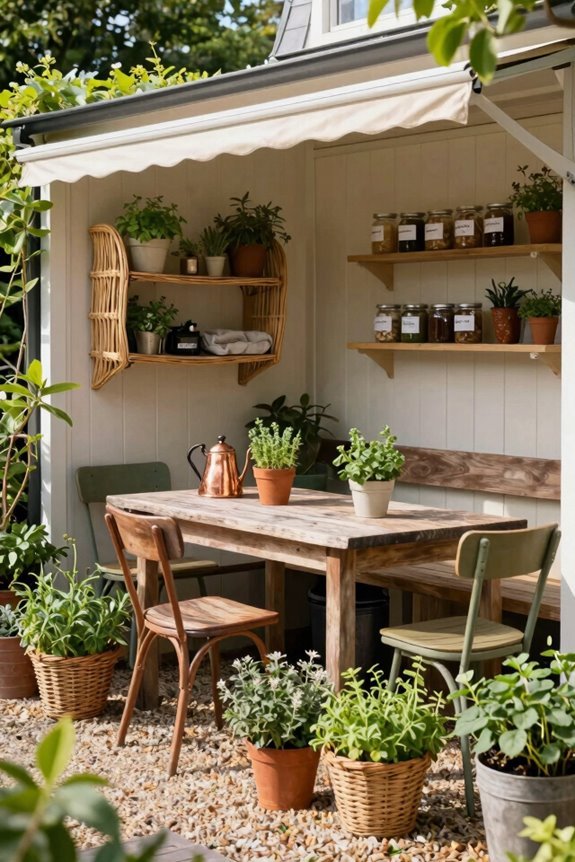
A garden cafe succeeds when it balances beauty with utility, and that’s where herbs, smart storage, and protective covers enter the scene. I’ve found that positioning self-watering planters near your service counter creates a fresh herb station that guests can admire while you grab fresh basil or oregano mid-shift. Weatherproof, labeled herb pots eliminate confusion, as nobody wants surprise mint in their lemonade.
Your storage solutions, whether bespoke wooden boxes or galvanized metal shelving, keep supplies organized and accessible without cluttering sightlines.
| Feature | Benefit | Material |
|---|---|---|
| Self-watering planters | Reduced maintenance | Recycled composite |
| Decorative fencing | Defined zones | Cedar or vinyl |
| Seasonal herb rotation | Year-round appeal | Varies by climate |
Strategic covers protect everything during off-hours, keeping your workspace pristine and functional.
Test Your Layout and Adjust for Seasons
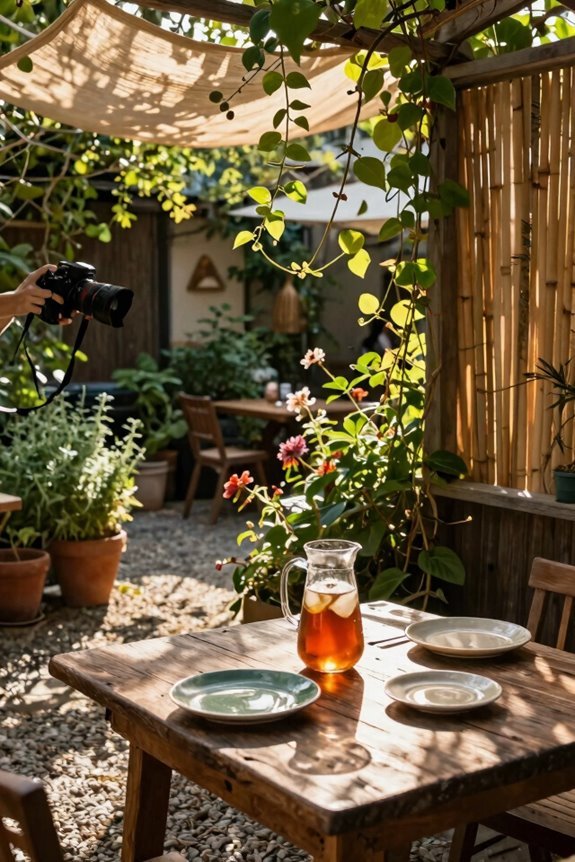
Once you’ve stocked your herb station and squared away storage, the real payoff comes when you stop imagining and start mapping. A garden cafe that looks good in a photograph but funnels guests into an awkward traffic jam isn’t winning any loyalty awards.
Map seating zones first: dining clusters, lounging nooks, social hubs. Then trace the flow from entrance through each area. You’ll want to test sun patterns at dawn, noon, and dusk; positioning umbrellas strategically prevents that midday heat.
Map seating zones by dining clusters and lounging nooks, then trace guest flow while testing sun patterns throughout the day.
Here’s what I prioritize:
- Sketch furniture placement using free tools like Google SketchUp
- Run seasonal simulations to adjust plantings and heating needs
- Create windbreaks and drainage systems for weather resilience
- Verify clearances around planters prevent stubbed toes
This customized testing turns your outdoor seating from theoretical to genuinely welcoming. It becomes a space that actually works across seasons.