
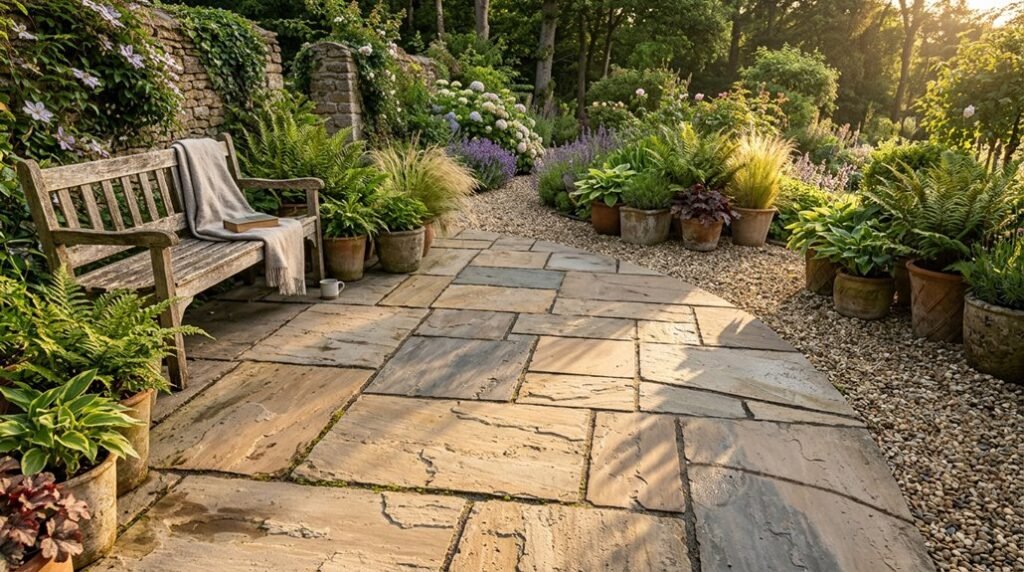
I’ve discovered that transforming your outdoor space doesn’t require a landscape architect’s budget, just the right stone choices and intentional planning.
Whether you’re drawn to Indiana limestone’s warm Mediterranean glow or Woodbury Gray Granite’s understated sophistication, your patio’s foundation hinges on matching materials to your climate and aesthetic.
The real appeal happens when you layer in purposeful zones, strategic textures, and those unexpected elements like fire pits that turn a simple stone surface into a destination.
Choose the Right Stone for Your Climate and Style
How do you pick a stone that’ll actually stick around—literally and figuratively?
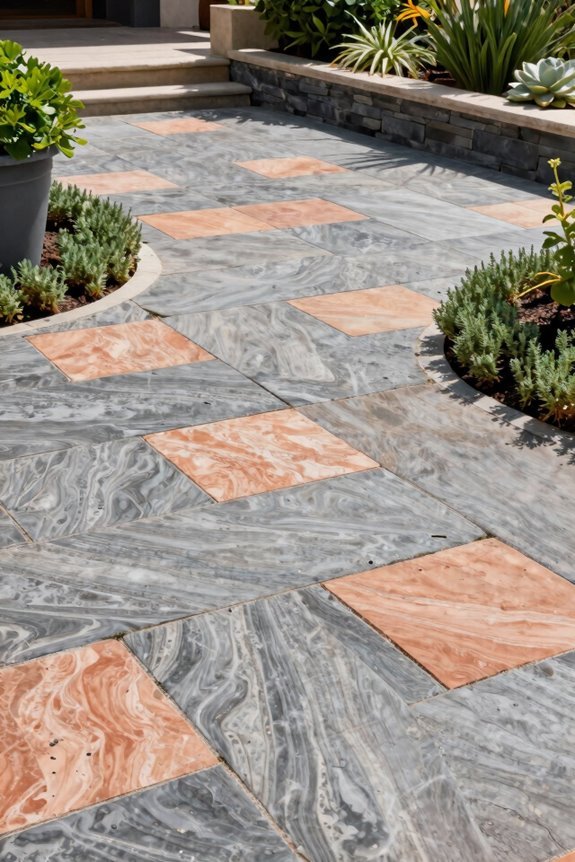
I’ve found that matching your stone to your climate creates an outdoor space worth spending time in. Indiana limestone whispers Mediterranean charm while delivering impressive weather resistance for regions with freeze-thaw cycles. If you’re leaning New England aesthetic, Woodbury Gray Granite stands firm with 4,000–20,000+ psi compressive strength that withstands winter’s abuse.
Your natural stone options expand dramatically when you consider climate-appropriate choices. Georgia Marble Pearl Grey offers modern sophistication with real durability. I prioritize North American sourcing because it guarantees quality control and aligns with sustainable practices.
Beyond durability specs, these bespoke materials adapt beautifully into various patterns, creating personalized outdoor spaces that reflect both your style and your region’s character.
Plan Your Patio Layout Around Traffic Flow and Focal Points
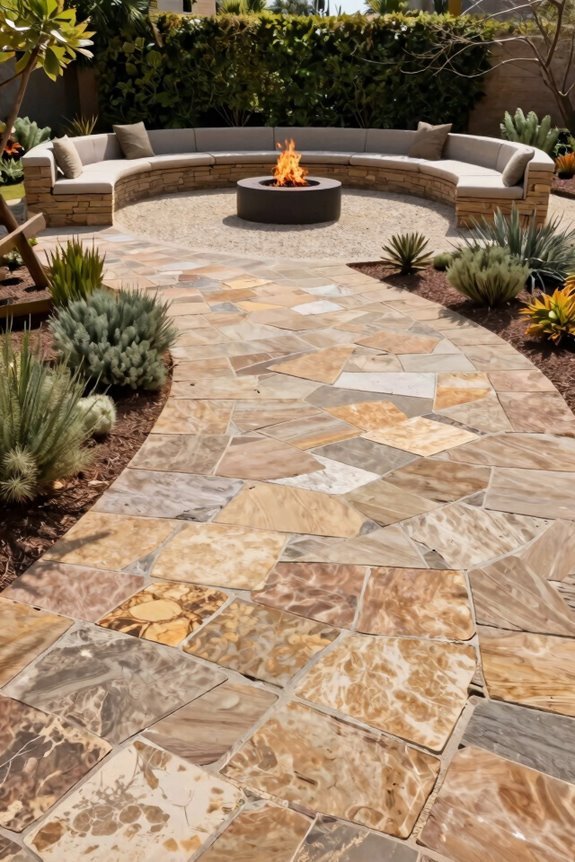
Once you’ve locked in your stone—say, that hardy Woodbury Gray Granite or elegant Georgia Marble—it’s time to orchestrate how people actually move through your outdoor living space. Your patio layout shouldn’t feel like a maze (nobody wants to shimmy sideways past the grill). Instead, I’d create clear pathways that funnel guests naturally from indoors toward your focal points.
Your patio layout shouldn’t feel like a maze—create clear pathways that funnel guests naturally toward your focal points.
Here’s what I’d prioritize:
- Establish 3–4 feet of walking space between furniture and edges
- Align primary traffic paths with eye-catching features like fire pits or water features
- Carve out distinct zones: cooking, dining, lounging (think bespoke rooms outdoors)
- Use pavers and stepping stones as gentle guides
- Check sightlines from indoor windows; your focal points deserve an audience
This choreography transforms wandering into belonging.
Design Stone Patterns, Colors, and Textures for Visual Interest
With your layout locked in and pathways established, you can layer in pattern, color, and texture to create visual interest. A perfectly arranged patio that looks bland is like serving gourmet food on a paper plate.
I’d recommend starting with natural stone patterns that resonate with your home’s personality. Herringbone layouts create dynamic movement, while running bond patterns deliver timeless elegance. Georgia Marble Pearl Grey and Woodbury Gray Granite offer sophisticated color palettes that age beautifully.
Your texture choice matters equally: honed finishes suit formal gathering spaces, whereas thermal-textured surfaces grip better in high-traffic zones. Safety meets style with the right selection.
Consider incorporating bespoke inlays or borders; they’re conversation starters disguised as paver designs. These outdoor patio ideas transform functional surfaces into personal galleries. Let regional stone’s unique character and developing patina tell your home’s story.
Create Separate Zones for Entertaining, Dining, and Relaxation
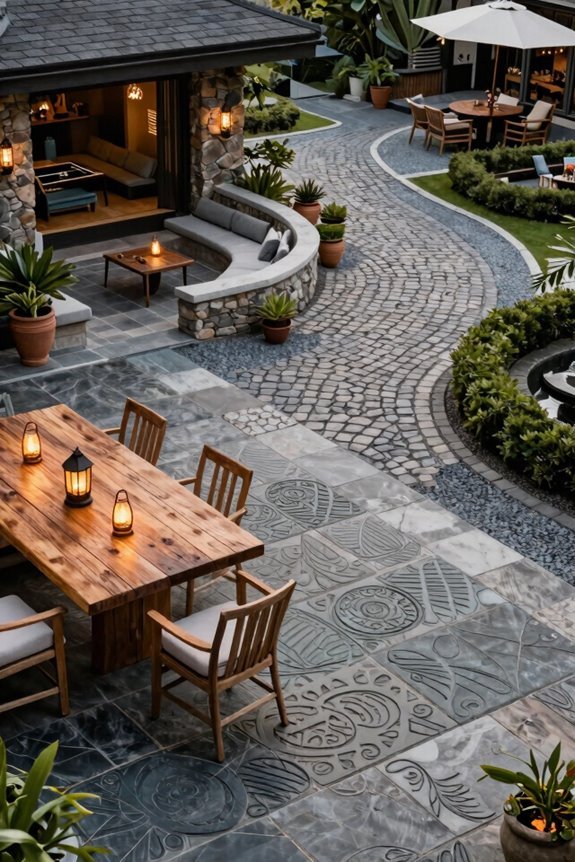
Your stone patio becomes far more functional when you stop treating it as one monolithic gathering space and instead architect distinct zones that flow together like rooms in an outdoor home. Creating separate areas transforms your entertaining potential dramatically.
Here’s how I’d approach it:
- Dining zone: Install a larger, flat stone surface with weatherproof seating and a built-in outdoor kitchen for effortless entertaining
- Lounge area: Layer deeper seating with soft textures on your stone patio foundation for real relaxation
- Visual separation: Use contrasting paver patterns and low-profile planter separators (no walls needed, thankfully)
- Pergola coverage: Shield your dining zone from harsh sun or rain
- Bespoke materials: Mix stone types to define each space naturally
This approach creates belonging. Guests instinctively understand where to gather, dine, or unwind. Your stone patio becomes a cohesive retreat, not just concrete real estate.
Enhance Your Patio With Fire Pits, Water Features, or Shade Structures
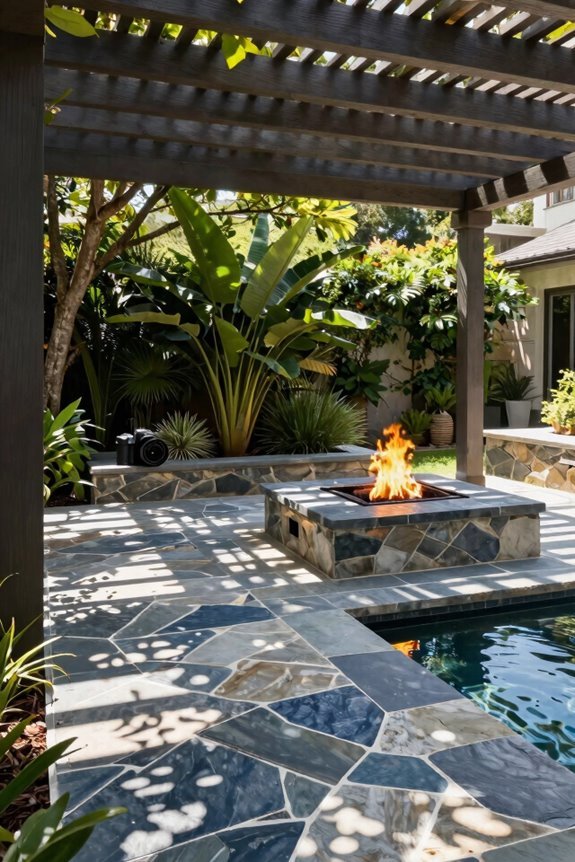
Now that you’ve carved out distinct zones, it’s time to layer in the elements that turn a functional patio into an appealing outdoor retreat. A fire pit centered on your stone patio becomes the heartbeat of gatherings, especially when evenings cool down. I’d recommend durable materials like sandstone or granite; they’ll weather beautifully for years.
Pair this with a water feature, such as a modest waterfall or pond, to add soothing soundscapes and visual intrigue. Then, crown your seating area with a pergola or shade structure. This trio of fire pit, water feature, and shade structure creates the custom retreat you’re craving. Built-in seating around these focal points maximizes your stone patio’s social potential while keeping sightlines crisp and inviting, balancing comfort with aesthetics.
Finish Your Patio With Borders and Hardscaping Details
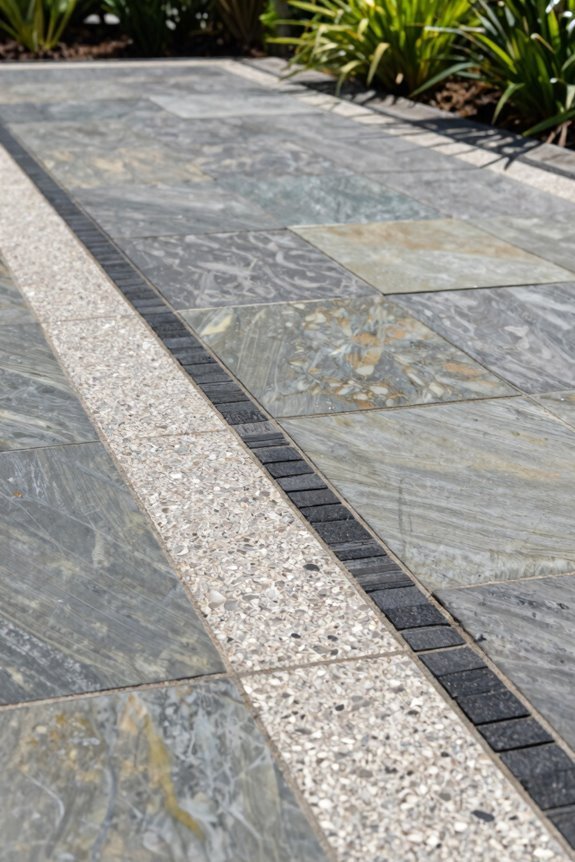
I’ll walk you through the finishing touches that give a basic patio a polished feel. Borders and hardscaping details are essential to the final look. You’ve got choices here: concrete edging for clean lines, natural stone like bluestone or granite for rustic charm, or even metal restraints (steel or aluminum) that keep everything in place while looking sleek and intentional.
Proper edge restraint installation prevents those frustrating paver shifts and settles that nagging worry about your carefully laid stones moving over time. The right edging solution makes all the difference in maintaining your patio’s appearance and structural integrity.
Defining Border Materials and Styles
Have you ever noticed how a picture frame completes a painting? Your patio’s border does exactly that; it’s the unsung hero that brings scattered stones together into a unified design.
I’ve learned that selecting the right edging material is important. Here’s what shapes a polished perimeter:
- Aluminum edge restraints prevent pavers from creeping outward (no wandering stones allowed)
- Concrete curbing offers durability and clean lines that anchor your design
- Natural stone borders echo your patio’s aesthetic while defining boundaries
- Invisible edge systems preserve seamless visuals while securing your base
- Contrasting material strips frame patterns like herringbone, creating visual rhythm
The perimeter you choose isn’t merely functional; it’s your design’s signature. Whether you’re drawn to bespoke timber edging or sleek metal restraints, proper border selection guides foot traffic, extends longevity, and welcomes guests into your thoughtfully composed outdoor space.
Edge Restraint Installation Techniques
Choosing your border material is just the beginning; the real work starts when you actually install it. Proper edge restraint installation makes a significant difference in patio longevity. Metal or concrete edge restraints anchor your perimeter gaps, preventing that creeping effect where pavers slowly migrate outward.
You’ll want to set them slightly below the surface so your mower can pass over them smoothly. For seamless edging, invisible systems work well and leave no visible border lines. They require careful base preparation and drainage considerations to prevent water pooling at edges.
On sloped sites, retaining walls double as both edge supports and bespoke seating areas. I recommend selecting restraints matching your specific paver type and local climate, ensuring minimal maintenance needs down the road.
Maintain Your Stone Patio for Long-Term Beauty and Durability
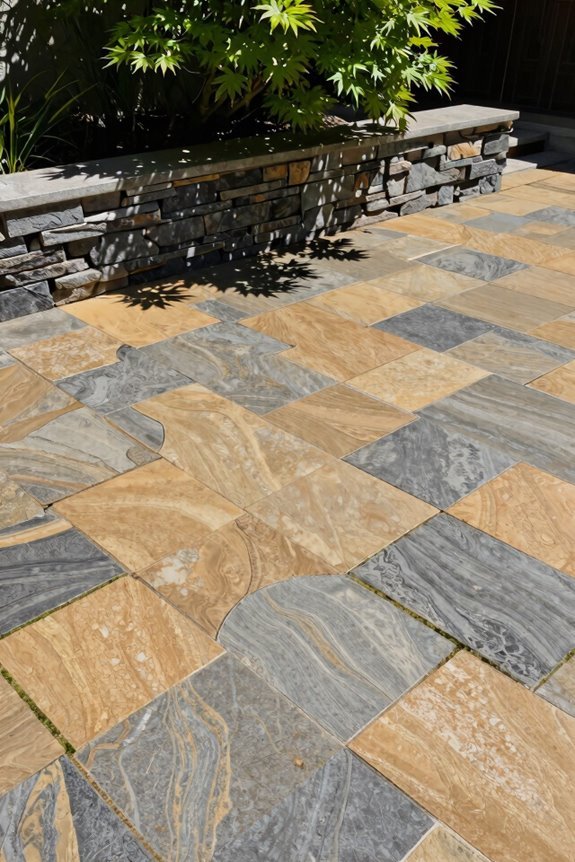
Once you’ve invested in a beautiful stone patio, the real work begins, not because maintenance is arduous, but because it’s the difference between a patio that ages gracefully and one that succumbs to algae, erosion, and the slow creep of neglect.
I’ve learned that stone patio maintenance isn’t complicated; it’s deliberate. Here’s your bespoke approach:
- Regular cleaning with soap and water prevents staining on natural stone surfaces
- Seal every 3-5 years to shield against moss growth and salt damage
- Inspect water features periodically; stagnant pumps ruin patios faster than forgotten elements
- Monitor edge restraints to prevent shifting (yes, pavers wander without boundaries)
- Choose Unilock products for durability paired with straightforward care guidance
Your stone patio becomes what you make it through consistent attention. That’s not burden, that’s ownership.