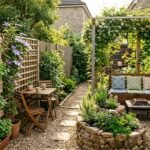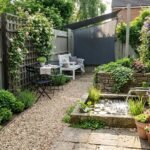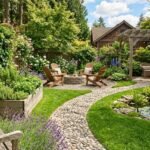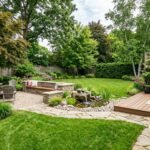
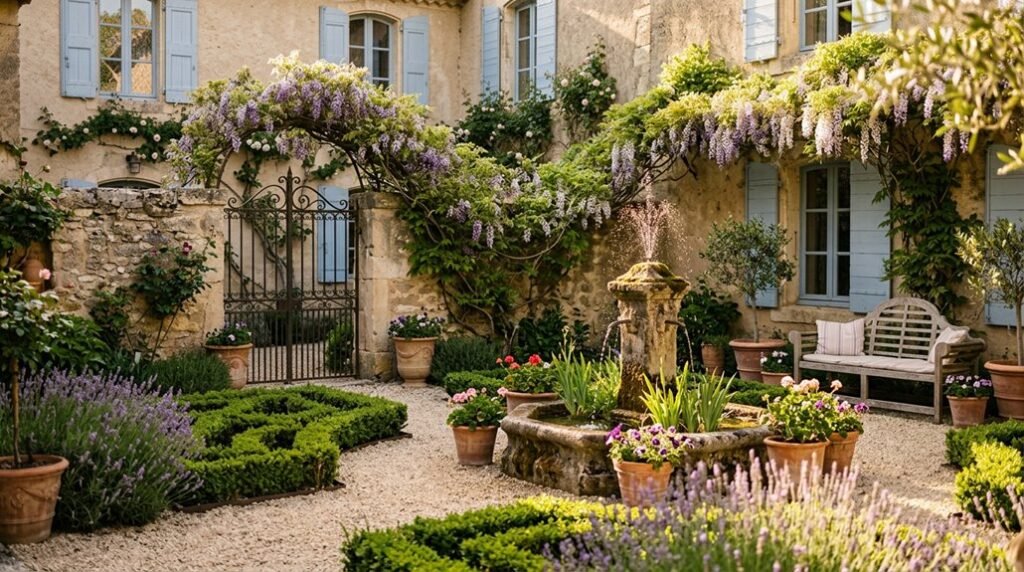
I’ve noticed that the most captivating French courtyards aren’t actually complicated; they’re just intentional. You’ll find that axial planning and layered symmetry create spaces that feel both curated and effortlessly sophisticated (no small feat, really). A single fountain or weathered stone basin anchors everything, while gravel pathways and boxwood hedges establish quiet movement throughout.
But here’s where it gets interesting: the real magic emerges when you layer in the details. Cast-iron furniture, heirloom roses, and espaliered fruit trees transform a simple courtyard into something with lasting appeal.
Start With Axis Planning to Establish Your Courtyard’s Structure
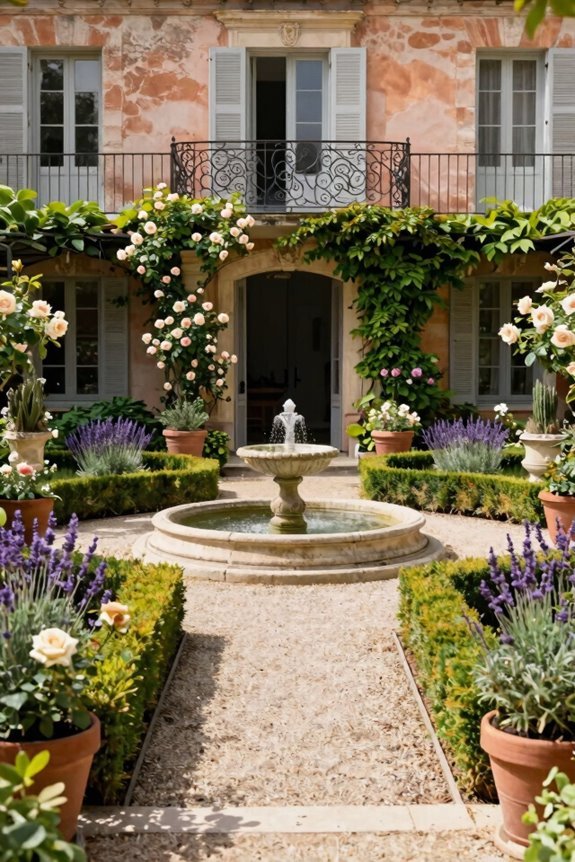
The foundation of any French courtyard garden worth its salt rests on axis planning, a deliberate organizational strategy that will transform your outdoor space from haphazard to intentional. This approach frames a specific view or landmark, creating depth and guiding your eye and feet through the space. I’ve found that symmetry reinforces the classic aesthetic while pulling visitors toward central focal points.
You’re naturally creating a visual conversation between architecture and plants. Position hedges and boxwood strategically as thresholds, defining separate garden rooms within your courtyard. This custom structure isn’t just beautiful; it’s functional. By designing around an axis, you’re establishing the skeleton upon which everything else hangs.
Your courtyard transforms from confused corners into purposeful zones, each inviting discovery.
Design French Garden Pathways With Gravel and Hedged Rooms
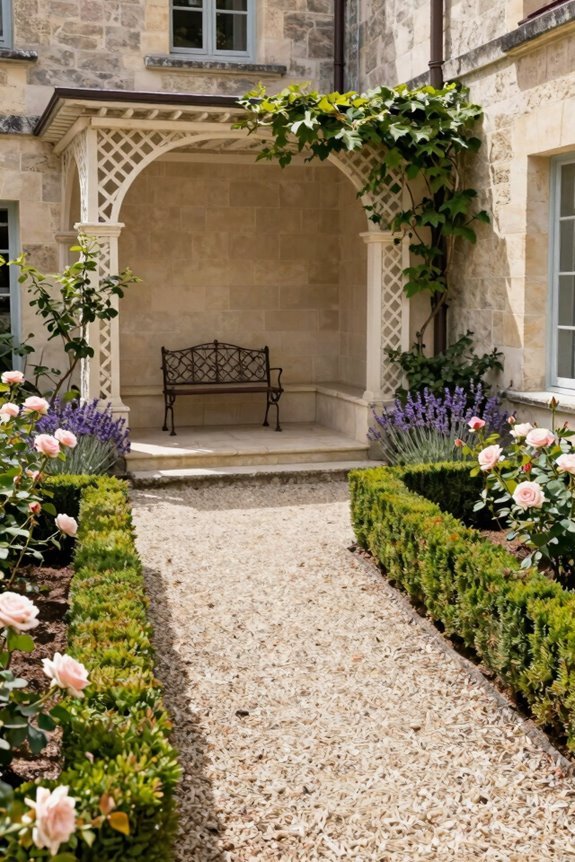
Once you’ve established your axis, I’d recommend crafting pathways from fine gravel; it’ll whisper beneath your feet rather than clang like stone, and it visually anchors each garden room you’re about to create. Paired hedges (boxwood works beautifully for year-round verdure) act as living thresholds, guiding you from one bespoke courtyard to the next while keeping each space private and intentional.
The combination transforms your pathway into a choreographed journey, where movement and enclosure work together. Think of it as your garden’s circulatory system, keeping everything flowing yet structured.
Gravel Pathways Create Movement
How do you guide visitors through a French garden without resorting to brass plaques and directional signs? The answer lies beneath your feet. I’ve found that pea gravel pathways are nature’s quiet conductors, orchestrating movement through your courtyard with elegant subtlety.
These light-colored surfaces draw the eye forward, creating soft, intuitive circulation that feels less like navigation and more like discovery. The crunching underfoot? That’s your garden whispering directions. Gravel pathways excel at defining movement zones while maintaining that coveted French orderliness.
Hedged Rooms Define Space
The beauty of layered symmetry is in the strategic placement. I arrange aligned planting beds and evenly spaced elements on both sides of gravel paths, creating that classic French courtyard aesthetic without feeling pretentious. The contrast between informal, crunchy gravel routes and these neat hedged enclosures delivers real visual interest.
Within each room, I integrate perennials—lavender, roses—that deliver seasonal color and fragrance. Stone or brick paving at entrances signals transitions between distinct outdoor rooms, making movement feel purposeful and graceful.
Install Water Features as Central Focal Points
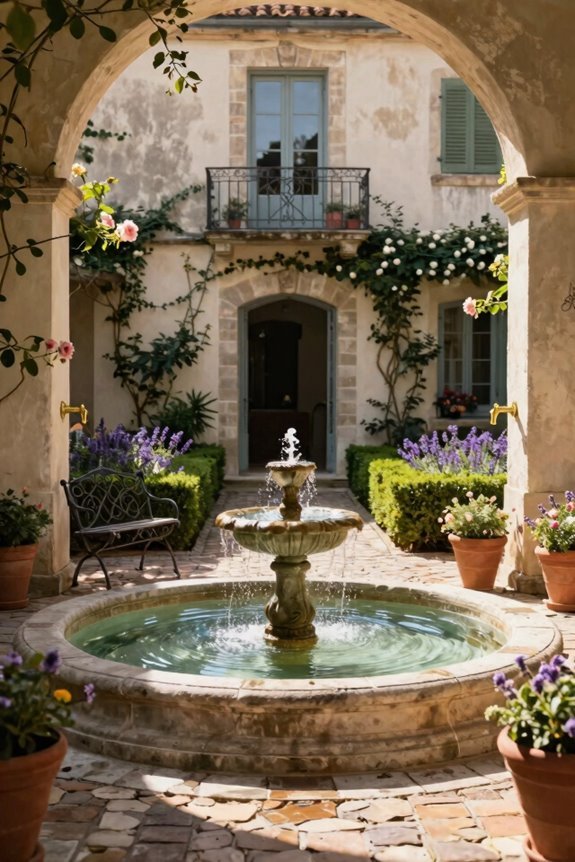
I’ve found that a well-placed fountain or stone basin changes your courtyard into something memorable; it’s where French elegance truly becomes evident. You’ll notice how brass or classical stone water features create those soothing soundscapes that instantly calm your nerves while drawing the eye along symmetrical sight lines, giving your garden instant architecture.
Fountains Create Timeless Elegance
Why do French courtyard gardens feel so inherently calming? I’d argue it’s the fountain. A well-chosen water feature anchors your space while creating that serene, reflective quality that makes you exhale the moment you step outside.
Consider these timeless options:
- Brass or stone fountains with aged patina finishes that whisper elegance without shouting about it
- Basin fountains that double as practical plantings for seasonal displays (function meets beauty)
- Salvaged garden troughs that feel authentically vintage rather than artificially distressed
The gentle murmur of running water pairs beautifully with lavender and boxwood verdure, grounding your symmetrical pathways in something genuinely soothing. Add subtle nighttime lighting, and you’ve created an intimate sanctuary.
Your fountain isn’t just decoration; it’s the heart of timeless elegance that transforms a courtyard into a place where you belong.
Water Features Enhance Tranquility
Fountains work their magic, but here’s what separates a good courtyard from a memorable one: positioning that water feature as your garden’s center point. I’ve discovered that small-scale elements—wall-mounted fountains or antique stone troughs—create soothing soundscapes without consuming precious space. The trick? Pair them with natural materials: weathered terracotta, aged brass, and limestone that whisper Provencal authenticity.
Running water does something remarkable; it blurs the boundary between your hardscape and vegetation, guiding visitors along gravel paths while cultivating true tranquility. When dusk arrives, night lighting transforms your water feature into visual poetry. Reflections dance across surfaces, making that humble basin suddenly distinctive and essential.
The real insight? Water features aren’t afterthoughts. They’re conversational anchors that invite lingering and create noteworthy moments.
Choose Cast-Iron Furniture and Stone to Ground Your Design
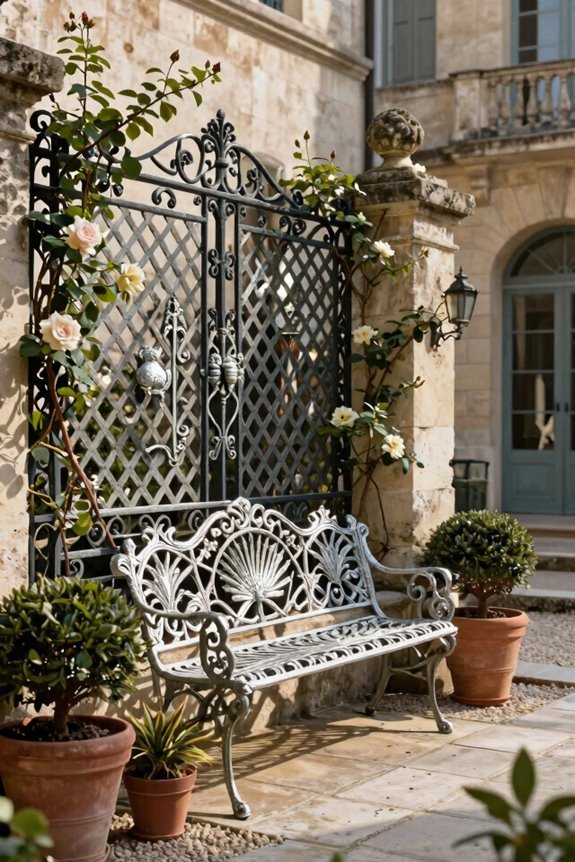
When you’re layering texture into a French courtyard, cast-iron furniture does the strenuous job—literally and aesthetically. I’ve found that these heirloom pieces anchor your space with authentic gravitas, especially when paired thoughtfully with stone elements.
Here’s what transforms a courtyard from nice to actually inviting:
- Traditional makers like Arras produce durable pieces with characteristic hoof-shaped feet and patina that deepens beautifully over time
- Stone grounds the design through stepped paths, pedestals, and retaining walls that echo cast-iron’s weight and create structural harmony
- Coordinate strategically with weathered copper, zinc watering cans, and antique stone planters for cohesion
Marble or alabaster-topped accents elevate the refined garden-room feel further. When cast-iron meets aged stonework, you’re not decorating; you’re creating lineage. Your courtyard becomes a space where elegance whispers rather than shouts.
Plant Heirloom Roses and Climbing Vines for Layered Growth
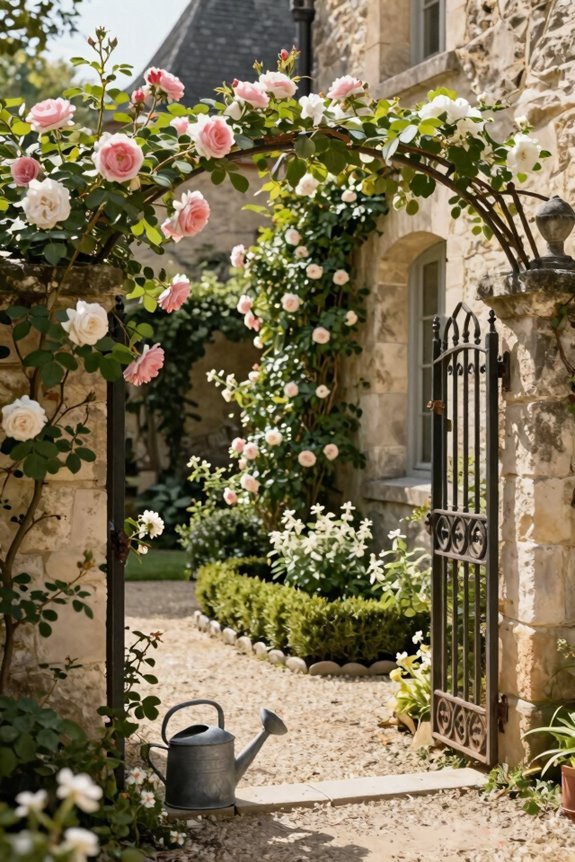
Now that you’ve established your courtyard’s structural bones with cast iron and stone, it’s time to drape those foundations in living color and fragrance. I’d plant heirloom roses—Pierre de Ronsard, Cécile Brunner, Buff Beauty—alongside climbing vines for layered growth that creates dimension and appeal through vertical plantings.
Star jasmine and Muscat grapevines create verdant walls along pathways (bonus: edible fruit). This vertical architecture softens hard surfaces while building complexity and interest to your design.
| Rose Variety | Bloom Color | Fragrance Level |
|---|---|---|
| Pierre de Ronsard | Blush pink | Intense |
| Buff Beauty | Apricot | Rich |
| Jacques Cartier | Deep pink | Strong |
| Cécile Brunner | Pale pink | Delicate |
Pair these with boxwood hedges to reinforce axial design. After autumn, mulch with shredded leaves to protect roots while retaining moisture. Your bespoke garden will shift through the seasons, offering continuous blooms from spring through summer.
Train Espaliered Fruit Trees to Frame Walls and Views
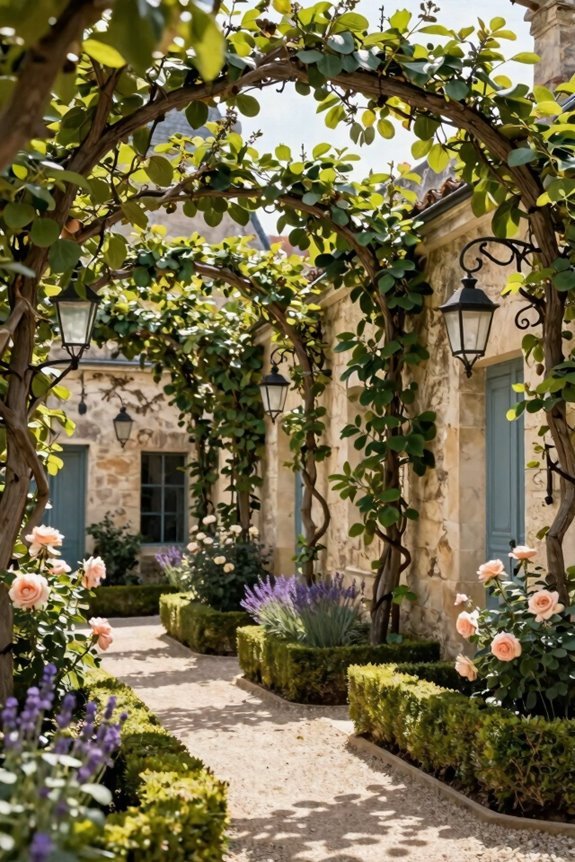
How do you transform a bare courtyard wall into a living gallery of blossoms and fruit? Espalier does exactly that. I train fruit trees flat against walls, creating architectural verdure that guides your eye toward focal points while producing apples, pears, and peaches.
Espalier transforms bare walls into living galleries—architectural frameworks that produce fruit while guiding your eye toward focal points.
The process works through intentional pruning:
- Horizontal patterns create clean tiers ideal for framing doorways
- Belgian Fence designs weave branches diagonally for sophisticated geometry
- Fan shapes radiate outward, maximizing sunlight and visual drama
Winter pruning encourages dense, even growth. I’ve learned these bespoke structures aren’t merely decorative. They’re living frameworks that balance fruit production with structural elegance. Your courtyard transforms into a productive space where seasonal blossoms and ripening fruit become permanent architectural features. The walls become partners in your garden’s story.
Layer Antique Urns and Sculpture for Finishing Details
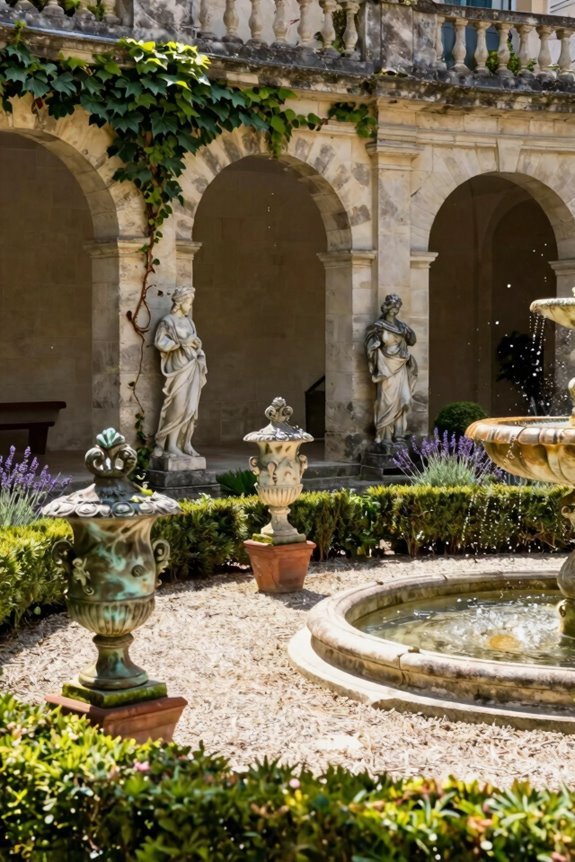
What separates a pleasant courtyard from one that whispers of centuries past? Layered antique urns and sculpture. I’ve found that positioning mossed terracotta Anduze urns along pathways creates an aged patina that feels authentically weathered, not manufactured. Pair these with mythological busts or nymph figures mounted on stone pedestals for subtle focal points that draw the eye deeper into your space.
Align your sculpture strategically to frame axial views, reinforcing symmetry through hedgerows and hardscape. Wrought-iron benches and Abacus-style urns anchor the composition with gravitas. Then add water; a small fountain or basin catches light and reflects your vegetation, transforming these elements into living focal points. You’re not just decorating; you’re curating bespoke vignettes that feel like they’ve belonged there for generations.