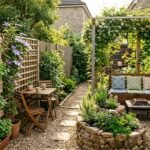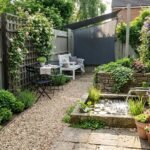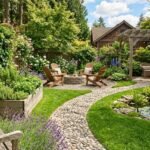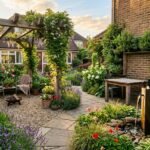
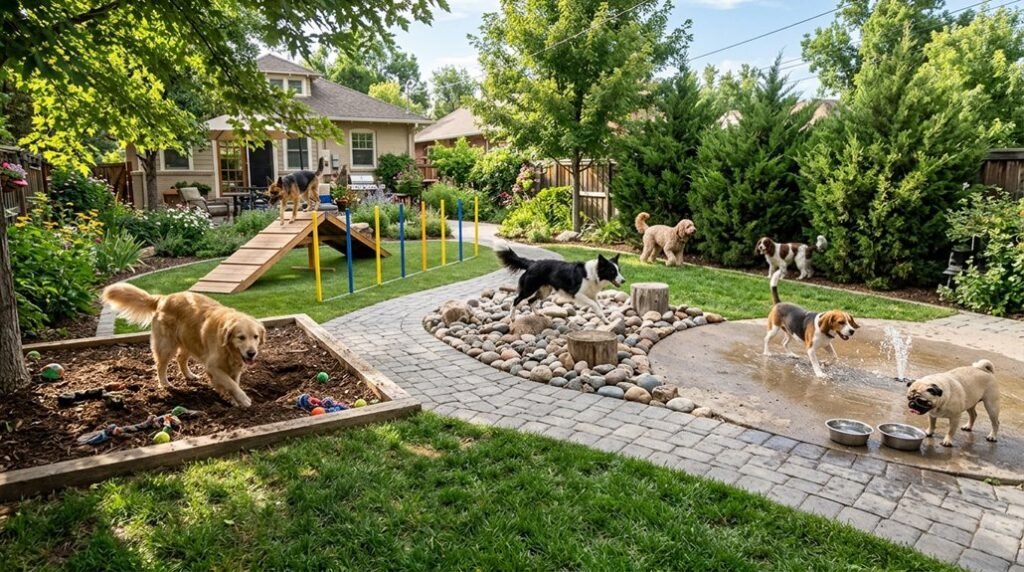
Did you know that dogs actually prefer varied terrain over boring lawns? If you’re tired of watching your pup pace the same tired grass while mud mysteriously multiplies, I have some helpful ideas.
The truth is, a dog-friendly yard isn’t just about letting them roam. It’s about designing specific zones that keep them active, cool, and engaged. Here’s how to transform your outdoor space into something noteworthy.
Ground Covers for Dog Yards: Comparing Pea Gravel, Mulch, Turf, and Sand
What’s the foundation of a truly functional dog yard? I’d argue it’s selecting the right ground cover. You’ve got solid options here.
Pea gravel ($0.50–$1.50/sq ft) drains naturally, perfect for muddy paws, but demands rounded stones to protect sensitive feet. Wood chips run budget-friendly ($0.15–$0.40/sq ft), though they’ll decompose faster than you’d like, requiring regular raking. Engineered wood fiber ($4/sq ft) lasts longer.
Pea gravel drains naturally for muddy paws, but engineered wood fiber outlasts cheaper wood chips that decompose quickly.
Artificial turf minimizes maintenance headaches but reaches scorching temperatures (165°F) without shade coverage. Sand ($1.50–$3.00/sq ft) satisfies dig-happy pups yet spreads everywhere like an unwelcome houseguest. Rubber mulch? Skip it; chewing risks aren’t worth the durability.
Each surface balances maintenance and safety differently. Your customized dog yard demands thoughtful consideration of these ground cover options before construction begins.
Create Shaded Rest Areas to Prevent Heat Stress and Joint Strain
Your dog’s comfort hinges on strategic shade placement: not parking them under a single tree and calling it a day. Purposeful shaded rest areas like pergolas and shade sails reduce heat stress during hot months. The trick is positioning these zones where you can still supervise without squinting.
Cooling surfaces matter significantly; concrete and composite decking stay much cooler than sun-baked pavers. Pair your shaded retreats with water access, such as a shallow bowl or modest fountain. I rotate moveable structures seasonally, ensuring year-round protection regardless of sun angles.
Your dog’s joints benefit from those crisp, shadowed lounging spots, which prevent the inflammation that heat aggravates. Think of it as creating customized comfort zones throughout your yard.
Enrich Your Yard: Ramps, Pools, and Sandboxes for Active Dogs
How do you transform a static yard into a dynamic playground that keeps your dog mentally stimulated and physically challenged? I’ve discovered that ramps, pools, and sandboxes create excellent enrichment options.
| Feature | Material | Benefit |
|---|---|---|
| Ramps | Durable timber or decking | Safe access between levels |
| Pools | Securely fenced water | Cooling + enrichment |
| Sandboxes | Washed, softened play sand | Digging satisfaction |
Sturdy timber ramps accommodate your German Shepherd’s bulk while preventing joint strain. Shaded pools (properly fenced!) provide relief on scorching days. Just watch for slipping hazards.
Sandboxes with clear boundaries contain that inevitable sand explosion, offering irresistible digging gratification. I’ve blended these elements across multi-surface zones: turf, gravel, mulch.
This varied mosaic balances stimulation with safety. Regular maintenance, including replenishing sand, inspecting ramps for wear, and cleaning pool surfaces, keeps your customized play area in good condition and your pup endlessly entertained.
Stop the Mud: Drainage and Waste Management Solutions
Ever notice how a muddy yard turns into a swamp after rain, turning your dog’s play area into something resembling a construction site? I’ve learned that smart drainage and waste management separate successful dog yards from disaster zones.
Here’s an effective approach: a multi-surface strategy combining pea gravel ($0.50–$1.50 per square foot), mulch, and turf. Gravel excels at drainage while keeping paws relatively clean, though it needs refreshing every 3–5 years. Artificial turf handles high-traffic zones beautifully, but watch those temperatures; they’ll hit 165°F in summer.
The real benefit happens when you layer these surfaces strategically. You’re creating natural pathways that manage waste effectively while reducing mud accumulation. It’s like building a customized system where your dog performs well, not sinks.
Design a Multi-Surface Yard That Lasts
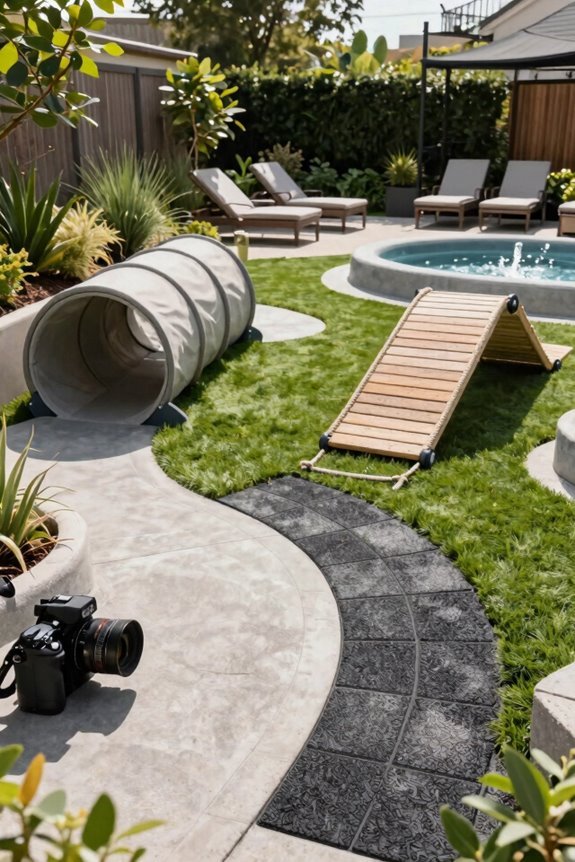
Because a one-surface yard is basically asking for trouble, I’ve found that layering different materials transforms a muddy mess into a functional outdoor space where your dog actually does well over time. You’re creating a customized outdoor area where your dog does well.
Here’s your multi-surface strategy:
- Shaded turf zones with grass for cooling rest areas and safety
- Rounded pea gravel in sunny spots (refreshed every 3–5 years) for superior drainage
- Play sand section dedicated to digging enrichment without spreading chaos
- Artificial turf patches for high-traffic zones (hose down regularly to prevent 165°F heat disasters)
This combination maximizes benefits while balancing durability and enrichment. You’re not just building a yard; you’re engineering longevity.
The strategic drainage prevents waterlogging. Shaded zones keep paws cool. Each surface serves a purpose, making maintenance predictable rather than panic-inducing.