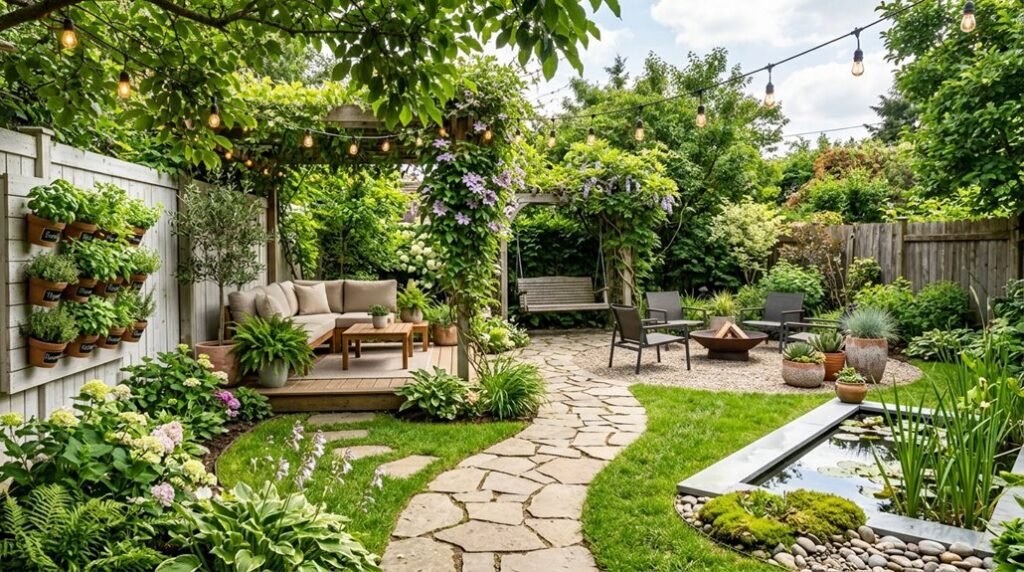
I’ll show you how to turn your neglected outdoor space into a real living area without spending too much money or effort.
You’ve got a blank canvas here, and honestly, most people waste it by cramming in too much stuff.
The secret is strategic priorities.
By anchoring your design around a focal point (think fire pit or pergola with climbing jasmine), dividing your space into zones, and choosing materials that actually last, you’re setting yourself up for success.
Here’s what transforms an ordinary yard into somewhere you’ll actually want to spend your Saturday afternoons.
Plan Your Backyard Layout With Priorities First
Before you start envisioning a beautiful patio or that statement tree you’ve been thinking about, you’ll want to get honest about what your medium backyard actually needs. I’ve learned that prioritizing essential features prevents trendy additions from taking up valuable square footage.
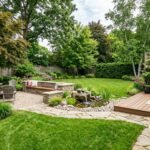
Start by listing everything you want: seating areas, lawn for activities, plants, dining zones. Then rank ruthlessly. Open space matters more than you’d think; blank canvas beats cluttered chaos. Consider functional zoning: where’ll people naturally gather? How will traffic flow from door to garden edge?
Professional input transforms layouts from awkward to intuitive, ensuring your custom outdoor space serves daily life first, social media second. Your backyard’s backbone is priorities, not trends.
Divide Your Outdoor Space Into Multi-Use Zones
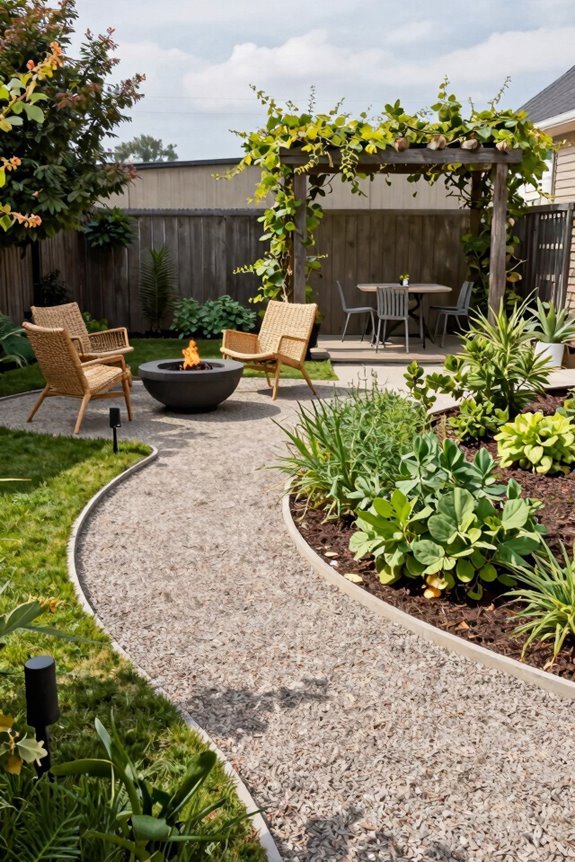
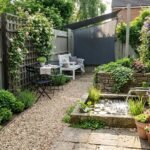
How do you fit a dinner party, a reading retreat, and a gathering spot into one modest backyard without creating visual bedlam? The solution is dividing your small backyard into distinct outdoor zones. I anchor each area with outdoor rugs; they’re like invisible walls that mark territory. Near your kitchen, I position the dining area and grill zone for seamless food transfers.
Farther back, a quieter seating area becomes my reading nook. Potted plants and simple dividers naturally separate these multi-use zones without clutter.
Lightweight outdoor furniture lets me reconfigure layouts instantly. A fire pit doubles as a coffee table, maximizing every square inch, while strategic space division transforms cramped quarters into cohesive backyard design that actually feels spacious. That’s customized living, my friend.
Build a Focal Point That Anchors Your Design
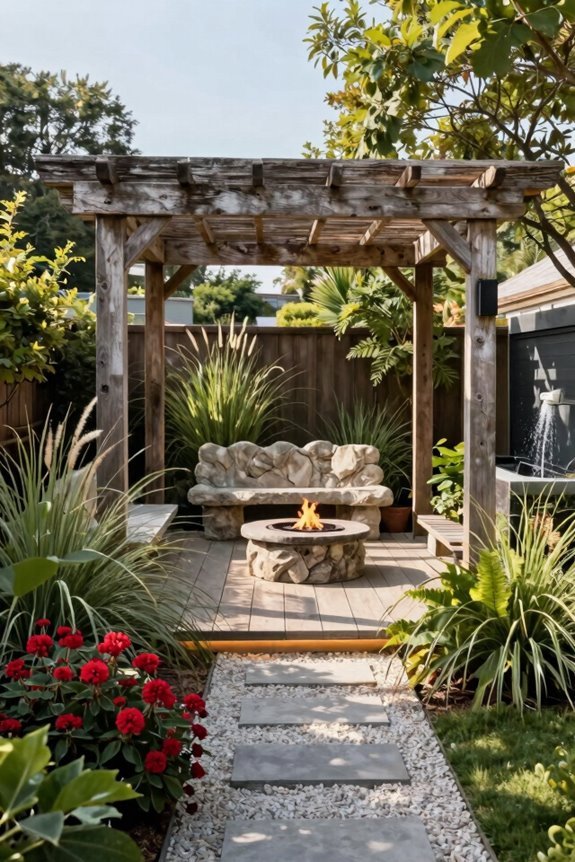
Once you’ve carved your backyard into functional zones, you’ll want something that naturally draws everyone together, and that’s where a focal point comes in. A well-designed anchor creates the gathering space your outdoor rooms need.
Consider these proven options:
- Fire pit or fireplace – The ultimate conversation starter that works on decks, poolside, or forest clearings
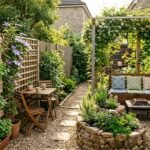
- Pergola with climbing vines – Leafy structures that visually define spaces while adding architectural interest
- Elevated stone patio or two-level deck – Multi-tiered designs that command attention and create distinctive intimacy
The right focal point unifies materials and plants around your chosen centerpiece. Consistent sightlines connecting your dining area, lounging area, and transition zones transform disconnected spaces into cohesive outdoor rooms.
Your focal point isn’t just decorative. It’s the heartbeat that keeps your backyard functioning as one harmonious gathering place.
Choose Plants That Unify Year-Round Interest
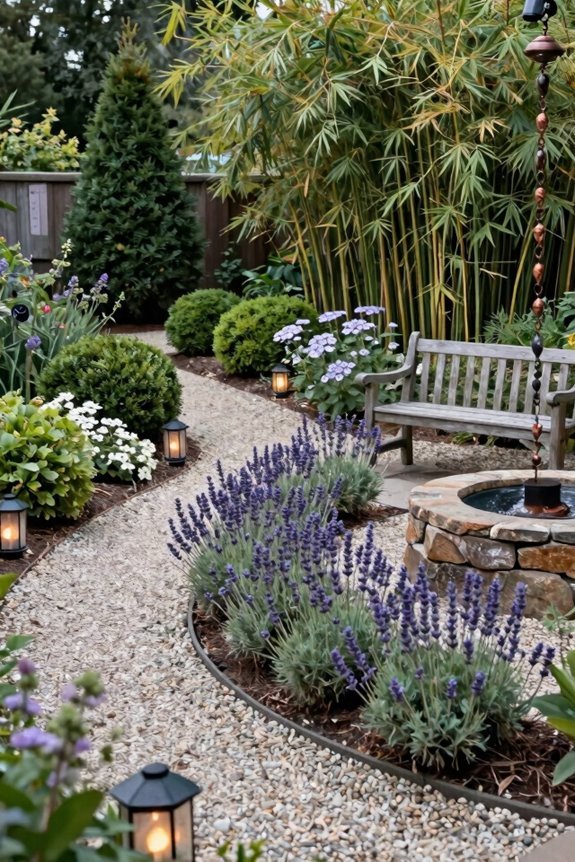
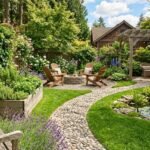
I’ve found that layering seasonal color—think vibrant spring bulbs, summer-blooming coneflowers, and autumn-burning Japanese maples—keeps your medium yard from looking neglected come November. Year-round texture variety matters just as much; pairing evergreen boxwoods and ornamental grasses with deciduous shrubs ensures your garden maintains visual weight even when winter strips away the showy foliage.
Strategic combinations of bark interest, persistent berries, and architectural foliage create a distinctive framework that makes your space feel intentional and alive through all four seasons.
Seasonal Color Layering
When’s the last time you looked out your window in January and felt excited about your garden’s appearance?
Seasonal color layering transforms your medium backyard into a custom landscape that remains beautiful year-round. I’ve discovered that strategic plant selection creates visual interest across every season, building a sense of belonging in your outdoor space.
Here’s my approach to year-round interest:
- Mix perennials with native plants that bloom sequentially, ensuring something’s always flowering
- Layer ornamental grasses beside flowering perennials for textural contrast when blooms fade
- Select varieties with colored foliage and berries that extend color into winter months
Plant success hinges on understanding soil health and site conditions. When I combine deciduous shrubs with evergreens, the garden maintains complexity regardless of season.
This thoughtful perennial mix, paired with groundcovers, creates dynamic visual interest while supporting local wildlife throughout the year.
Year-Round Texture Variety
Because a garden that looks good only in spring is a three-season disappointment, you’ll want to build texture into every corner of your medium backyard through thoughtful plant layering. I’d recommend anchoring foundation plantings with evergreens like boxwood or juniper for reliable structure.
Layer in mid-height bloomers, think coneflowers and black-eyed Susans, that extend your blooming cycles across seasons. Add drought-tolerant natives and ornamental grasses for movement and foliage color when flowers fade. Ground-level groundcovers fill gaps while reducing maintenance headaches and weeds.
This layered texture contrast combines broadleaf perennials, spiky grasses, and structural shrubs to create visual interest regardless of the season. The result is a lush backyard that earns its place in your life all year long.
Select Durable Materials and Low-Maintenance Choices
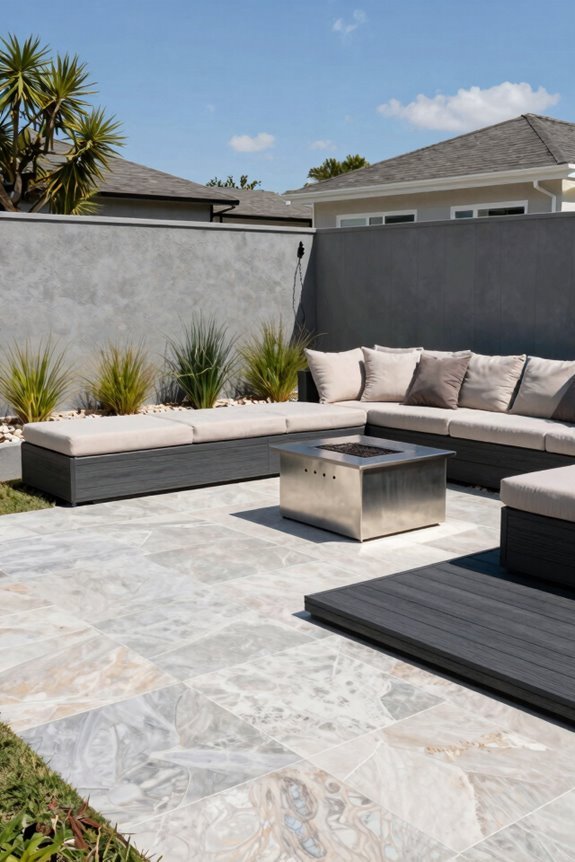
How do you build a backyard that actually gets better with age instead of crumbling into regret? I’ve learned that durable materials and low-maintenance choices are your foundation for success.
Consider these essentials:
- Porcelain tiles that mimic natural stone; they’re virtually indestructible and weather-resistant across seasons
- Structural elements like pergolas and retaining walls that integrate seamlessly with plantings, creating authentic outdoor rooms
- Strategic lighting and durable furnishings that enhance functionality without demanding constant upkeep
I’d choose weather-resistant materials specifically engineered for seasonal adaptability, so no surprises arrive when winter does. Pair hardscapes with durable storage solutions that withstand regular use.
When you combine bespoke design with low-maintenance selections, you’re not just building a space. You’re crafting a garden that matures gracefully. Your backyard becomes an investment, not a burden.
Add Shade and Privacy With Pergolas or Climbers
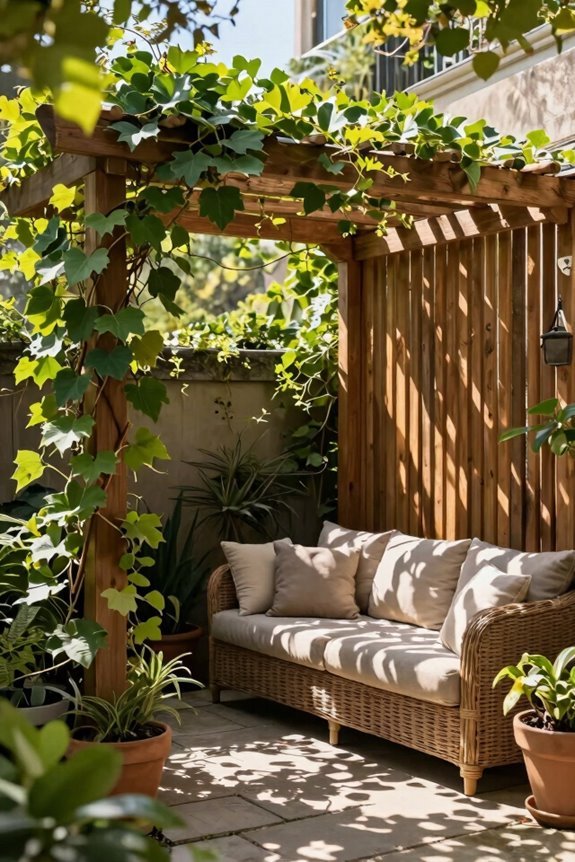
I’ve found that a well-placed pergola transforms my medium backyard into distinct zones while serving double duty. By training climbing vines like clematis or jasmine across the structure, you’re weaving greenery into your design that not only softens hard lines but also creates natural screens without the maintenance headache of traditional fencing.
The beauty lies in how these climbing plants turn a simple architectural element into a personalized retreat that suggests privacy while your neighbors remain unaware.
Pergolas Define Outdoor Spaces
A step back to notice how a backyard lacking structure feels like a blank canvas—interesting, sure, but missing that architectural moment? A pergola changes that. This versatile structure transforms your medium yard into defined outdoor rooms, creating intentional zones where you’d actually want to spend time.
Here’s what makes pergolas work:
- They establish a transitional space between your home and yard, anchoring your layout with purpose
- Climbing plants add greenery and privacy while softening the hardscape into something inviting
- Decorative lighting extends your lounging zone into evening hours, because mosquitoes need boundaries too
Whether attached to your home or freestanding, a pergola paired with a dining area or comfortable seating becomes your custom outdoor retreat. The dappled shade from climbing vines creates that desirable gathering spot where neighbors actually envy your backyard design.
Climbing Vines Create Privacy
Privacy, that precious commodity in medium yards, doesn’t require solid fencing or your neighbors’ resentment. I’ve discovered that climbing vines transform pergolas and trellises into living screens that whisper “stay out” far more gracefully than wood ever could.
Fast-growing climbers like clematis or climbing hydrangea create bespoke outdoor rooms within weeks, layering verdure that softens hardscapes while filtering sunlight into dappled gold. Choose drought-tolerant natives suited to your climate; they’re practically self-sufficient and support local wildlife as bonus guests.
What I love most is that vines offer year-round privacy without the solid, fortress-like feeling of traditional fencing. They’re shade-makers and seclusion-providers rolled into one. Combine them with water-efficient plantings, and you’ve built a personal retreat that feels both lush and intentional, the outdoor equivalent of having your cake and eating it too.
Blur Indoor-Outdoor Boundaries With Strategic Placement
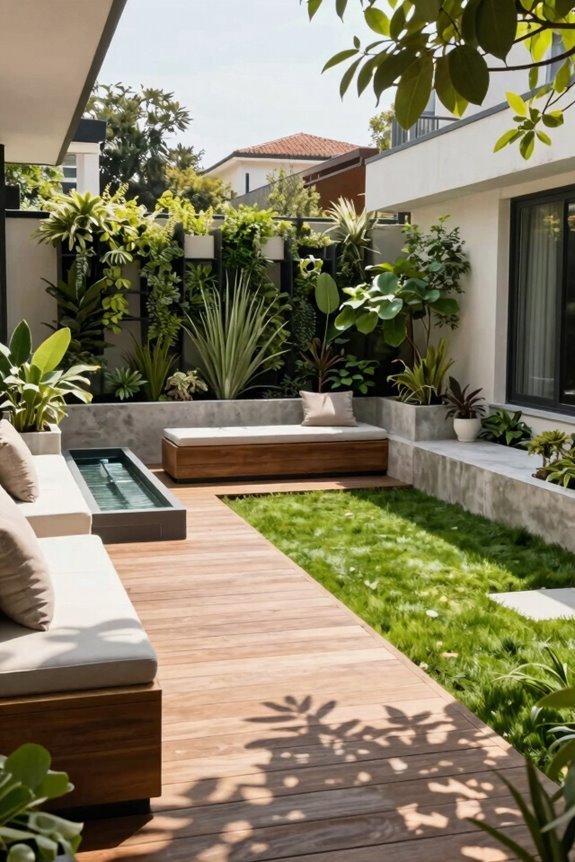
How many times have you sat inside on a gorgeous day, feeling like your home’s walls were keeping you from the action? I’ve discovered that blurring indoor-outdoor boundaries changes everything.
Blurring indoor-outdoor boundaries transforms how you experience your home, turning walls from barriers into gateways to the action outside.
Consider these strategic moves:
- Install French doors and large windows to visually connect your interior with yard space
- Extend interior flooring onto your patio; continuous materials reinforce that seamless transition
- Position container plants near yard entrances to bridge indoor and outdoor realms
When you eliminate hard edges through thoughtful sight lines and unobstructed access flow, something noteworthy happens. Your outdoor rooms become natural extensions of your living space, not separate afterthoughts. This indoor-outdoor connection functionally expands your home while creating that coveted belonging you’re seeking. You’re not just adding square footage; you’re weaving your life into plant-framed spaces where inside and outside blend together seamlessly.