Did you know that most homeowners plant their shade trees in the wrong season? I’ll walk you through how to build a canopy with rich foliage that actually works year-round. It’s not just about picking any tree and hoping for the best.
The right combination of fast-growing species, architectural forms, and climate-matched selections can transform your outdoor space into a shaded retreat within just a few seasons. Here’s what actually works.
Know Your Yard: Assess Light, Moisture, and Hardiness Zones First
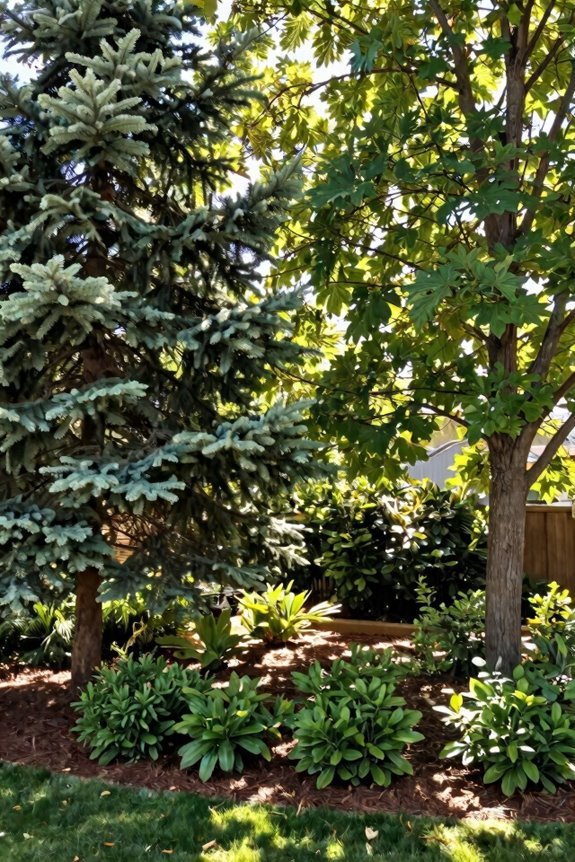
How much sunlight actually hits your yard on a typical day? I’ve found that mapping your light exposure—full sun, partial shade, or full shade—fundamentally shapes which shade trees will do well in your space. You’ll also want to evaluate moisture conditions: some sites stay boggy while others drain quickly, and certain species prefer wet feet, like the Weeping Willow.
Don’t skip your hardiness zone check either. Matching trees to your climate ensures they’ll establish properly rather than struggle through harsh winters.
Finally, I assess soil quality and available root space before committing to anything. Testing pH and fertility levels prevents costly mistakes later. This groundwork transforms your yard into a custom landscape where plants flourish year-round, creating the canopy coverage you’re after.
Fast-Growing Shade Trees: Full Canopy in Years, Not Decades
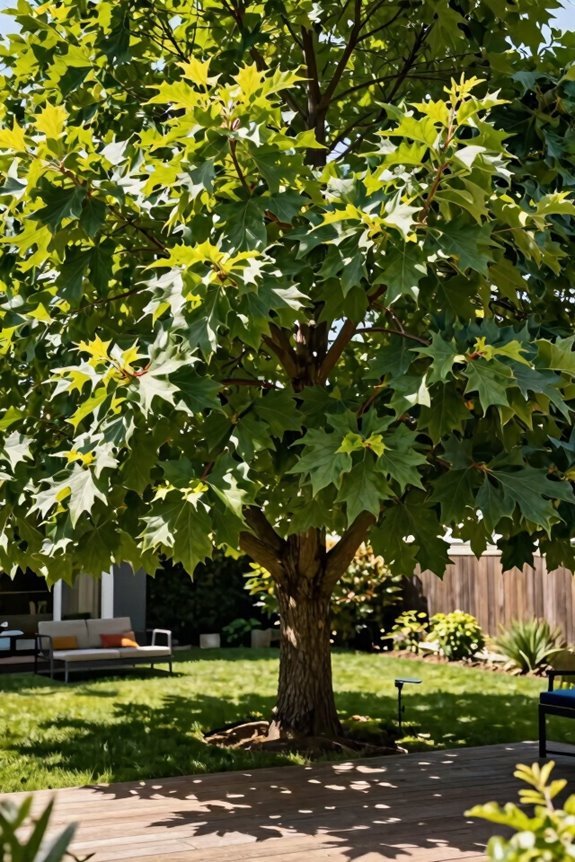
If you’re impatient for thick overhead foliage, I’ve got good news: you don’t need to wait decades for a canopy that actually shields your patio from the sun’s relentless glare. Species like Hybrid Poplars and American Sycamores can rocket upward 6–8 feet annually, which means you’re choosing between rapid-growth champions with bespoke care needs and climate-specific options that’ll thrive without becoming your summer project.
Let’s break down which trees match your yard’s personality and what establishment routine keeps them healthy during those critical first years.
Rapid Growth Rate Options
When you’re tired of waiting decades for a sapling to actually shade your patio, fast-growing trees become your best friend. Hybrid Poplar tops the charts, shooting up 8 feet annually, basically one growth spurt per season. American Sycamore follows closely at 6 feet yearly, while Autumn Blaze Maple delivers steady 3–5 feet of growth. River Birch rounds out your rapid-growth roster at 3 feet per year.
What separates these champions? Mature height matters. Hybrid Poplar maxes out around 50 feet, whereas American Sycamore reaches a towering 70 feet. This height differential means your canopy timeline shifts dramatically; taller trees create dappled shade faster across sprawling yards and eliminate sun-baked deck problems. You’re not just planting; you’re crafting a customized shade strategy that delivers results while you’re still young enough to enjoy it.
Establishment Care Requirements
Why do some fast-growing trees explode into lush foliage while others sputter along like a car running on fumes? The answer lies in establishment care. I’ve learned that watering heavily during those critical first months isn’t optional; it’s essential.
Your fast-growing shade trees demand deep, consistent irrigation to anchor their roots firmly below the surface (think of it as giving them a strong foundation for their rapid ascent). Pair this with quality soil preparation tailored to your specific species. Full sun exposure accelerates growth trajectories dramatically.
Trees with deep, expansive root systems develop faster canopies while avoiding surface-root nightmares later. These customized care requirements during year one set the stage for decades of reliable, year-round shade. Invest now; relax later.
Species Selection By Climate
Once you’ve locked in your establishment routine, the real benefits emerge through smart species selection, because the fastest-growing tree in Alaska won’t help you much in Atlanta. Your climate zone determines everything.
In warmer regions, American Sycamore delivers up to 6 feet yearly, creating tall shade trees at 70 feet, perfect for serious shade ambitions. Hybrid Poplar rockets skyward at 8 feet annually, though it prefers milder zones. For temperate climates, Autumn Blaze Maple and Tulip Poplar both hit 3–5 feet per year, offering that full canopy you’re craving within years.
River Birch adapts beautifully to wet or dry conditions, growing steadily at 3 feet yearly. In colder climates, Ginkgo emerges as your climate-adapted champion, delivering fast-growing foliage while tolerating brutal winters. Choose bespoke, not generic.
Fall Color Champions: Maples and Oaks That Transform Your Landscape
How do you turn your backyard into nature’s most spectacular art gallery each autumn?
I’d argue that Maples and Oaks are your gallery’s star exhibits. The Autumn Blaze Maple delivers vibrant reds with impressive speed, like nature accelerating the fall season. October Glory Maple offers that same dramatic transformation, while Red Sunset adapts beautifully to different sites without finicky requirements.
For oak lovers, Shumard Oak and Northern Red Oak bring brilliant crimson displays that rival their maple counterparts. These trees aren’t just shade providers; they’re seasonal focal points. Plant them strategically, and you’ll create a custom landscape where green foliage shifts into fiery hues each year. Your backyard becomes a place where autumn’s artistry feels personal, intentional, and undeniably yours.
Trees for Full Sun and Partial Shade Conditions
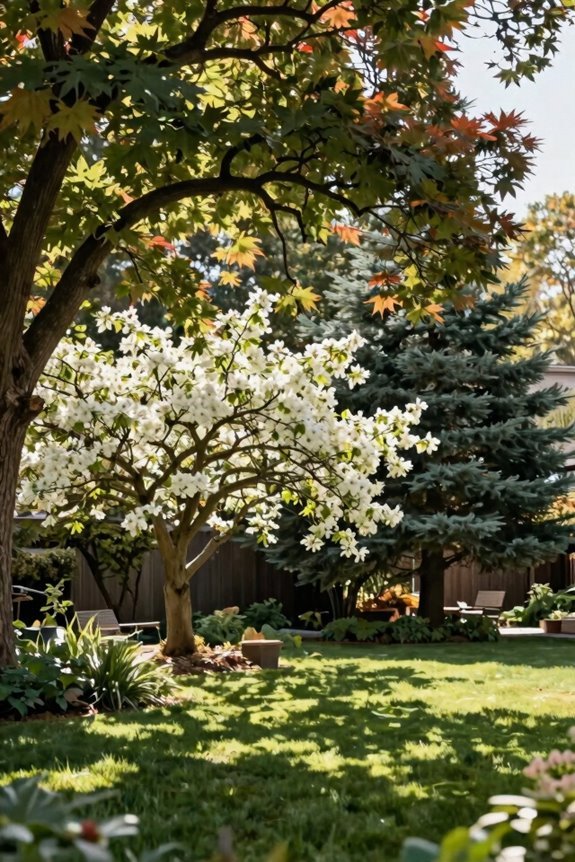
I’ve found that matching your tree choice to your yard’s light exposure makes a significant difference. Full sun specimens like Autumn Blaze Maple and Hybrid Poplar require those bright, unobstructed spots where they’ll reward you with rapid growth (up to 8 feet yearly for the Poplar, if you’re feeling ambitious), while River Birch and Shumard Oak prove themselves the diplomatic choice, performing equally well in partial shade without sacrificing the lush foliage you’re after.
Your custom landscape really hinges on understanding these light preferences, because even the hardiest performer becomes a poor choice when stuck in the wrong conditions. I’ll walk you through the specific rankings that’ll help you nail this decision.
Optimal Light Requirements
What’s the real difference between planting a tree in full sun versus partial shade? I’ve found that full sun specimens like Autumn Blaze Maple and Hybrid Poplar rocket upward, reaching 3–8 feet annually, while delivering the lush foliage you’re craving. Partial shade trees? They’re the reliable friends who still show up, just slightly slower.
River Birch manages about 3 feet yearly even when dappled light filters through. Here’s the thing: you don’t need to choose between sun and shade. Clonal cultivars like Autumn Blaze adapt beautifully to both conditions, offering customized growth regardless of your yard’s quirks.
Deep-rooted trees such as Northern Red Oak thrive in full sun, developing robust systems. Pick based on your actual light patterns, not wishful thinking, and you’ll have a successful shade garden.
Shade Tolerance Rankings
When you’re ranking trees by their shade tolerance, you’re really asking which specimens will deliver full foliage whether they’re basking in full sun or tucked beneath dappled light, and that’s where things get interesting.
River Birch tops my list for versatility, growing well across both conditions with a quick 3 ft/yr growth rate. Maple cultivars like Red Sunset bring that strong performance wherever you plant them, adapting well to variable light. Meanwhile, oaks (Northern Red and Shumard varieties) sacrifice speed for substance in partial shade; they’ll still build impressive canopy, just slower.
Weeping Willow prefers sun exposure; heavy shade makes it sluggish. The real advantage? Match your shade tolerance expectations with growth rate demands, and you’ll create a custom shaded retreat that actually performs.
Winter Interest: Shade Trees With Beautiful Bark and Branching
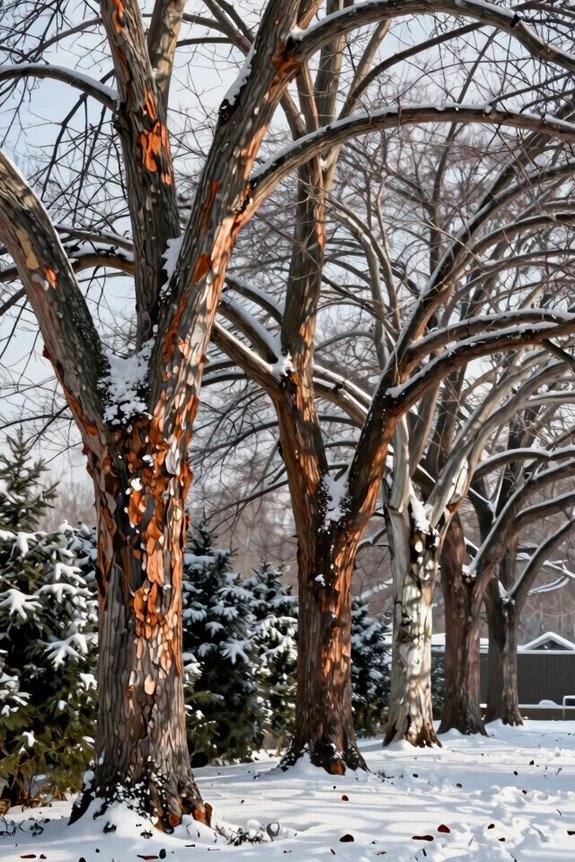
How often do we admire a shade tree’s summer canopy, then forget it exists come November?
I’ve discovered that winter transforms certain trees into sculptural masterpieces. When verdure fades, their true character emerges, and it’s striking.
Consider these bespoke options:
- River Birch displays curling, exfoliating bark in cinnamon and cream that practically glows against snow
- Paper Birch offers luminous white bark for dormant landscape contrast
- Quaking Aspen creates dramatic multi-stem silhouettes with visible bark that catches winter light
- Northern Red Oak maintains strong branching architecture with sculptural gray-brown tones
These aren’t afterthoughts. They’re intentional design choices. Weeping Willow adds architectural elegance with drooping branches that remain visually arresting when bare.
You’re not just selecting shade trees; you’re crafting year-round interest. Winter becomes an asset, not a design liability.
Wet Site Solutions: Shade Trees That Thrive in Soggy Soil
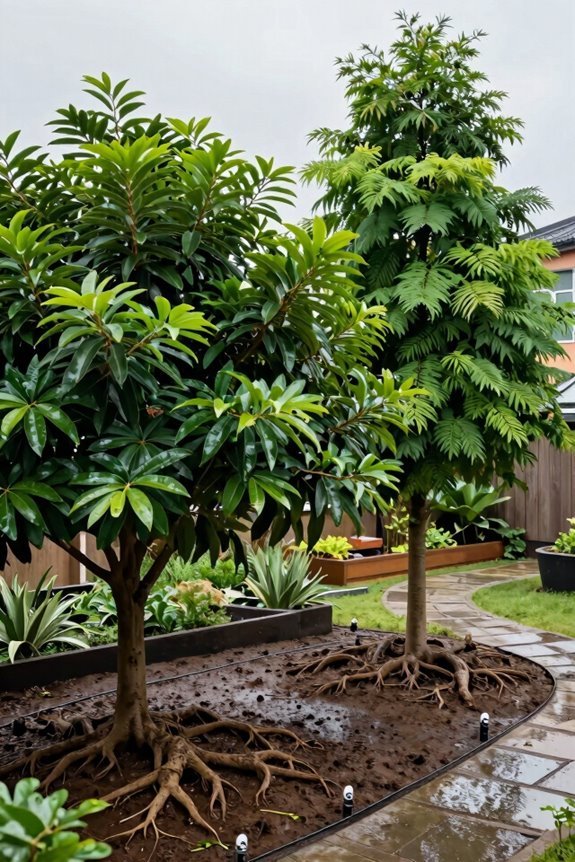
Those sculptural winter silhouettes we just celebrated? They’re about to get soggy. If your backyard’s more swamp than sanctuary, don’t despair—I’ve got solutions that’ll transform wet sites into shade havens.
The Weeping Willow practically begs for waterlogged conditions, its graceful verdure cascading over marshy ground like nature’s own bespoke landscape design. River Birch joins the party with rapid growth and those stunning curling bark patterns that’ll keep things visually interesting year-round.
| Tree | Moisture Tolerance | Fall Color |
|---|---|---|
| Weeping Willow | Excellent | Golden |
| River Birch | High | Vibrant |
| Red Sunset Maple | Adaptable | Brilliant |
These aren’t just survivors—they’re strong performers for wet spaces. Your soggy corner’s finally getting the shade treatment it deserves.
Drought-Tolerant Shade Trees for Dry Climates and Challenging Spots
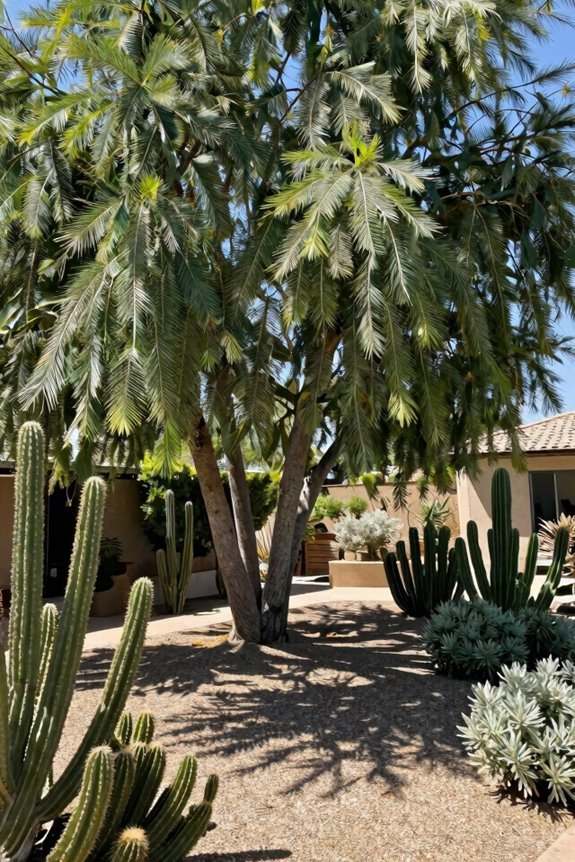
What if your backyard’s biggest challenge isn’t too much water, but too little? You’re not alone. I’ve found that selecting drought-tolerant shade trees converts parched landscapes into green spaces full of life.
Consider these bespoke options:
- River Birch showcases curling, papery bark and rapid growth, offering natural visual interest for dry spots
- Hackberry demands minimal water while shrugging off pollutants and poor soil
- Tulip Poplar establishes deep roots, anchoring itself against drought stress
- Autumn Blaze or Red Sunset Maple deliver striking fall color while adapting once established
These shade trees aren’t just survivors; they’re performers. They’ll establish properly with adequate initial watering, then flourish independently. Your dry, challenging planting site becomes an asset rather than a liability. That’s part of a community of smart gardeners who’ve figured out the solution.
Native Shade Trees That Support Local Wildlife
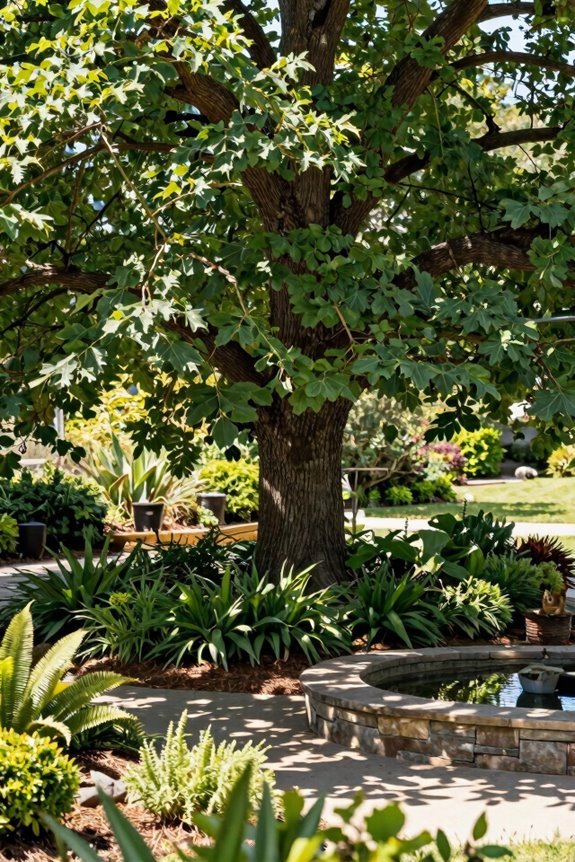
Beyond surviving dry spells, your shade trees can become active participants in your backyard’s habitat. I’d recommend Northern Red Oak for brilliant fall color and acorn production that feeds local wildlife. Paper Birch offers rapid growth plus deer resistance, a rare combination. River Birch does well in wet spots with yellow autumn foliage.
Hackberry brings toughness and broad soil tolerance. Shumard Oak and Willow Oak handle urban conditions while supporting habitat value. These natives aren’t just shade providers; they’re habitat architects. Your custom woodland corner becomes a wildlife magnet, with squirrels and birds included.
Plant these species strategically for layered canopy coverage. You’ll watch your yard transform into living infrastructure with shade, beauty, and ecological purpose all working together. That’s the real win.
Cold-Hardy Shade Trees for Northern and Mountain Gardens
How do you create a shaded retreat when winter temperatures drop well below freezing? I’ve discovered that northern gardens don’t need to sacrifice verdure for resilience. The key is selecting trees built for brutal seasons.
Consider these champions:
- Northern Red Oak grows roughly three feet yearly, painting autumn in brilliant crimson
- Red Sunset Maple combines structural elegance with reliable cold tolerance and fiery fall color
- River Birch thrives in wet or drought-stressed montane conditions with golden foliage
- Ginkgo biloba offers exceptional heat-and-cold versatility for mountain microclimates
I’ve learned that these bespoke selections don’t just survive; they flourish. They’re not backup options; they’re strategic choices. When you’re designing shade for northern landscapes, you’re not compromising. You’re embracing trees engineered by nature for your exact conditions. That’s powerful gardening.
Heat and Humidity Tolerant Shade Trees for Southern Yards
When summer humidity rolls across southern gardens, you’ll discover that shade isn’t just a luxury, it’s a necessity. I’ve found that Red Maple and Autumn Blaze Maple excel in these sweltering conditions, delivering vibrant fall color while establishing themselves quickly. River Birch handles wet sites beautifully, offering rapid growth and brilliant yellow foliage even when temperatures soar.
For something more permanent, Shumard Oak provides long-term shade with minimal fussing once it’s settled in. Silver Maple and Tulip Poplar round out your selection, tolerating heat fluctuations year-round. Weeping Willow works too, though it demands careful siting; think strategically about afternoon sun. These selections aren’t just heat-tolerant; they’re your path to creating that cool, inviting outdoor retreat where you truly belong.
Where to Buy and When to Plant for Best Results
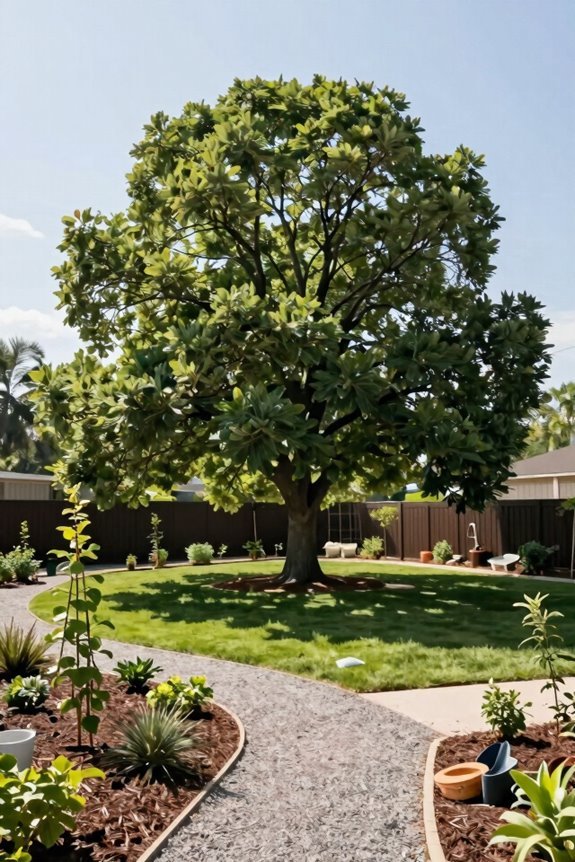
I’ve found that timing your purchase with the natural growth cycles; spring and fall being your sweet spots; pairs perfectly with sourcing trees from reputable nurseries like those operating out of Fort Mill, South Carolina, where they’re actually cultivated and conditioned before shipping (not just plucked from some mystery warehouse).
When you buy from established growers who ship within days, you’re getting plants that arrive ready to establish itself in your yard, creating shade structure rather than gambling on mail-order mystery trees. Finding a bespoke supplier means your sapling arrives in good condition and vigorous, so you can plant with confidence knowing you’ve invested in quality stock that’ll deliver decades of dappled relief.
Optimal Planting Season Timing
Timing your shade tree purchase and installation affects whether your canopy succeeds or your sapling struggles. There is actually a science to it. Aligning your planting season with your local climate prevents transplant shock and accelerates root establishment before extreme temperatures arrive.
Consider these pivotal timing factors:
- Fall plantings capture cooler temperatures and natural moisture, promoting robust growth development
- Spring installations harness emerging growth cycles when trees awaken from dormancy
- Pre-season purchases allow adequate root adjustment during transit from Fort Mill nurseries
- Climate-specific windows vary dramatically; your zone determines everything
Purchase shade trees several weeks before your ideal planting season arrives. This customized approach lets roots acclimate while you prepare soil conditions. Whether you’re chasing fall color or establishing summer refuge, strategic timing converts a risky gamble into a confident investment in your landscape’s future.
Selecting Reputable Tree Nurseries
Once you’ve mapped out your planting window, the next move is finding a nursery that’ll actually deliver healthy stock, not some leggy sapling that’ll barely survive its first season. I look for vendors with strong online ratings (think 4.7 stars) and nursery reputation built on sourcing from established facilities like those in Fort Mill, SC.
Fast-growing trees like Autumn Blaze Maple and Bloodgood Japanese Maple signal a nursery worth trusting. Verify they offer free shipping to 48 states with delivery within days. The best nurseries provide bespoke care guidance for establishment, including deep-watering protocols that support root development through year one. Stock variety matters too, as they should mix fast-growing and slow-establishing options for genuine year-round shade solutions, not just promises.
First-Year Establishment: Watering, Mulching, and Root Development
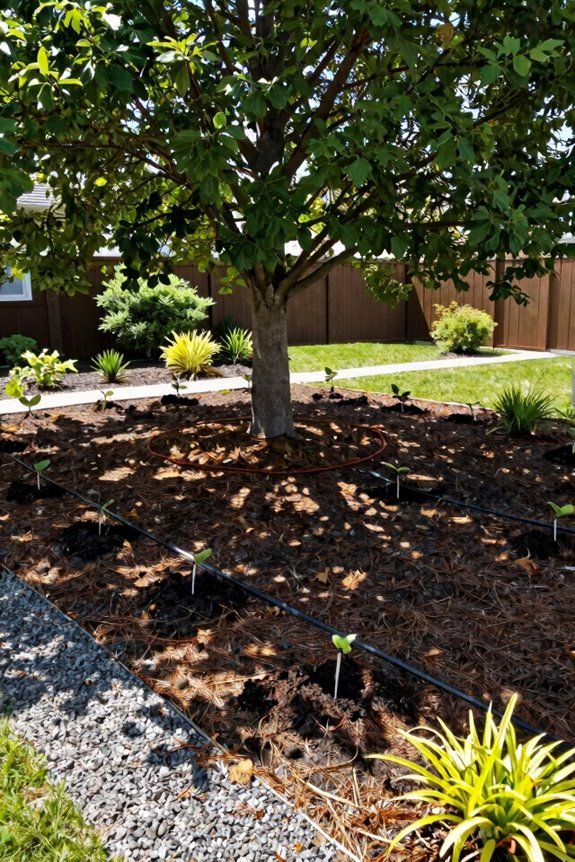
Because your newly planted shade tree is coming from the nursery’s coddled environment, it’ll need your focused attention during those critical first twelve months. I’ve learned that deep watering beats frequent sprinkling every time, like building architectural foundations rather than decorating surfaces.
Deep watering beats frequent sprinkling—build architectural foundations for your tree’s roots, not just decorative surfaces.
Here’s what develops a fragile sapling into a strong, established tree:
- Water deeply twice weekly, soaking the root zone thoroughly (not just moistening)
- Mulch generously with 3-4 inches of wood chips, keeping it away from the trunk
- Monitor soil moisture by feeling 6 inches down; it should feel like a wrung-out sponge
- Skip fertilizer initially since established nursery trees already have what they need
Your early investment pays dividends. Those deep roots you’re nurturing now prevent surface upheaval later, stabilizing your tree’s future and your landscape’s integrity.