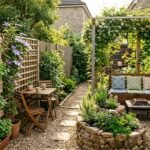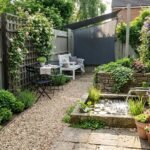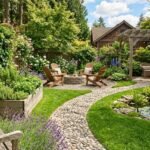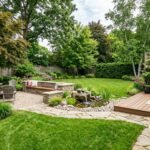
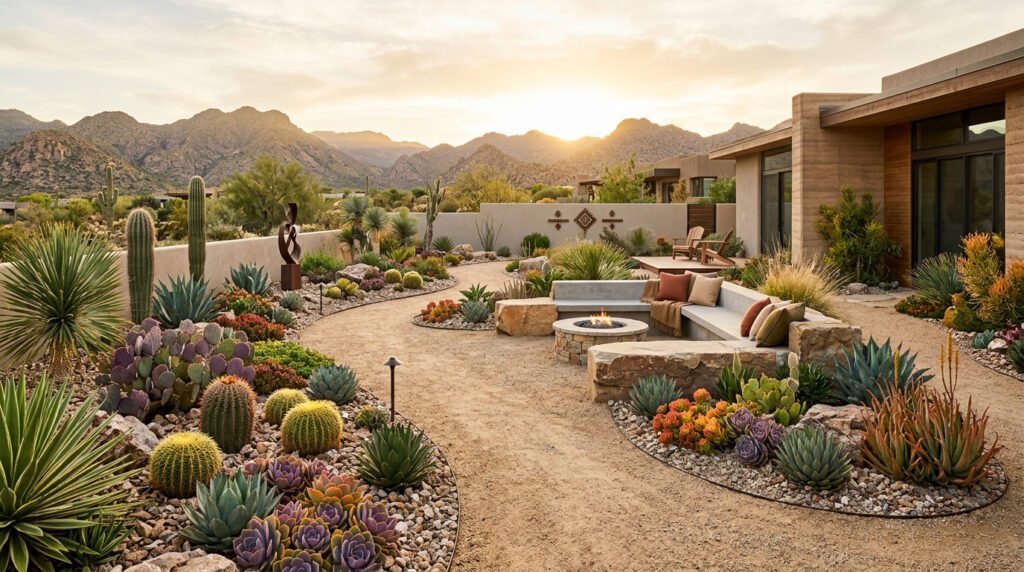
I’ll show you how to turn your dusty patch into a welcoming outdoor space, without trucking in a swimming pool. By anchoring your space with native palo verde and mesquite, layering in permeable hardscapes, and strategizing shade structures, you’re building something that actually belongs in the desert.
The key benefit? Doing it without constant watering or an absurd water bill. Here’s what transforms your backyard from parched to purposeful.
Start With Native Desert Plants and Drought-Tolerant Species
When you’re designing a desert backyard, your foundation should be native desert plants and drought-tolerant species; they’re the essential elements of arid landscaping. I’ve found that incorporating palo verde and mesquite trees transforms your space while demanding minimal irrigation. These drought-tolerant trees cast dappled shade without draining your water bill or your patience.
Grouping plants with similar needs, think agave, yucca, and penstemon together, streamlines your low-water gardening routine considerably. Native desert plants thrive in lean soil, requiring far less fertilizer than non-native alternatives. For color accents, I’d recommend red yucca and desert willow; they add seasonal interest with barely a sip of water.
This customized arid landscaping approach means your perennials flourish while you actually enjoy your water-wise backyard.
Design Hardscape Features That Echo the Desert
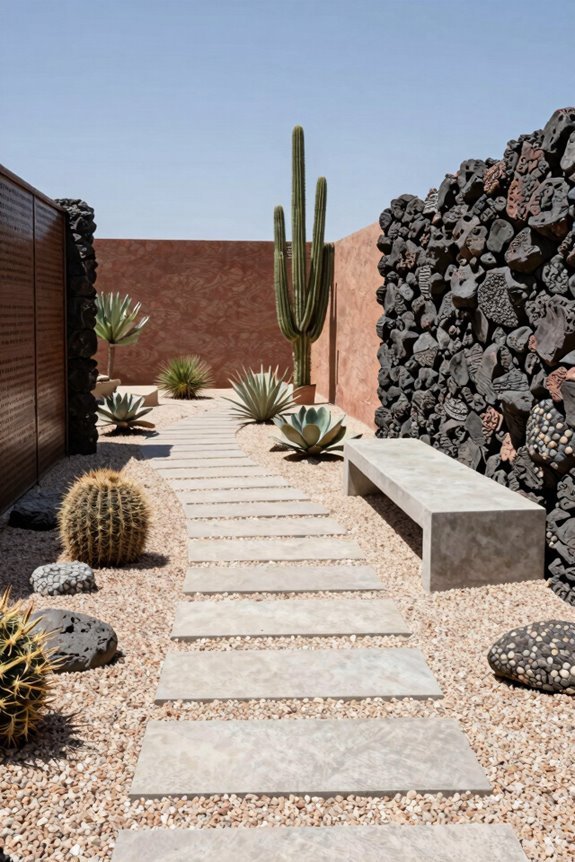
You’ll want to anchor your desert landscape with hardscape elements that feel born from the land itself. Think permeable gravel pathways that let rainwater sink through rather than run off, paired with locally sourced stone that echoes your region’s geological character.
Native boulders and strategically placed stone accents create visual rhythm while mimicking natural desert topography. When you layer in locally quarried patios and dry-stack walls, you’re building a custom outdoor room that requires minimal maintenance and maximum authenticity.
These hardscape features aren’t just practical; they provide erosion control, define spaces, and reduce the need for water-intensive turf. They serve as your design foundation that lets drought-tolerant plants and shade structures play their supporting roles without competing for attention.
Permeable Pathways and Patios
Why should rain vanish into storm drains when it could sink straight into your soil? Permeable pathways and patios make your desert backyard more water-efficient. I recommend using decomposed granite or permeable pavers—materials that let rainfall infiltrate rather than runoff.
These gravel pathways feel authentic underfoot while supporting groundwater recharge in arid climates. Strategic stone and boulder accents break up hardscape monotony, mimicking natural desert topography. Layer decomposed granite around drought-tolerant plants to create a low-maintenance landscape that practically cares for itself. This bespoke approach reduces irrigation needs dramatically.
Local materials establish genuine sense of place while shrinking transportation emissions. Your desert landscaping becomes functional art; beautiful pathways that conserve water without sacrificing style. That’s smart design meeting desert soul.
Native Stone and Boulder Placement
Because stone speaks the desert’s native language better than any manufactured material, I’d argue that boulders and locally sourced rock become your transition’s most honest design elements. I’ve found that arranging native stone in irregular, curved lines mimics natural desert ridges while dramatically improving drainage and soil moisture retention.
| Design Element | Benefit |
|---|---|
| Larger boulders at sightlines | Visual anchors and focal points |
| Layered berms | Enhanced water infiltration |
| Smaller stones filling gaps | Softened hardscape transitions |
| Locally sourced material | Authentic desert aesthetic |
| Curved placement patterns | Naturalistic appearance |
Position substantial boulders strategically; they’re landscape punctuation marks, the exclamation points of your design. Fill gaps with smaller rock accents, creating custom transitions between permeable pathways and drought-tolerant plants like agave and yucca.
This naturalistic hardscape improves visual interest while respecting your arid environment’s inherent beauty.
Divide Your Backyard Into Functional Living Zones
- When a desert backyard sprawls before you like an undivided canvas, the smartest move is to break it into distinct zones: lounging, dining, and entertaining areas that each serve a purpose without fighting for space.
- I’d recommend creating functional living zones using these desert landscaping ideas:
- Define pathways with decomposed granite or gravel to guide foot traffic naturally
- Position a shaded lounging area beneath a pergola with earthy-toned seating
- Establish a dining space near a water feature or fire pit for gathering
- Use native desert trees as privacy barriers between zones
- Install permeable hardscaping with drought-tolerant plants for sustainable drainage
- This customized approach transforms your arid outdoor space into interconnected rooms. You’ll enjoy maximum comfort without sacrificing the desert’s inherent beauty or your water conservation goals.
Choose Shade Structures for Cooling and Focal Interest
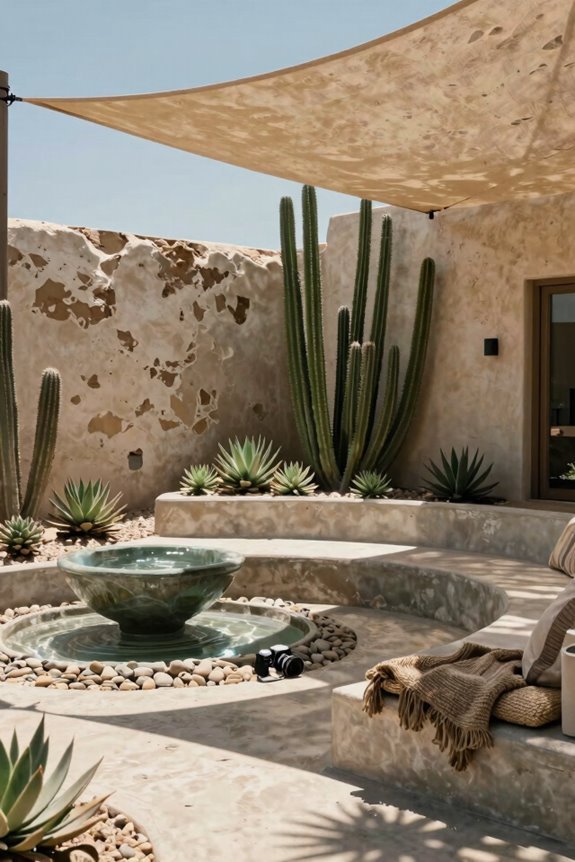
I’ve found that positioning shade structures strategically changes both your comfort level and your backyard’s visual appeal. A pergola over your dining area, for instance, creates that essential cooling zone, while a slatted shade sail becomes an architectural anchor that your eye naturally gravitates toward.
When you layer sun-tolerant plants like desert ironwood or palo verde beneath these structures, you’re creating focal points that serve dual purposes: dappled shadows that lower surface temperatures and greenery that breaks up the monotony of bare hardscape. The visual interest deepens when you weave in warm-hued fabrics and lattice screens, which add character without sacrificing the water-conscious approach your desert garden demands. After all, style shouldn’t require an irrigation bill that rivals your mortgage.
Structural Shade Solutions
Transform your desert backyard into a livable outdoor room by anchoring it with strategic shade structures. The desert sun requires deliberate planning for comfort and usability. Layering multiple solutions creates cooling zones where you’ll actually want to spend time:
- Pergolas and gazebos provide sturdy frameworks for climbing vines like bougainvillea
- Shade sails offer flexible, modern coverage with breathable fabrics that prevent heat buildup
- Heat-reflective materials bounce sunlight away rather than absorbing it
- Canvas coverings allow airflow while filtering intense afternoon rays
- Sun-tolerant trees deliver greenery that deepens shade naturally over seasons
Position structures to maximize afternoon relief in seating areas while preserving views of focal desert features. This customized approach transforms harsh landscapes into welcoming havens where desert living feels intentional, not punitive.
Focal Point Placement Strategies
Where should that pergola actually go? Strategic placement transforms shade structures from mere accessories into anchors for your entire outdoor experience. Position them to frame focal points: fire pits, water features, or specimen desert plants, creating bespoke microclimates where you’ll actually want to gather.
Consider sun angles carefully. Afternoon shade over seating areas keeps you comfortable while maintaining sightlines to architectural features and distant views. Layer native trees like mesquite or palo verde beneath your structures; their foliage extends cooling and reduces heat reflected from hardscape.
| Focal Element | Ideal Shade Structure |
|---|---|
| Fire pit | Pergola with partial slats |
| Water feature | Gazebo for full protection |
| Specimen plant | Shade sail for visual focalization |
| Seating zone | Umbrella cluster system |
Choose earthy materials, rusts, and charcoals that whisper rather than shout, creating cohesion while offering UV-resistant durability.
Add Desert Water Features Without Wasting Water
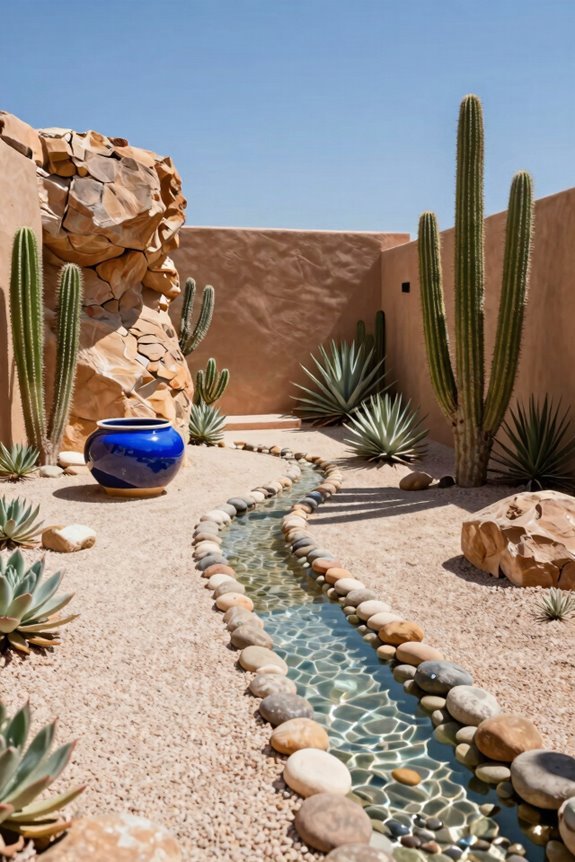
Can you really have a water feature in an arid climate without guilt-tripping yourself every time you glance at your water bill? Absolutely. I’ve discovered that water-efficient desert water features aren’t just possible; they’re worthwhile.
Here’s how I’ve made it work:
- Recirculating pondless systems reuse the same water, dramatically cutting waste
- Small rock fountains with shallow basins minimize splash and evaporation
- Solar-powered pumps eliminate grid energy entirely, offering guilt-free ambiance
- Dry creek beds paired with low-flow fountains conserve resources well
- Drought-tolerant plantings and mulch around edges reduce soil moisture loss
The secret is pairing these bespoke designs with irrigation efficiency in mind. I’ve integrated native plants strategically, creating cooling visual effects without the water-wasting regret. Your desert landscape can be both attractive and responsible.
Set Up Efficient Irrigation for Hands-Off Watering
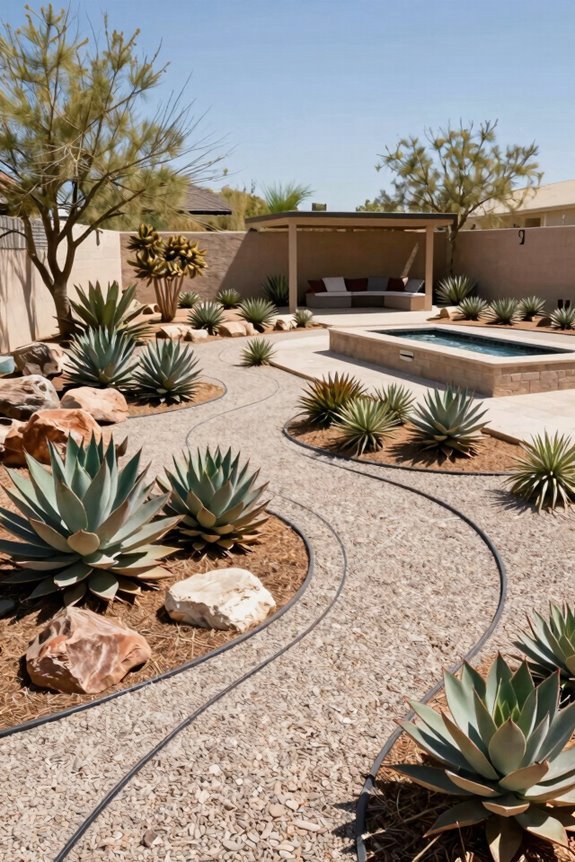
Now that you’ve got your water features humming along responsibly, it’s time to tackle the real water consumer in your desert backyard: your plants. I’d recommend installing drip irrigation systems that deliver water directly to plant bases, slashing evaporation waste considerably. Smart irrigation controllers adjust schedules based on soil moisture and evapotranspiration rates, basically functioning as your personal water-saving assistant without the attitude.
Low-volume emitters minimize water loss in high-heat environments where every drop counts. Group drought-tolerant plants by watering needs, simplifying maintenance while preventing over-watering disasters. Add mulch around beds to conserve moisture and regulate soil temperature, boosting overall water efficiency significantly. This customized approach transforms you into a hands-off gardener whose plants flourish without constant fiddling.
Extend Your Evenings With Lighting and Fire Features
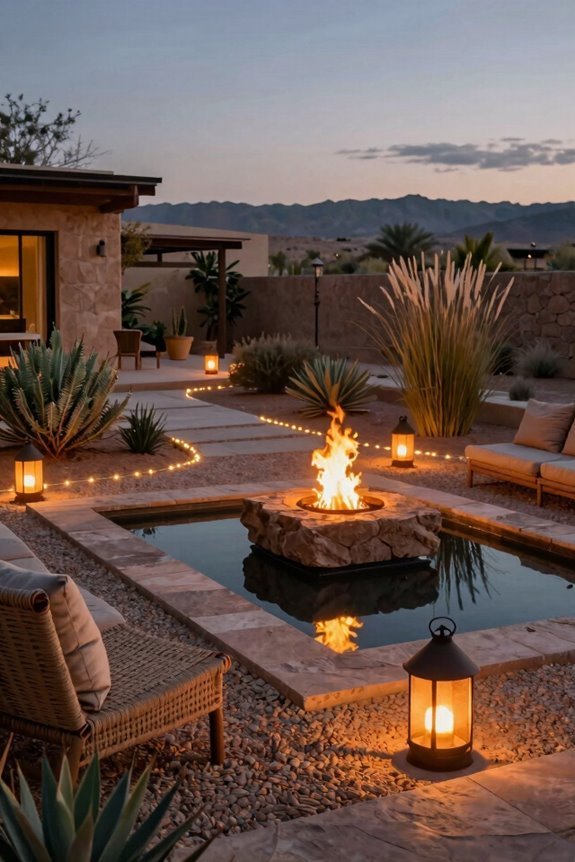
Why settle for abandoning your desert oasis when the sun dips below the horizon? I’ve discovered that strategic outdoor lighting extends your nighttime living into what you’d normally reserve for daylight hours.
Here’s how I’ve enhanced my desert landscaping:
- Pathway illumination with low-voltage LED fixtures guides visitors safely across permeable pavers
- Uplighting on boulders and tall plants creates dramatic depth and enhances the desert landscape
- Ambient lighting beneath pergolas delivers warm, inviting gathering spaces
- Fire features, whether gas or wood-burning, serve as social focal points and seasonal warmers
- String lights cast ethereal silhouettes against desert skies
The advantage? Low-voltage systems reduce energy consumption while delivering customized outdoor living spaces. I’ve learned to respect local regulations and maintain clearance from flammable materials, because safety comes before aesthetics. Your evening entertaining just got seriously extended.