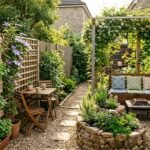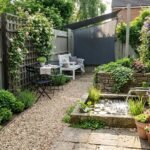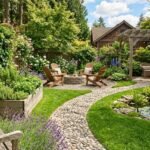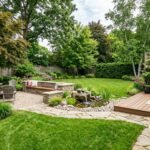
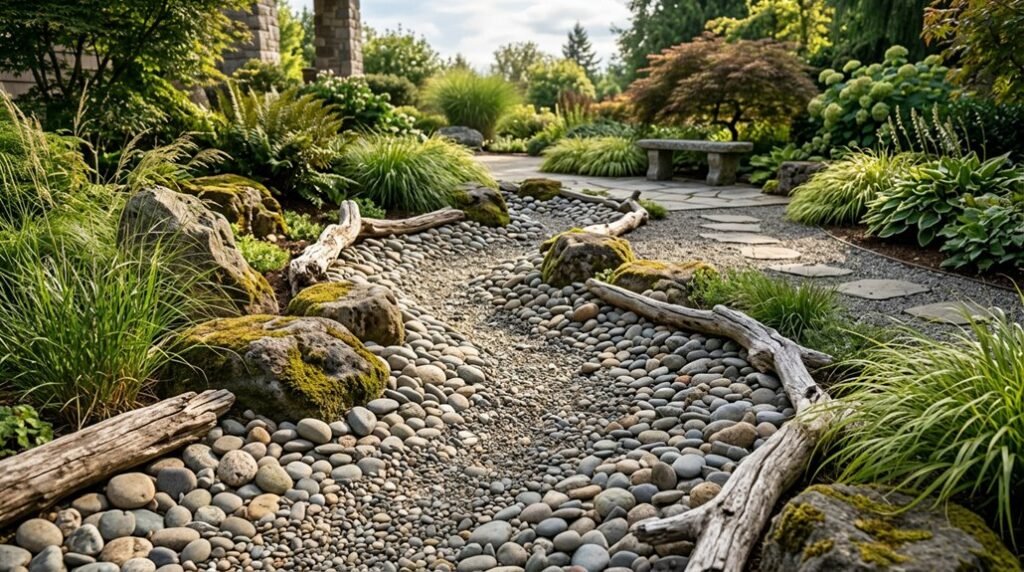
I’ll show you how to redesign your yard with a dry river bed, those curving channels of layered stone that control water runoff while looking visually striking.
You’ll arrange large boulders at curves, guide the flow with medium river rocks, and soften everything with drought-tolerant plants like yarrow and rosemary.
But here’s the thing: the real benefit isn’t just what you see.
It’s how this feature actually works beneath the surface, preventing erosion and reducing maintenance challenges you didn’t know you had.
What Dry River Beds Are and Why They Add Value
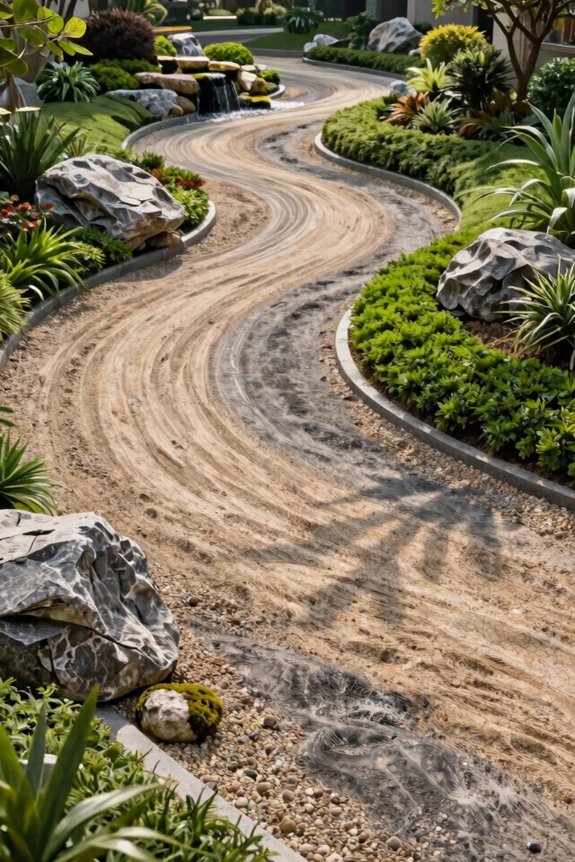
Ever wonder how scenery designers manage water while creating something beautiful? That’s precisely what a dry creek bed does. I’ve found that these landscape features masterfully redirect drainage away from your home while transforming ordinary yards into captivating outdoor spaces.
A custom dry creek bed incorporates strategically placed rocks, with large boulders anchoring curves and smaller river rocks filling the interior to mimic natural waterways. This arrangement isn’t merely aesthetic; it’s functional drainage management. The rocks absorb heavy rainfall runoff, significantly reducing erosion that would otherwise damage your landscaping.
What I love most is that they’re low-maintenance focal points requiring minimal upkeep. Whether you’re designing a front yard or back garden, a dry creek bed adds both practical drainage solutions and visual interest, proving that smart landscaping improves property appeal.
Why Dry Creek Beds Control Water and Prevent Erosion
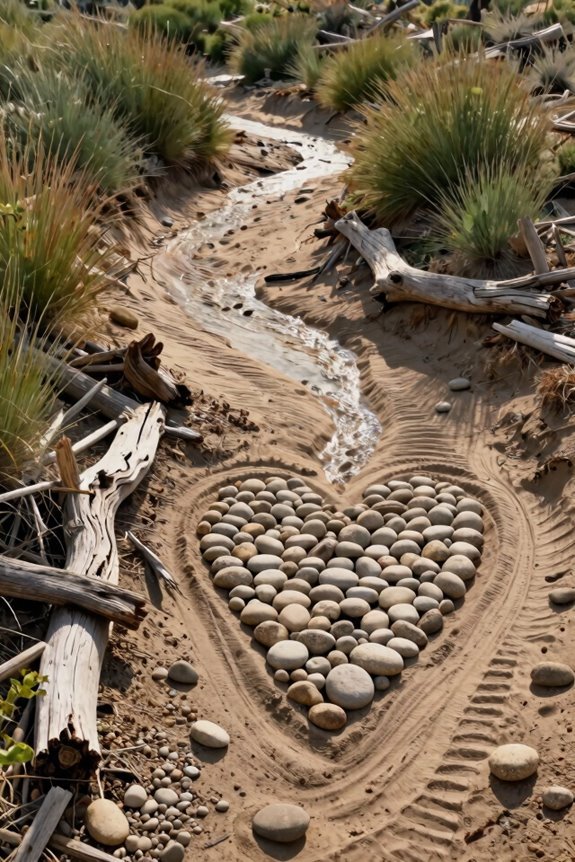
Now that you’ve got the aesthetic appeal down, let’s talk about what makes dry creek beds actually work, because pretty doesn’t matter much when your landscape’s washing into the street. I’ve found that strategically placed rocks redirect surface water during heavy rainfall, channeling runoff along designed paths that significantly reduce erosion.
The key is layering large boulders at turning points with smaller river stones, which slows water velocity and prevents that destructive scouring effect. Underneath, landscape fabric acts as your silent guardian, preventing weeds while maintaining unobstructed drainage pathways. This combination creates a customized drainage solution that diverts water away from your home and landscape. In wet climates especially, these beds shift from mere decoration into functional infrastructure that protects your yard’s soil and structural integrity.
Popular Dry Creek Bed Designs for Every Yard
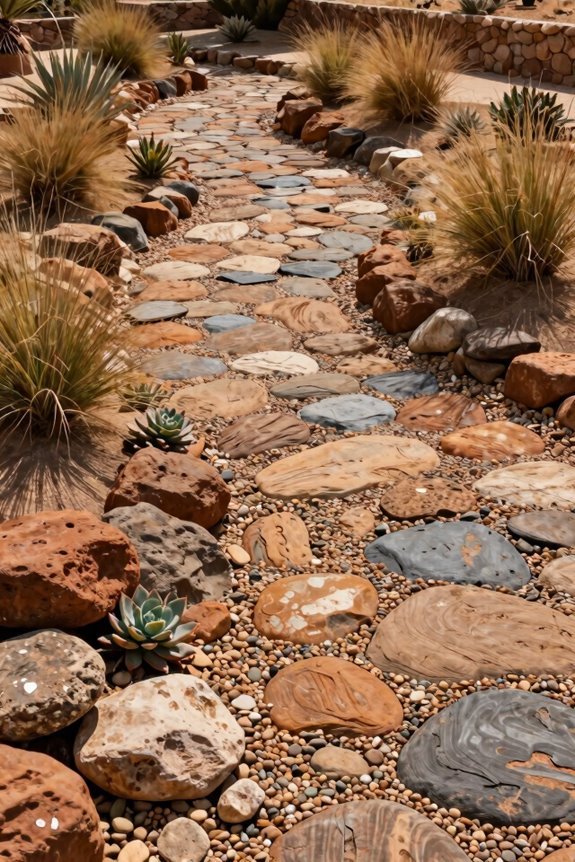
I’ll show you how to design a dry creek bed for your yard with approaches that work well across different settings, whether you’re dealing with slopes or a flat expanse that needs visual interest. Your rock selection matters significantly; bigger boulders anchor those critical turning points, while smaller stones guide the interior flow.
Pairing rocks with drought-tolerant plants like yarrow and rosemary creates landscapes that require minimal maintenance. From Japanese slate layouts to copper rain chains that direct water effectively, these custom approaches adapt well to climates ranging from Virginia’s wet 43 inches annually to arid regions where every drop counts.
Functional Drainage Solutions
Transform your yard’s water management challenges into an attractive landscape feature by installing a dry creek bed, a design that tackles erosion and drainage while adding natural beauty to your outdoor space. Strategic boulder edging anchors the entire landscape design, creating defined pathways for water flow. Large boulders at turning points prevent washout, while smaller river rocks fill the interior, mimicking nature’s authentic charm.
Layering landscaping fabric beneath suppresses weeds without sacrificing drainage functionality. For enhanced water management, consider installing copper rain chains that guide runoff directly into the bed for both visual interest and practical benefit. In wetter climates, this approach diverts excess moisture, protecting your garden from saturation while maintaining that coveted natural aesthetic.
Your dry creek bed becomes both an engineering solution and a landscape feature that enhances your property’s design.
Rock Selection and Sizing
What makes a dry creek bed look authentic rather than like someone just dumped rocks in a trench? Rock sizing. I’ve discovered that varied river rocks, from golf-ball-sized pebbles to fist-sized stones, create that water-tumbled quality your landscape needs. Here’s my approach: I anchor turning points with substantial boulders (the visual punctuation marks), then layer medium and small stones to establish organic flow patterns. This rock sizing technique mimics how actual water sculpts creek beds over millennia.
For landscape texture, I blend warm tan and gray rounded stones; no angular rejects allowed. The color variation provides visual richness. Medium stones guide the eye downstream, while larger rocks define borders convincingly. When you layer these river rocks thoughtfully, your dry river bed becomes something that looks professionally designed rather than hastily assembled.
Climate-Specific Design Approaches
Because your yard’s rainfall pattern and soil drainage characteristics are as unique as your zip code, your dry creek bed design should be equally tailored. In wet climates like Forest, VA, where 43 inches of annual rainfall means your lawn practically auditions for a swimming pool, I’d recommend a more robust drainage strategy.
Layer larger boulders strategically to handle heavy water flow without washing away your carefully placed stones (yes, water has opinions about landscaping). Consider copper rain chains directing runoff directly into your creek bed, creating both function and visual drama.
For drier regions, you’ve got design freedom to prioritize aesthetics over engineering. Either way, your custom landscape design turns inevitable drainage challenges into striking focal points that work with your climate rather than against it.
Sloped Yard Dry Creek Beds With Natural Rock Variation
When you’re working with a sloped yard, I’ve found that varying your rock sizes—mixing hefty boulders with smaller stones and pea gravel—creates an authentic streambed aesthetic while naturally guiding water downhill, which functions as a natural drainage system. You’ll want to pair this rocky foundation with drought-tolerant border plants like yarrow, rosemary, and foxtail fern, which not only add greenery without constant watering but also anchor the design and prevent erosion on the incline.
The result is a custom landscape feature that handles both form and function. It looks like a real creek meandered through your yard while simultaneously solving your slope’s drainage challenges.
Rock Sizing And Placement
How’d you like your dry creek bed to look—like it actually had water running through it yesterday?
Rock sizing and placement are essential elements. I’ve found that combining large boulders with medium and small river rock creates authentic visual flow. Large boulders anchor turning points, while smaller pebbles fill the interior, establishing depth and dimension.
| Rock Type | Purpose |
|---|---|
| Large boulders | Anchor curves and guide water flow |
| River cobbles (tan/gray) | Border definition and texture |
| Small interior pebbles | Layered, three-dimensional effect |
Your dry creek bed works best when you resist straight lines; nature abhors them. Curving layouts mimic genuine water movement on slopes. I position larger rocks at edges for emphasis, smaller stones within, creating that bespoke, lived-in appearance.
This strategic placement shapes your yard into a landscape feature that feels intentional yet wonderfully organic.
Drought-Tolerant Border Plants
What makes a sloped dry creek bed shift from bare rock to an appealing landscape? The right border plants. I’ve discovered that drought-tolerant plants like rosemary, yarrow, and foxtail fern create the greenery that enhances your rocky landscape. These aren’t just pretty faces; they’re hardworking teammates.
Rosemary brings silvery-green texture and aromatic interest. Yarrow delivers clusters of golden, coral, or crimson blooms that dance along your creek’s edge. Limonium adds delicate, papery flowers that whisper in the breeze.
What makes this combo suited to sloped yards? These border plants anchor soil while their deep roots handle drainage like pros. You’ll reduce irrigation needs dramatically. The result is a cohesive, mulched-edge border that controls runoff while proving that low-maintenance doesn’t mean low-impact. Your landscape becomes an invitation to belong to the sustainable-design community.
River Rock Selection: Creating Authentic Creek Bed Aesthetics
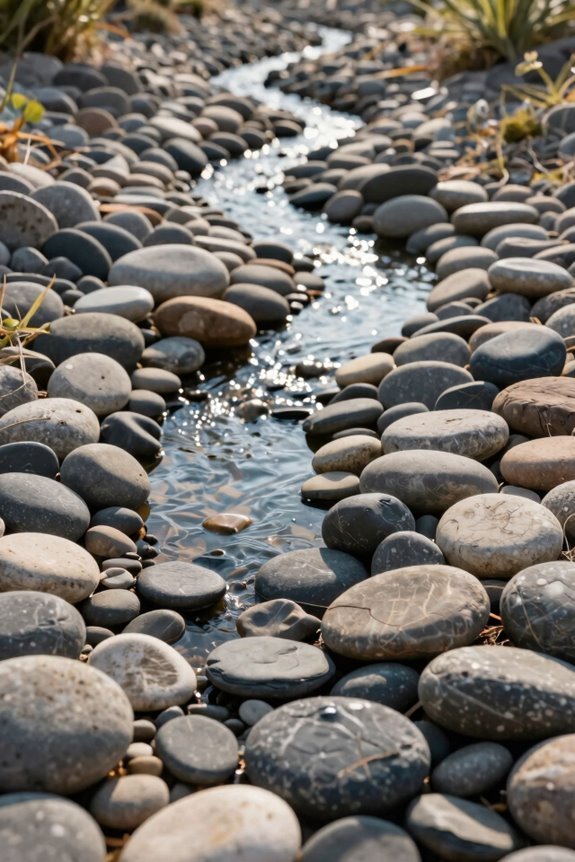
The secret to nailing that “nature did this, definitely not me” vibe? Select river rocks that actually look like water wore them down. I’m talking rounded stones in medium to large sizes. Jagged varieties will betray your carefully constructed illusion.
Your palette tones matter enormously. Mix tan, gray, and neutral cobbles to echo authentic riverbed textures and prevent that monotonous, landscaped appearance.
Anchor turning points with substantial boulders; they’ll establish structure while guiding the eye naturally downstream. Position smaller rounded stones between them, creating organic flow rather than rigid lines. This bespoke arrangement transforms your dry creek bed into something genuinely credible.
| Rock Size | Purpose | Placement |
|---|---|---|
| Large | Anchors & structure | Turning points |
| Medium | Visual flow | Throughout bed |
| Small | Texture & depth | Fill spaces |
| Mixed | Natural variation | Entire design |
| Rounded | Authenticity | Everywhere |
Japanese Garden Dry Creek Beds for Bold Visual Impact
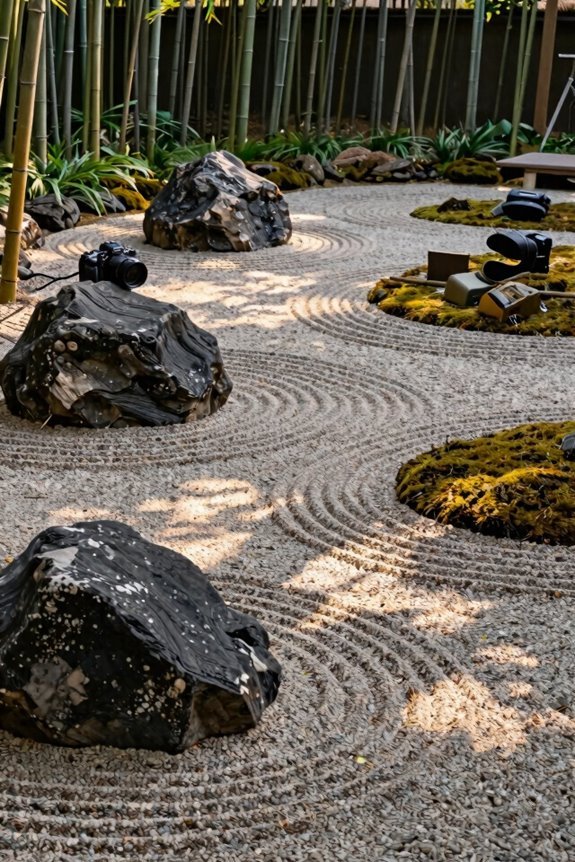
If you’re ready to abandon the organic, boulder-scattered approach for something with considerably more backbone, Japanese garden dry creek beds demand your attention. I’d argue that slate paddle stones create the most striking dry creek bed aesthetic: their dark, uniform surfaces overlap like scales, forming a bold visual impact that commands respect.
What makes this Japanese garden style compelling is the tight, continuous layering with no gaps. The contrast between deep slate and surrounding plants, especially purple iris beds, establishes a structured line that feels intentional. You’re not mimicking nature; you’re choreographing it.
This slate creek bed approach transforms your landscape into a meditative space with genuine design backbone. It’s minimalism with attitude.
Connect Gutter Downspouts to Dry Creek Beds
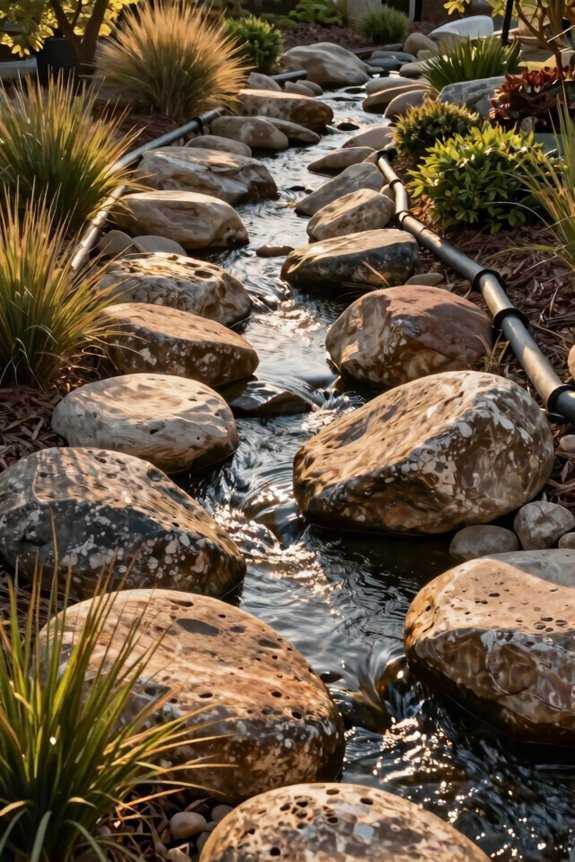
I’ve discovered that routing your gutter downspout into a dry creek bed transforms a purely utilitarian drainage problem into an attractive landscape feature that whisks water away from your foundation while looking intentional rather than like you forgot to finish the job.
You’ll want to lay landscaping fabric first, then fill the bed with black river rocks (small to medium sized work best) that channel rainwater naturally downslope, preventing erosion and the muddy moat situation that splash blocks tend to create. By edging the bed with stone or wood and letting nearby plantings blur the line between design and practicality, you’re creating water management that actually earns its place in your yard’s landscape.
Functional Rainwater Management
Rather than letting gutter downspouts dump roof runoff onto your landscape like an unwanted guest, you can channel water into a dry creek bed. Replacing splash blocks with a mini dry creek bed filled with black river rock creates effective rainwater management.
Here’s what makes downspout integration effective: you’re protecting your foundation and mulch from erosion while adding visual interest. Build the bed to any length your yard requires; customization matters. Frame it with flat slate stone borders and surrounding mulch for that polished transition, because function doesn’t mean sacrificing aesthetics.
This drainage landscaping approach proves you don’t need to choose between practical and beautiful. Your roof runoff becomes landscape value.
Custom Aesthetic Integration
Why settle for utilitarian splash blocks when your downspout can become a design statement? I’ve discovered that redirecting gutter downspouts into a custom aesthetic integration transforms your home’s drainage into landscape art. By channeling roof runoff into a black river rock dry creek bed, you’re replacing eyesores with purposeful elegance.
Your bespoke drainage feature guides water naturally while blending seamlessly with surrounding mulch and plants. The beauty lies in consistency: uniform rock colors and clean edging create visual harmony that plastic splash blocks simply can’t match. I tailor each creek bed’s length to fit the property perfectly, whether short and decorative or extended corridors.
Landscaping fabric beneath the stones prevents weeds while maintaining that coveted low-maintenance aesthetic. Your downspout doesn’t just manage water anymore; it belongs.
Play Yard Dry Creek Beds as Functional Garden Dividers
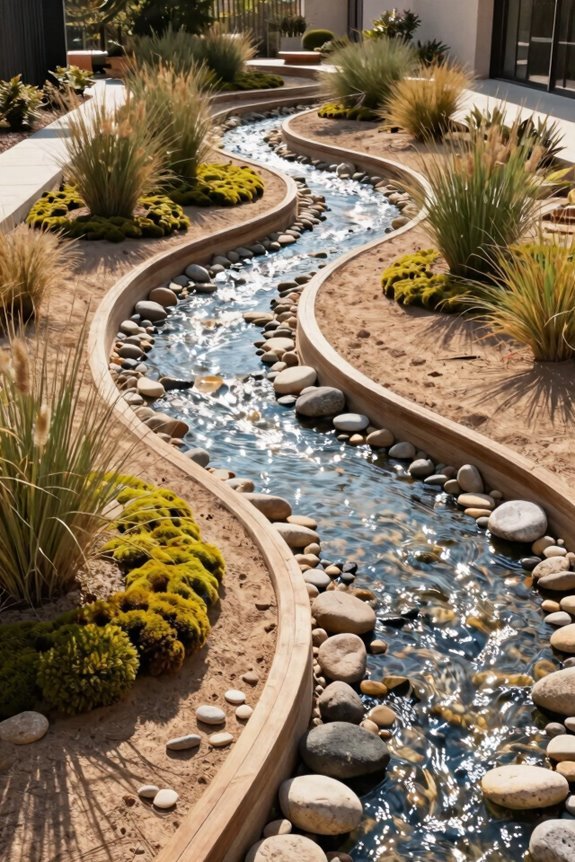
How do you separate a kid’s sandbox from your prized perennials without installing an ugly fence? A play yard dry creek bed does exactly that. This custom garden divider creates natural boundaries while maintaining visual flow. The design integrates drainage seamlessly, whisking away water after storms so you’re not explaining soggy lawns to your landscaper.
| Feature | Benefit |
|---|---|
| Rocky texture | Sensory exploration |
| Wood bridge | Movement + focal point |
| Varied pebbles | Tactile interest |
| Natural drainage | Functional appeal |
Your kids get an inviting play space; your garden stays protected. Surrounding shrubs and groundcovers soften edges, creating that cohesive look you’re after. It’s the garden divider that actually belongs in your yard, not an eyesore, but a landscape feature everyone admires.
Desert Dry Creek Beds for Low-Water Xeriscaping
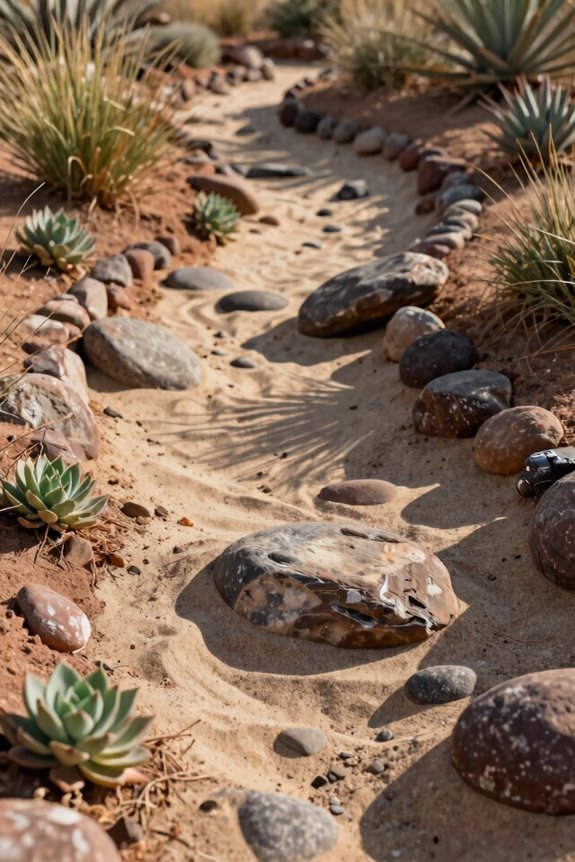
While play yards require moisture and abundant greenery, desert landscapes demand a completely different philosophy—one where every drop counts and beauty emerges from restraint. I’ve discovered that desert dry creek beds become xeriscaping’s essential tool.
You’ll layer varying rock and pebbles—think warm beiges against slate grays—to create visual intrigue without demanding water. These aren’t just attractive; they’re practical. Strategic boulder placement handles drainage well, slowing runoff before it escapes.
I pair sparse drought-tolerant plants with mulch around the bed, which conserves moisture while maintaining that sculptural quality. The key is following natural contours, letting curves mimic actual waterways (minus the actual water—convenient, right?). Your landscape becomes bespoke yet sustainable, proving that restraint and striking design aren’t mutually exclusive.
Best Plants for Dry Creek Bed Borders
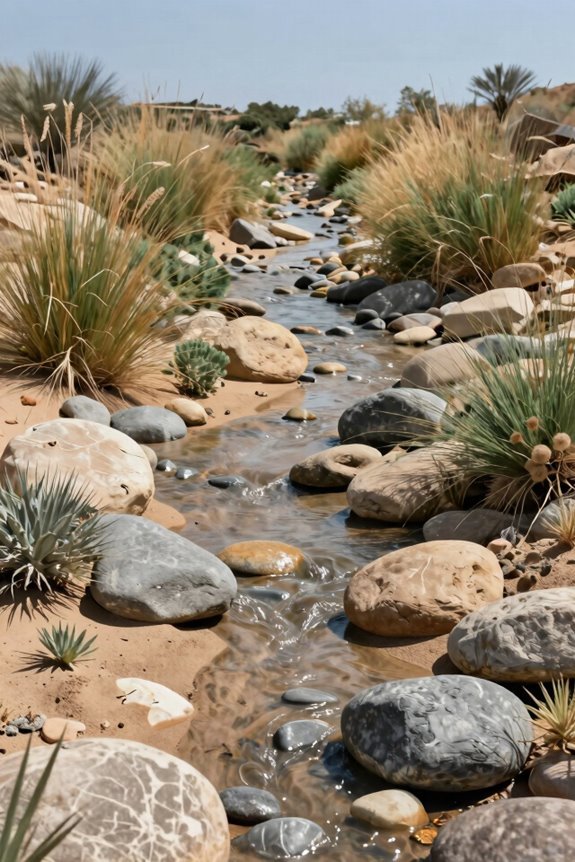
Since your dry creek bed’s visual success hinges on what frames it, the right borderline plantings transform mere rock arrangements into cohesive scenery features. I’ve found that layering drought-tolerant plants creates the lush appearance you’re after without the guilt of excessive watering.
Here’s what works beautifully:
- Ornamental grasses soften hard edges while adding graceful movement and seasonal texture
- Drought-tolerant perennials like yarrow and rosemary provide reliable color with minimal fuss
- Native shrubs anchor your design, creating a custom landscape that feels naturally integrated
Your border planting strategy should space plants generously to maintain creek bed visibility. This approach optimizes drainage while showcasing your hardscape investment. Think of ornamental grasses as nature’s choreographers; they’ll dance alongside your rocks, creating that sophisticated layered effect that separates well-designed landscapes from merely functional ones.
Building Your Dry Creek Bed: Step-by-Step Installation
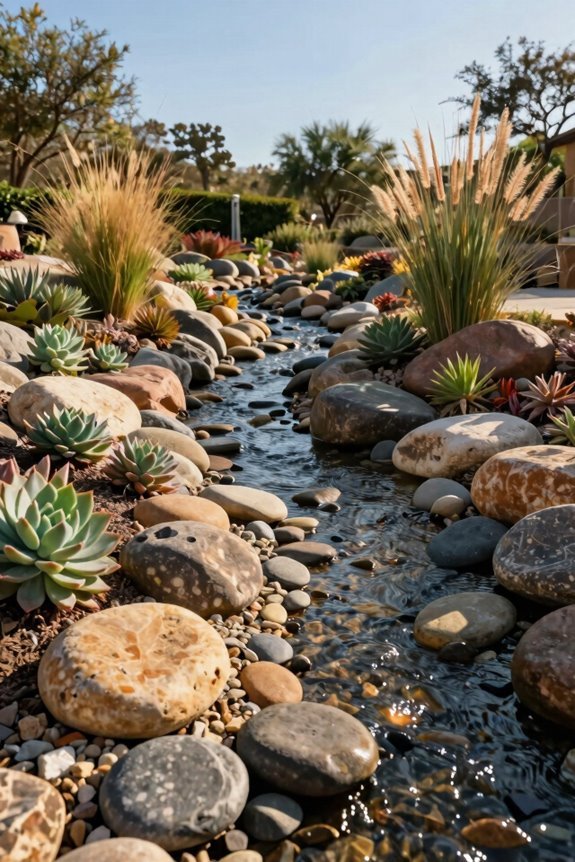
Once you’ve chosen your border plants and mapped your creek’s path, it’s time to start digging. Start by laying landscaping fabric across your channel; this suppresses weeds while enhancing drainage. Next, position large boulders at turning points to anchor your design, acting as the structural foundation of your creek’s path.
Fill the bed with medium-to-small river stones in varying sizes and colors: tan, gray, and blue-gray create authentic texture and visual interest. Install flat slate or edging stones along borders to define boundaries and prevent your neighbors from mistaking it for an actual water feature. This layered approach of fabric, rocks, and edging turns a simple channel into a distinctive landscape feature that guides runoff while adding refined character to your yard’s appearance.
Design Elements for Your Dry Creek Bed
You’ve built the bones of your dry creek bed, now it’s time to give it soul. I’m talking about transforming those river rocks into a landscape feature that actually stops people mid-conversation.
Start by layering your materials strategically. Large boulders anchor curves and turning points, while medium and small stones create organic flow. Pair slate edging with landscaping fabric to keep weeds out and your maintenance manageable.
Here’s what creates excellent results:
- Curves over rigidity: ditch the straight lines for natural contours that feel welcoming
- Strategic plantings: yarrow, rosemary, and drought-tolerant grasses soften the hardscape beautifully
- Textural contrast: mix smooth river rocks with jagged boulders for visual depth
The result? A custom dry creek bed that blends plants and stone into one cohesive masterpiece.
Keep Your Dry Creek Bed Looking Great Year-Round
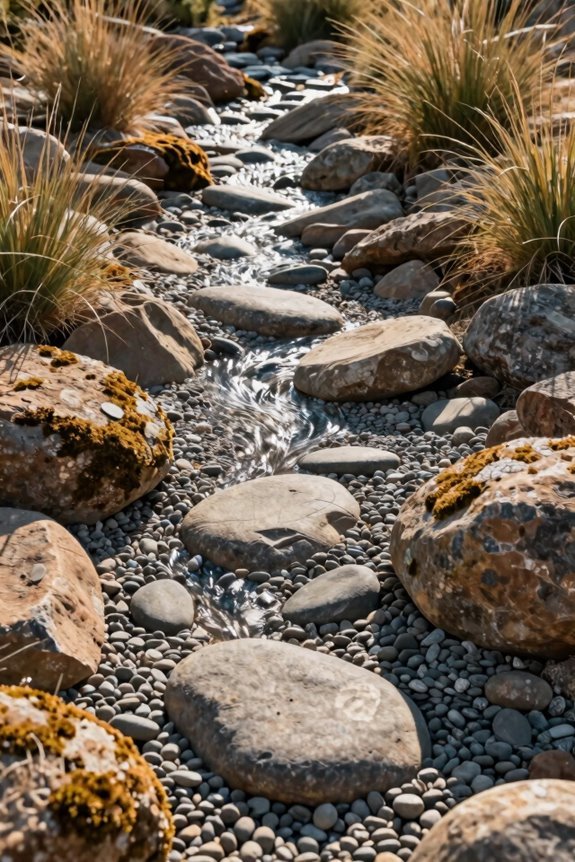
How do you keep that eye-catching dry creek bed from slowly reverting to an overgrown mess? I’ve found that consistent seasonal maintenance prevents your landscape investment from becoming an eyesore. After storms, I inspect the bed thoroughly, removing debris and monitoring for erosion that threatens those carefully placed edges.
I keep gravel depth uniform; this isn’t glamorous work, but it’s essential for proper drainage and weed suppression. Rock placement requires periodic attention, and seasonal shifts demand gentle re-seating to maintain that organic, uneven aesthetic you’ve worked to achieve. I pull weeds by hand (yes, really) to preserve the bed’s natural integrity.
Plan quarterly checks for durability and prune encroaching vegetation nearby. This customized maintenance turns your dry creek bed from a temporary feature into an enduring landscape centerpiece that actually earns its place in your yard.