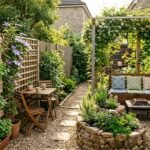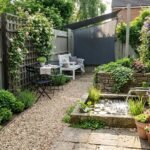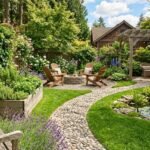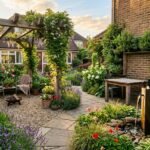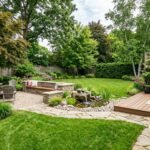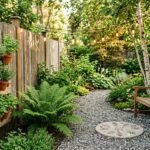
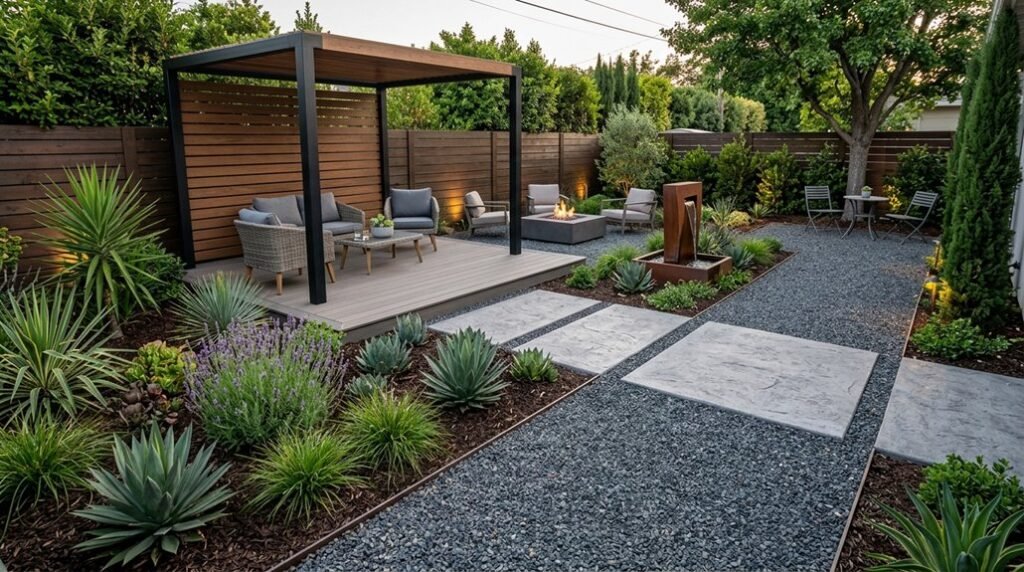
If your lawn’s been more burden than blessing, you’re not alone, and you don’t need grass to create a beautiful outdoor retreat. I’ve discovered that swapping turf for native plants, permeable hardscapes, and drought-tolerant xeriscaping changes your space into a low-maintenance area.
From productive raised beds to tranquil Zen gardens filled with gravel and stone, these seven approaches offer practical solutions for every aesthetic. Each design actually cuts your water bill and maintenance hours while boosting biodiversity. Here’s what works best.
Native Plants: Adapt Your Garden to Local Climate
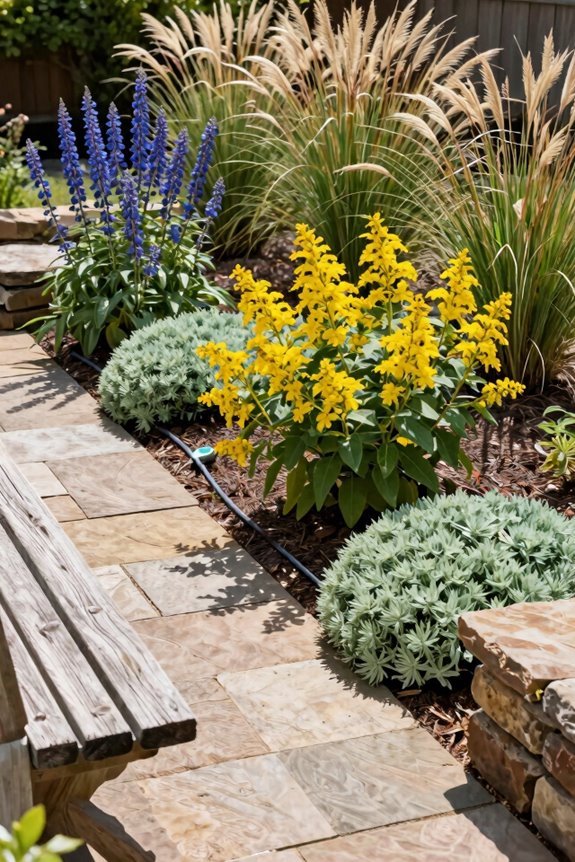
Let me break down why native plants will transform your no-grass backyard from a thirsty maintenance nightmare into a self-sufficient habitat. When you select region-specific species, you’re asking plants to do what they’ve already mastered: thriving in your local soil and climate. This drought-tolerant approach slashes your water bill and eliminates endless fertilizer applications, no more chemical treatments.
Native plants aren’t just attractive foliage; they’re biodiversity powerhouses attracting pollinators and birds that’ll make your space come alive. I’d recommend a phased installation strategy: start small, observe what flourishes, then expand. Mix flowering perennials with architectural shrubs for year-round interest.
This bespoke, low-maintenance design creates a regional climate-adapted space where nature handles the heavy lifting. You’re not fighting nature anymore; you’re joining forces with it.
Xeriscaping: Save Water With Drought-Tolerant Design
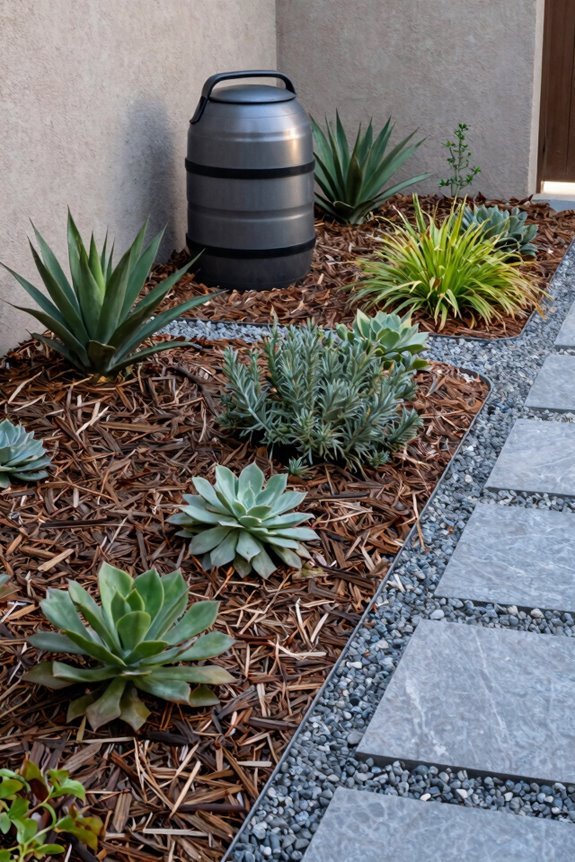
When you’re ready to ditch the thirsty turf, xeriscaping lets you create a custom outdoor space that practically waters itself.
I’ll walk you through selecting drought-tolerant plants like sedums and desert marigolds, layering in hardscape elements such as decomposed granite pathways and river rocks, and strategizing your irrigation zones so every drop counts. Because in water-conscious landscaping, efficiency is practical and effective.
Drought-Tolerant Plant Selection
Because water bills and environmental guilt both sting, xeriscaping offers a smarter path forward, one where your landscape actually does well on neglect. I’ve discovered that selecting drought-tolerant plants isn’t about sacrificing beauty; it’s about choosing species that genuinely belong in your climate.
Native species like sedums, Russian sage, and desert marigold demand virtually zero fussing while supporting local pollinators. Pair these with strategic mulch layers (cedar chips work beautifully) to lock in moisture and suppress weeds simultaneously. Install drip irrigation on a timer, and you’ve created a self-sufficient system. The real payoff happens when you stop fighting your region’s natural conditions.
Your low-maintenance landscape becomes a lush green tapestry that practically maintains itself. That’s the custom outdoor space every gardener secretly craves.
Water Conservation Benefits
How much of your monthly water bill disappears into thirsty turf that’ll brown out anyway come summer? I’ve discovered that xeriscaping converts this water-guzzling reality into real savings. By embracing drought-tolerant plants and low-maintenance landscaping, you’re joining a community that refuses to waste resources on grass that demands constant care.
Consider these water conservation wins:
- Drip irrigation systems deliver water directly to root zones, slashing waste by 50%
- Ornamental grasses thrive on rainfall alone once established, eliminating supplemental watering
- Mulch layers retain soil moisture while suppressing weeds; it’s basically nature’s protective covering
- Smart controllers adjust watering schedules based on weather, preventing runoff
Your xeriscape doesn’t just shrink water bills; it creates year-round visual appeal without the guilt. That’s the belonging we’re after: sustainable beauty that actually makes sense.
Hardscape Features and Layout
You’ve cut your water bill down, now it’s time to build the skeleton that’ll hold your xeriscape together. I’m talking hardscape: the gravel paths, decomposed granite, and strategically placed boulders that anchor your design while suppressing weeds like tiny landscape bouncers.
Layer mulch generously around drought-tolerant plants. It’s basically a moisture blanket for your soil. Your layout matters too. I arrange my beds in flowing curves or tidy grids, if you’re into that, with drip irrigation tucked beneath the mulch, delivering water where it counts.
Add shade structures like pergolas or rocks to reduce evaporation and create comfortable gathering spots. These elements work together well, turning your yard into a low-maintenance space that looks intentional, not sparse.
Hardscape Pathways: Define Zones With Pavers and Stone
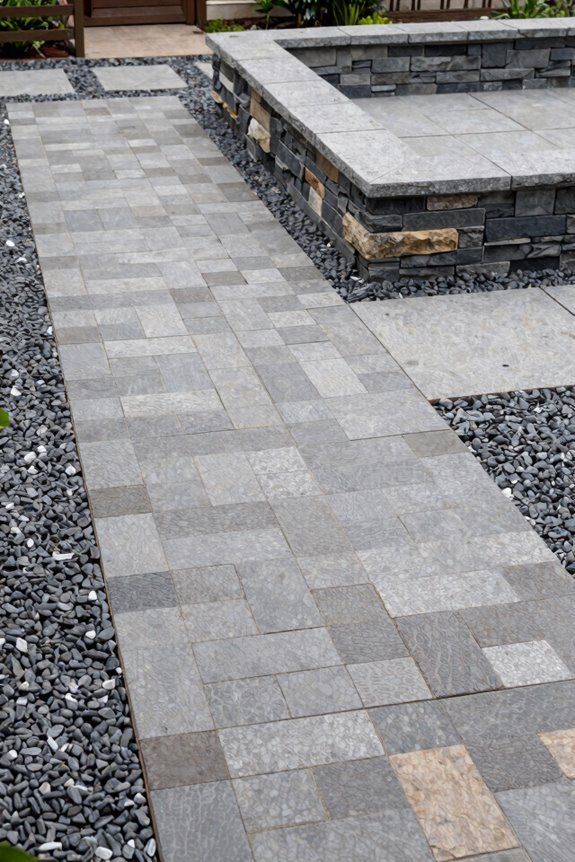
When you’re planning your no-grass backyard, I’d encourage you to think of pathways as the skeleton that holds your outdoor spaces together; they’re what actually get you from point A to point B without trudging through xeriscaped plants. Your layout should visually connect key zones (say, the patio to your raised edible beds to a shaded seating nook), while your material choices (whether that’s warm-toned pavers in a herringbone pattern, decomposed granite for a rustic feel, or natural stone for architectural cohesion) should echo the textures and colors already present in your home and hardscape features.
The real benefit comes when you combine permeable materials with proper edging and grading, which drains water naturally, suppresses weeds, and keeps your bespoke low-maintenance landscape looking intentional rather than accidentally abandoned.
Design Layout And Flow
Your no-grass backyard deserves a design layout that actually works. I’m talking about creating intuitive pathways that guide you naturally from house to those outdoor living spaces you’ve always wanted. Here’s what transforms a scattered yard into a cohesive retreat:
- Establish 3–4 foot-wide pathways using pavers or natural stone for comfortable foot traffic
- Link functional zones: seating, dining, garden beds. Use logical flow that feels intentional, not accidental
- Match materials to your home’s architecture so everything works together harmoniously
- Integrate gravel between hardscape segments for drainage and subtle visual breathing room
Your low-maintenance hardscape becomes the backbone of year-round usability. Those pathways aren’t just practical. They’re your invitation to actually live outside.
Material Selection And Installation
The real impact happens when hardscape pathways stop being afterthoughts and start defining your entire outdoor narrative. I’ve learned that permeable pavers, whether porous concrete or interlocking brick, aren’t just drainage heroes; they’re zone architects. They create visual separation between your dining retreat and seating nook without sacrificing functionality.
Natural stone edges anchor these spaces beautifully, keeping weeds at bay while maintaining crisp boundaries. Choosing slip-resistant materials matters tremendously in wet climates, protecting everyone who gathers in your customized outdoor rooms.
| Material | Best For | Low-Maintenance Rating |
|---|---|---|
| Permeable concrete | Modern homes | ★★★★★ |
| Interlocking brick | Traditional designs | ★★★★☆ |
| Flagstone | Rustic aesthetics | ★★★★☆ |
| Porous gravel | Budget-friendly zones | ★★★☆☆ |
Installation requires precision. Proper drainage venting prevents pooling disasters that undermine your hardscape investment.
Vegetable Gardens: Grow Food in Raised Beds and Small Spaces
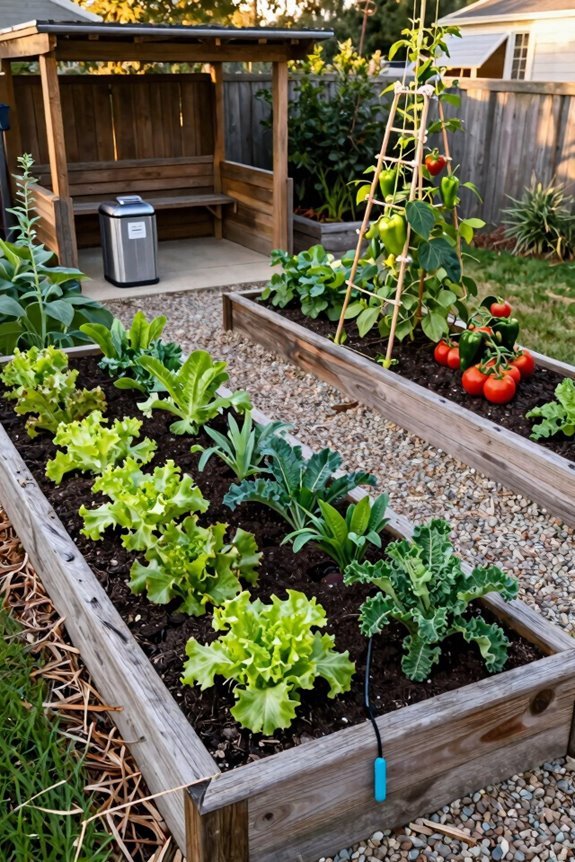
How’d you like to harvest crisp tomatoes and peppery greens from a backyard that’s barely bigger than a parking space?
Raised beds transform cramped yards into productive gardens. I’ve found that four-foot-wide beds maximize reach while minimizing strain on your back, which is the real benefit of no-grass living.
Raised beds transform cramped yards into productive gardens while maximizing reach and minimizing back strain.
Here’s what makes small-space gardening work:
- Compact varieties of tomatoes and peppers yield well in confined areas
- Square-foot gardening increases production through dense, strategic planting
- Vertical trellises double your harvest by supporting vining crops upward
- Container gardening offers flexible placement options
Stack succession planting atop these strategies, rotating crops every three weeks, and you’ll maintain continuous small-space harvests from spring through fall. Your neighbors will wonder where this green abundance originates. Your secret? Strategic density and vertical thinking, not sprawling acreage.
Outdoor Kitchens: Cook, Dine, and Entertain Outdoors
Outdoor kitchens aren’t just fancy grilling stations; they’re full-fledged culinary theaters that transform your backyard into a destination for cooking and entertaining. I’ve found that built-in grills paired with weather-proof materials like stainless steel and concrete create the perfect low-maintenance setup. You’ll want proper drainage and safety features (electrocution isn’t fun) installed thoughtfully beneath your countertops.
Adding a pizza oven extends your cooking repertoire while keeping the area clear. Weather-resistant cabinetry holds everything you need, eliminating trips inside. Task lighting reveals those sizzling steaks beautifully.
The real magic happens when you layer in a bar area and fire pit. Suddenly, your outdoor dining space becomes the neighborhood’s favorite gathering spot. This bespoke approach turns your backyard into an irresistible entertainment hub where you’ll actually want to spend time.
Zen Gardens: Design Peaceful, Low-Maintenance Spaces
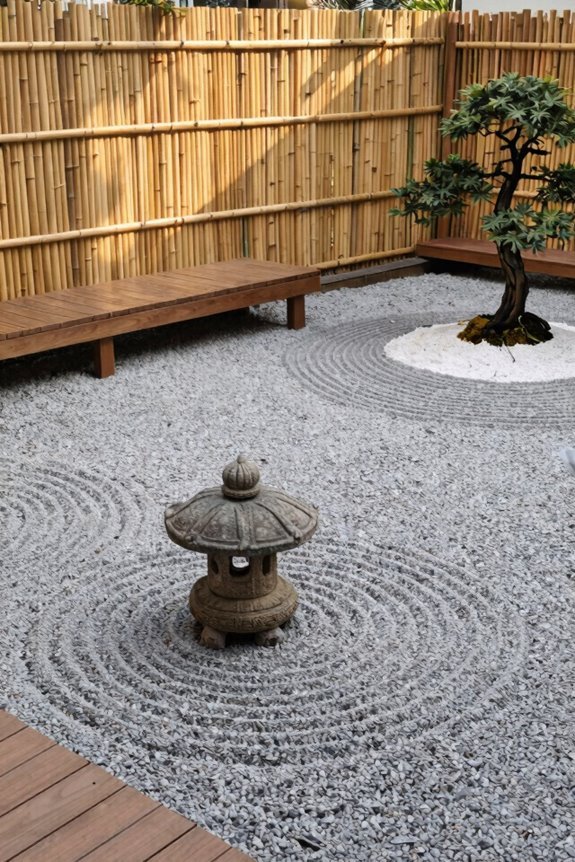
- Raked gravel or sand creates meditative patterns and requires minimal watering
- Stepping stones guide movement while preserving negative space
- Evergreen plants provide year-round greenery without demanding fertilizer
- Stone lanterns or bamboo fountains anchor your custom meditation area
The genius lies in using negative space rather than filling every inch. Clean lines and sparse plantings mean you’re using restraint as your design principle. Your garden becomes a calm, contemplative landscape that whispers rather than shouts, perfect for finding peace without exhausting yourself.
Wildlife Habitats: Invite Birds and Pollinators Year-Round
What if your backyard became a bustling habitat instead of a manicured monoscape? I’ve discovered that native plants transform underused lawn into wildlife-rich space. By layering groundcovers, shrubs, and canopy trees, you’ll create diverse homes for pollinators and birds year-round.
| Season | Native Plants | Purpose |
|---|---|---|
| Spring | Serviceberry, trillium | Early nectar source |
| Summer | Black-eyed Susan, coneflower | Peak pollinator activity |
| Fall | Asters, dogwood berries | Migration fuel |
| Winter | Holly, winterberry | Emergency food |
| Year-Round | Mixed shrubs | Bird nesting shelter |
I’ve added shallow water features, nothing fancy, just birdbaths with gentle fountains because visiting animals need refreshment. Dense shrubbery and brush piles provide suitable bird nesting sites.
This vegetation-based approach eliminates mowing while welcoming the community you’re building outdoors. You’re not just gardening; you’re belonging to something larger.