
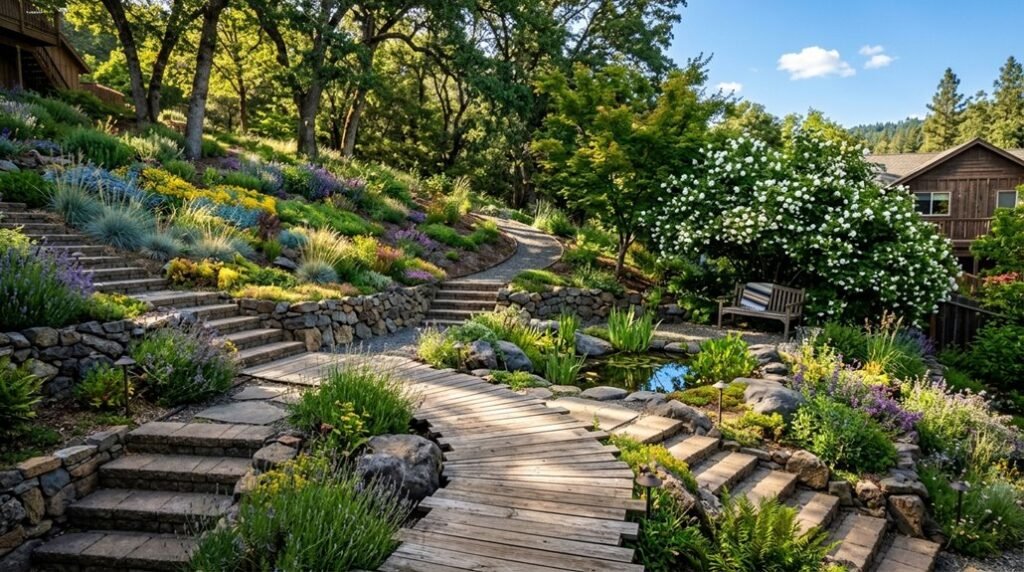
I once watched a homeowner spend fifteen grand leveling a slope, only to face drainage nightmares within two seasons. Here’s what I learned: your sloped yard isn’t a problem to erase; it’s an asset waiting to be engineered.
With terraced retaining walls, native groundcovers, and strategically placed stone pathways, you’ll reshape that challenging topography into layered outdoor living spaces that’d make European landscape architects nod approvingly. But which approach actually fits your budget and soil conditions?
Assess Your Slope: Budget, Feasibility, and Your Best Option
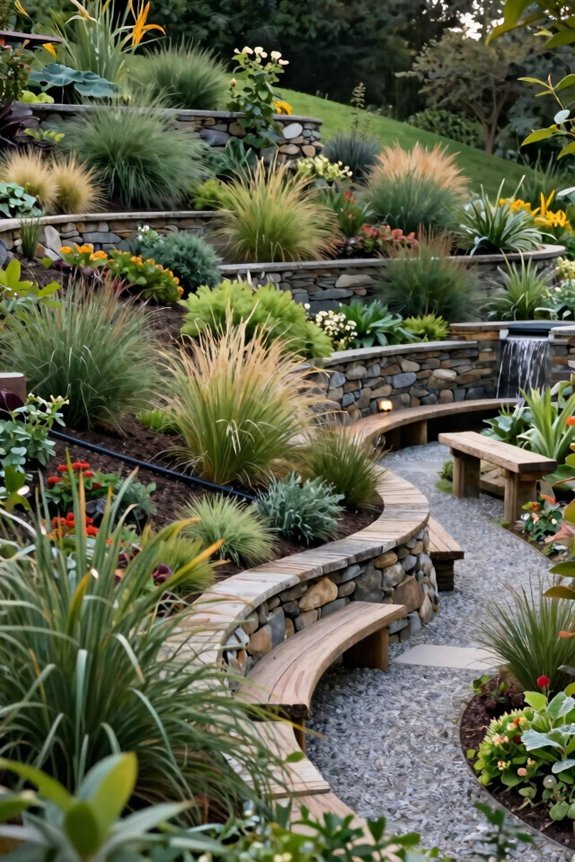
Your feasibility hinges on three factors: drainage patterns, slope access, and erosion control needs. Rocky terrain means you’re looking at premium materials like Belgard bricks or natural stone. Softer soil? Timber terraces offer customized affordability.
Consider your budget honestly. Terraced beds start budget-conscious, while retaining walls climb toward premium pricing. I recommend prioritizing flat zones first; patios and seating areas come before tackling vertical challenges. Smart assessment now prevents costly mistakes later.
Retaining Walls and Patios: Create Level Space
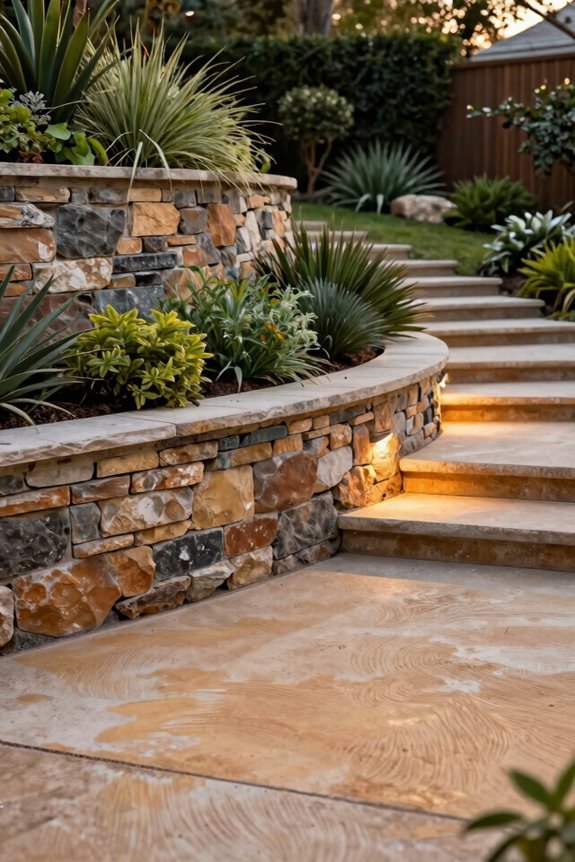
To convert your sloped yard into usable living space, I’ll walk you through the three essential components that make retaining walls and patios work together. A wall without proper drainage is just an expensive way to flood your neighbors’ basements.
You’ll need to understand how to level your terrain effectively, manage water so it doesn’t treat your foundation like a swimming pool, and choose materials (think brick pavers in herringbone patterns or professionally graded stone) that balance durability with sophisticated European style.
The key is when drainage systems and precision installation work in tandem, converting steep slopes into tiered zones where your family can enjoy multiple activities instead of just sliding down your yard.
Leveling Sloped Terrain Effectively
When a slope’s challenging grade threatens your backyard’s usability, retaining walls and professionally installed patios become your best allies for creating functional outdoor living space. I’ve learned that leveling a slope requires strategic planning, not just wishful thinking and a shovel.
A professional contractor transforms chaotic terrain into usable zones through terraced garden designs and properly graded level patios. They install drainage solutions preventing pooling and erosion, your basement’s silent problem. Stone steps connect elevations seamlessly, while retaining walls stabilize the slope itself.
Yes, leveling costs money. But imagine hosting gatherings on flush, level patios instead of tilting precariously. Materials like Belgard pavers in herringbone patterns create that inviting European aesthetic. Your backyard becomes less tightrope, more retreat.
Drainage and Water Management
Because water doesn’t care about your landscaping plans, I’ve learned that proper drainage behind retaining walls isn’t optional. It’s the difference between an attractive patio and a muddy disaster. You’re joining countless homeowners who’ve discovered that managing water runoff prevents soil erosion and keeps those lovely brick-paver patios intact.
| Drainage Component | Purpose |
|---|---|
| Perforated drain pipe | Channels water away from wall base |
| Gravel backfill | Allows water infiltration and filtration |
| French drains | Redirects slope runoff effectively |
| Terraced beds | Reduces erosion while guiding water |
| Proper grading | Ensures customized slope management |
Professional installation handles complex slope management and grading correctly. Combining terraced beds with retaining walls creates those usable flat spaces we all want while protecting your investment from seasonal saturation.
Material Selection and Installation
How do you transform a sloped backyard into usable, level space without compromising drainage or aesthetics? I’d recommend pairing retaining walls with a patio using Belgard Holland Savannah bricks in herringbone patterns, they’re slip-resistant and age beautifully with Old World charm and modern safety.
Professional installation matters here. Your contractor will handle critical grading, ensuring water flows away from structures rather than pooling. Proper backfill and weep holes prevent hydrostatic pressure buildup; you’re giving water an escape route so your wall doesn’t become an expensive paperweight.
Material selection depends on your slope topography. Quality bricks provide durability while creating that antique European aesthetic you’re after. The result is a level patio that manages drainage intelligently, turning problematic slopes into your backyard’s focal point.
Groundcovers and Native Plants: Stabilize Soil and Reduce Maintenance
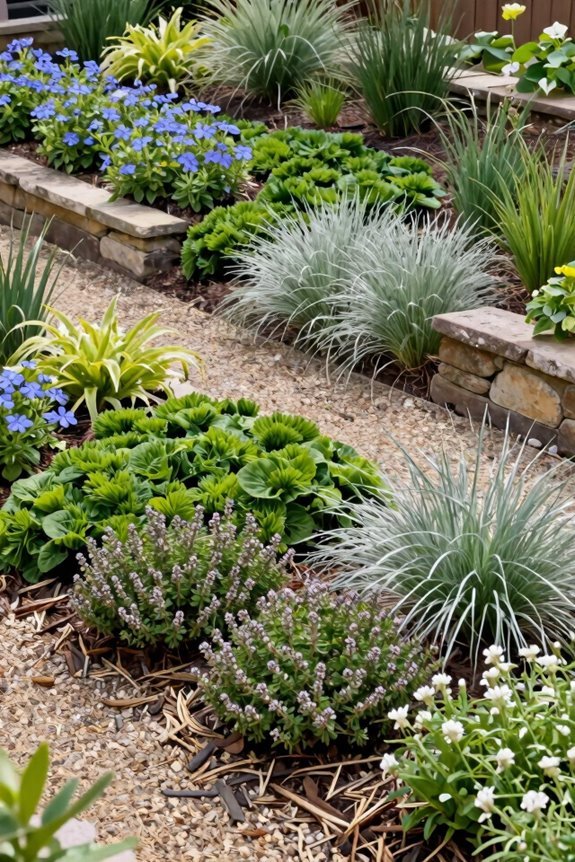
Once you’ve carved out your level spaces with retaining walls, I’d encourage you to blanket those slopes with native groundcovers, think creeping sedums, native junipers, or regional creeping perennials that’ll form a protective mat without demanding constant attention or your wallet. You’re enlisting plants that’ve already adapted to your local climate, so they’ll perform well on less water and fertilizer while their dense verdure stabilizes soil, prevents erosion, and slows water runoff before it pools at your landscape’s base.
Layer these bespoke selections strategically, and you’ve created a self-maintaining system that turns steep terrain from a maintenance nightmare into a resilient, low-mow landscape.
Native Plant Selection Benefits
When you’re staring down a steep slope that erodes faster than you can say “topsoil,” native groundcovers become your best allies, not just aesthetically, but structurally. I’ve learned that region-appropriate natives transform hillside landscaping into a self-sustaining system. They demand less water, require minimal irrigation, and build drought resilience naturally.
Here’s why they’re worth the investment:
| Benefit | Impact |
|---|---|
| Deep root systems | Stabilize soil effectively |
| Year-round verdure | Reduces maintenance burden |
| Pollinator support | Creates vibrant habitat |
| Evergreen natives | Winter interest guaranteed |
Native perennials and groundcovers work together beautifully, layering texture while controlling erosion. You’ll notice pollinators thriving within weeks. That’s belonging; connecting your landscape to the local ecosystem.
Skip the high-maintenance turf on those steep gradients. Your slope and your weekends will thank you.
Groundcover Erosion Prevention
Because water doesn’t pause for pretty landscapes, the right groundcovers become your slope’s defense system; slowing runoff, anchoring soil, and frankly, saving you from watching your topsoil migrate to your neighbor’s yard. I’ve discovered that drought-tolerant groundcovers create lush vegetation while reducing erosion significantly. Native plants excel here, requiring minimal fussing while stabilizing hillside landscapes naturally.
Your bespoke slope needs layering. Pair creeping sedums or native junipers with strategic mulch applications and drip irrigation systems. This combination transforms vulnerable terrain into resilient garden beds. Evergreen perennials maintain year-round cover, suffocating weeds before they gain footholds.
Groundcovers don’t just prevent erosion; they belong to your landscape’s ecosystem, creating connection among plants, soil, and water. This integrated approach yields slopes that stay put while looking intentional.
Low-Maintenance Slope Solutions
While slopes demand constant vigilance from most gardeners, the right groundcovers and native plants flip the script entirely. They’re your soil’s bodyguards, working 24/7 to slow runoff and anchor topsoil without requiring weekly fussing. I’ve discovered that low-water natives paired with dense groundcovers create a bespoke erosion control system that maintains itself.
Pair these verdant layers with terraced beds or raised beds for easier access, so no more awkward reaching. Install drip irrigation with pressure-compensating emitters to water evenly across elevation changes. Choose species with staggered bloom times for continuous color while minimizing replanting headaches.
This approach transforms your slope from a maintenance nightmare into a self-regulating ecosystem.
Pathways and Steps: Navigate Your Slope Safely
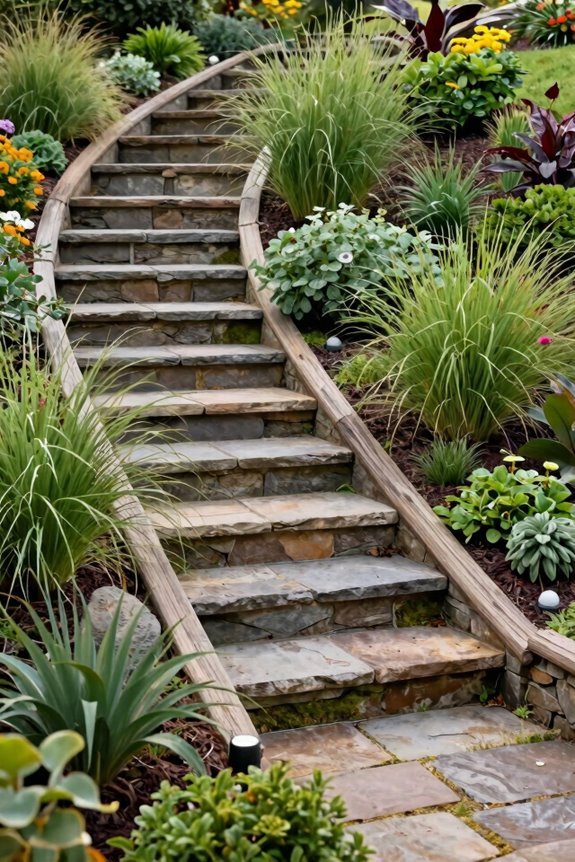
How do you transform a treacherous slope into an inviting journey through your yard? I’ve discovered that winding pathways create visual interest. By laying stone, wood, or concrete pavers that blend landscape with your plantings, you’ll craft accessible routes that reveal surprises around each turn.
Stair elements, such as sturdy brick or wooden steps, break up steep inclines while visually connecting different elevations together. Here’s where it gets personalized: terraces and retaining walls establish distinct zones (dining, relaxation, play) while controlling erosion.
Your sloped yard needs smart drainage too. I recommend gravel bases and proper grading to prevent pooling. Adjacent groundcovers stabilize soil beautifully.
Accessibility isn’t negotiable. These thoughtful pathways don’t just protect your shins; they transform your landscape into a cohesive, welcoming escape that you’ll actually want to explore.
Boulders and Rock Gardens: Add Slope-Friendly Visual Interest
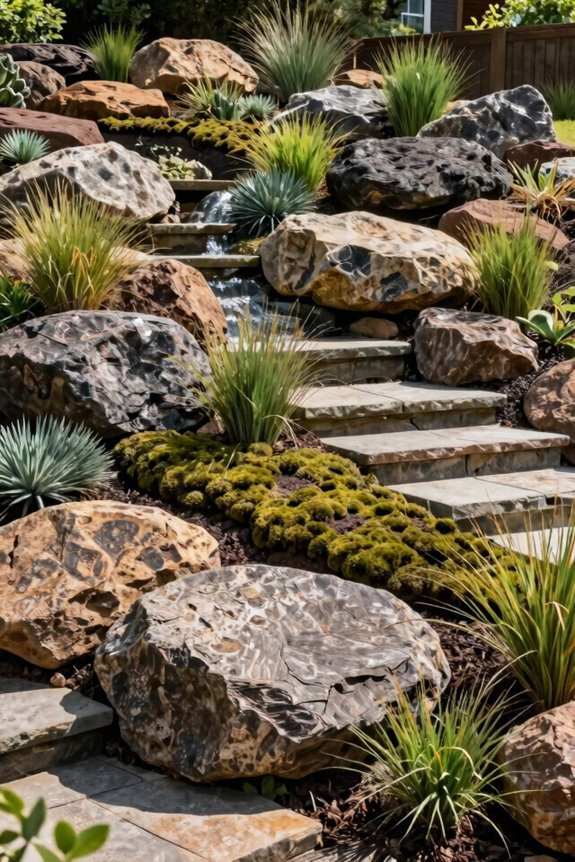
Ever notice how a single strategically placed boulder can transform a bland hillside into scenery with real personality? I’ve discovered that boulders create dramatic focal points while simultaneously tackling erosion control, combining two benefits in one design element. When I design a rock garden on my slope, I vary stone sizes and colors, anchoring them with native, drought-resistant plants for lush appeal.
I arrange boulders at terraced levels to stabilize soil and guide water flow downhill, merging physics with gardening principles. Groundcovers like creeping sedums nestle between rocks, suppressing weeds while protecting soil. Strategically positioned taller plants anchor the back; smaller specimens edge walkways.
This customized approach converts maintenance challenges into low-maintenance landscapes. My slopes now feature natural seating areas and stepping-stone access between garden zones. The result is a visually striking slope that requires minimal upkeep.
Elevated Decks and Raised Beds: Build Up Instead of Leveling
The trick? Choose pressure-treated lumber or composite materials that handle moisture like champions. Proper drainage prevents pooling; debris-free grates beneath each level keep your slope from turning into a muddy mess. Space pathways generously for irrigation access—your plants and your back will appreciate the consideration.
Strategic stairways knit these terraced levels into visual cohesion. Pair everything with smart erosion control: compacted soil, native plantings, and careful grading. Your custom terraced landscape becomes both functional and visually appealing, proving slopes aren’t obstacles; they’re opportunities.
Tiered Seating Areas: Use Slope Levels to Create Distinct Outdoor Zones
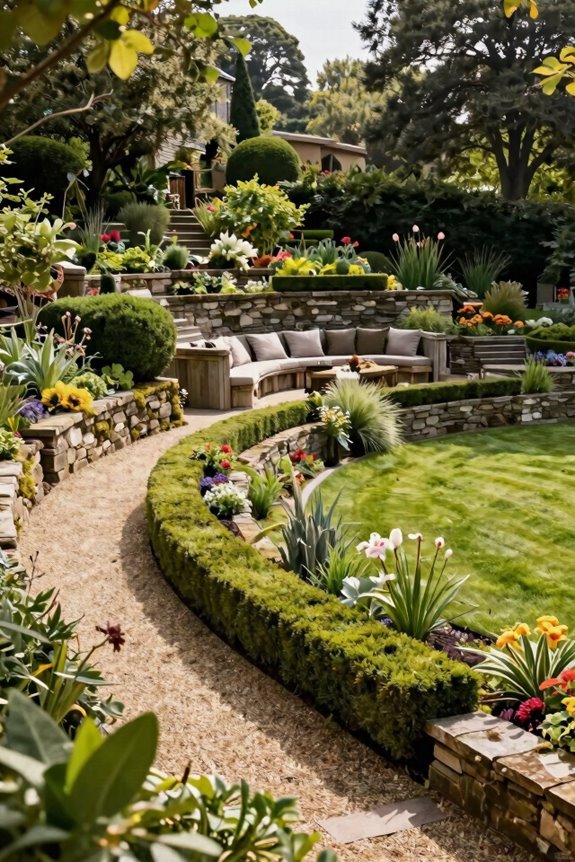
Why flatten what you can celebrate? I’ve discovered that tiered seating transforms sloped yards into purposeful outdoor zones. Rather than fighting gravity, I embrace it, creating a dining terrace above and a cozy lounge below, each commanding its own landscape personality.
Retaining walls do the heavy lifting here, preventing erosion while establishing stable platforms for furniture and plants. I’ve incorporated terraced beds and wooden garden boxes on each level, maximizing planting area without sacrificing accessibility along the slope.
The drainage payoff is significant; broken runoff cascades down manageable steps instead of pooling messily at the base. I’ve woven lighting and pathways along tier edges, crafting that bespoke European charm while enhancing safety.
These slope levels aren’t obstacles. They’re invitations to something exceptional.